
Role
Team
Tools
Timeline
Project Summary
For this project, I created a post-apocalyptic title sequence designed to convey atmosphere and emotional intensity from the very first frame. Rather than relying on dialogue or exposition, the goal was to build tension purely through visual storytelling, using dynamic typography, layered imagery, and a muted, desaturated color palette to immerse viewers in the tone and setting before the narrative even begins. Every element, from framing to pacing, was crafted to spark curiosity and set the emotional stage for the story that follows.
Phase 01
Concept & Direction
For this project, I combined original photography and videography shot throughout Cincinnati with a post-apocalyptic creative direction, transforming familiar, recognizable locations into something quietly abandoned and unfamiliar. I developed a visual system built around muted color, layered environmental detail, and deliberate stillness, blending real-world locations with the emotional tone of the genre to support the title sequence's sense of atmosphere and quiet devastation. The goal wasn't to depict destruction literally, but to suggest it through absence, empty space, overgrowth, and a single figure moving through a world that feels emptied out rather than actively in ruin.
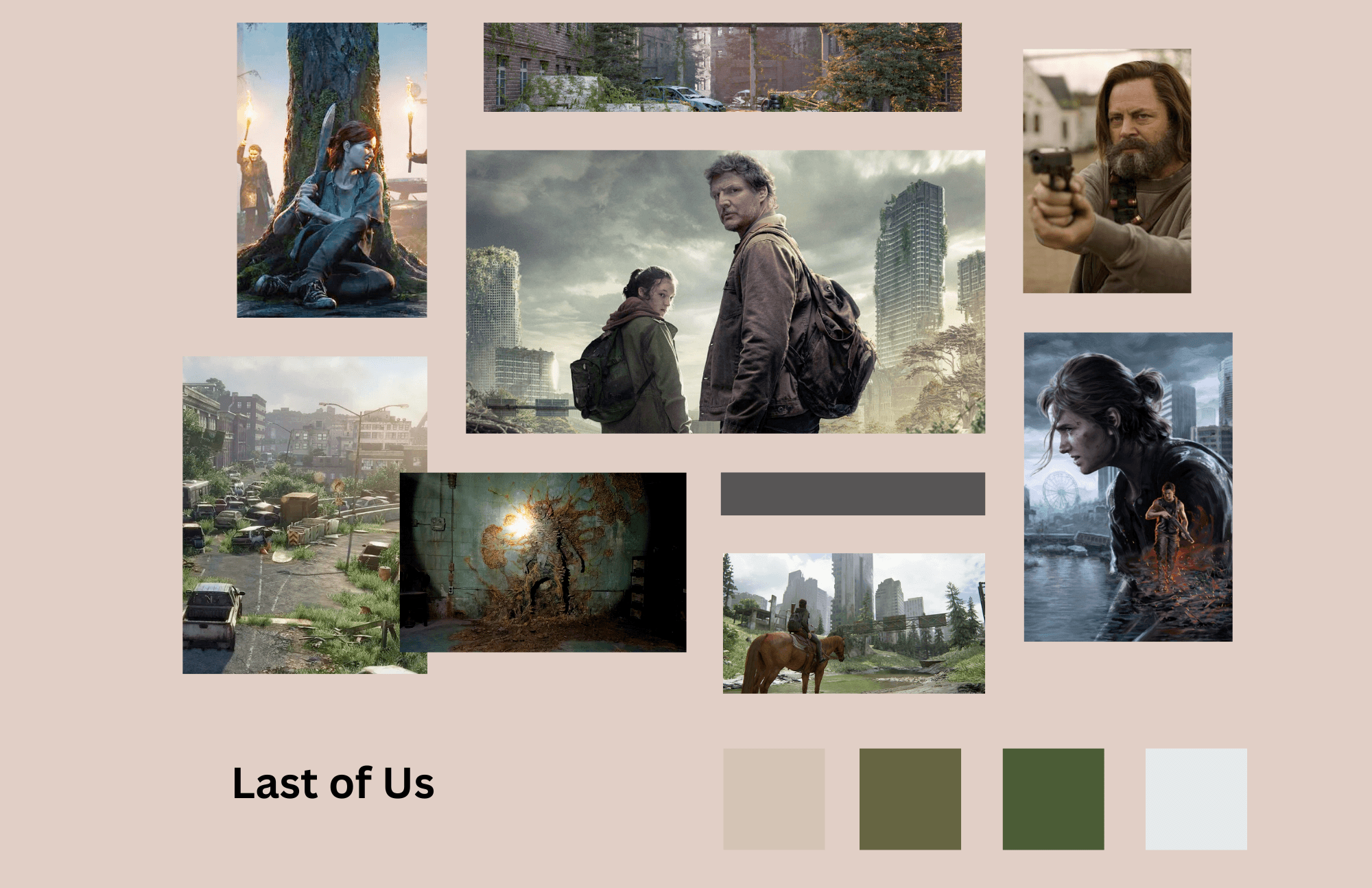
Moodboard
This mood board captures the tone of a post-apocalyptic world through muted colors, layered textures, and emotional imagery drawn largely from The Last of Us, a key visual reference for this project. Stills of overgrown cityscapes, quiet devastation, and characters moving through emptied-out environments helped define the atmosphere I was chasing: tension without action, isolation without spectacle. This board set the visual foundation for the title sequence, establishing the muted color palette, desaturated tone, and sense of quiet unease that carried through into the final photography and edit.
Phase 02
Process Photos and Video
For this project, I served as photographer, videographer, and director, shooting original footage and stills throughout Cincinnati to build a post-apocalyptic visual world from the ground up. Working with natural light across several locations, I directed shots built around isolation and quiet devastation, empty streets, overgrown landscapes, a single figure turned away from the camera, to make a familiar city feel abandoned and unfamiliar. I shot dozens of variations at different times of day to find the exact tone and light balance that read as haunting rather than staged, then brought the strongest frames and clips into the edit to build out the title sequence.
Storyboard
After shooting, I remapped out the title sequence beat by beat to establish pacing, framing, and the order in which key visual elements would appear. Each panel was planned around building tension incrementally, opening on quiet, distant shots of the city, moving through close, tactile details, and ending on the reveal of the title itself. This let me plan locations, framing, and shot length in advance rather than discovering the structure during editing, so every frame in the final sequence was intentional.

Phase 03
Editing
The editing process was where this project really came together. I had my concept, my footage, and my mood board, but the real challenge was pacing: how long to hold on stillness before introducing motion, and when to let silence sit before the title card hit. I edited in Adobe Premiere and After Effects, layering desaturated color grading over the raw footage to push the muted, post-apocalyptic tone established in the mood board. I iterated through several cuts before landing on a rhythm that let the environment breathe, letting empty space and quiet moments build unease rather than rushing toward the reveal. That patience in the edit was exactly the atmosphere I was chasing.
Audio Consideration
The audio for this piece is an original post-apocalyptic instrumental, inspired by the score work in The Last of Us, sparse piano and string elements layered over ambient, atmospheric texture. I wanted the sound to mirror the visual tone of the sequence: quiet, restrained, and a little mournful, letting silence and space do as much emotional work as the instrumentation itself. Rather than driving the footage with rhythm or energy, the score was built to sit underneath the visuals, reinforcing stillness and isolation rather than competing with it.
Audio Credit: Royalty Free on Youtube
Phase 04
Final Deliverable & Reflection
A significant challenge in this project was identifying and securing real-world environments that authentically conveyed the intended post-apocalyptic atmosphere. This involved extensive location scouting throughout Cincinnati, where I personally captured a diverse range of photographic and video assets. I am highly satisfied with the resulting visual narrative, as the locations I chose played a crucial role in establishing the project's distinctive tone.
Next Steps
I'm Still Here was one of my biggest photography and video projects, and there's still meaningful work I'd want to pursue if I continued developing it further.
