Role
Timeline
Problem Space
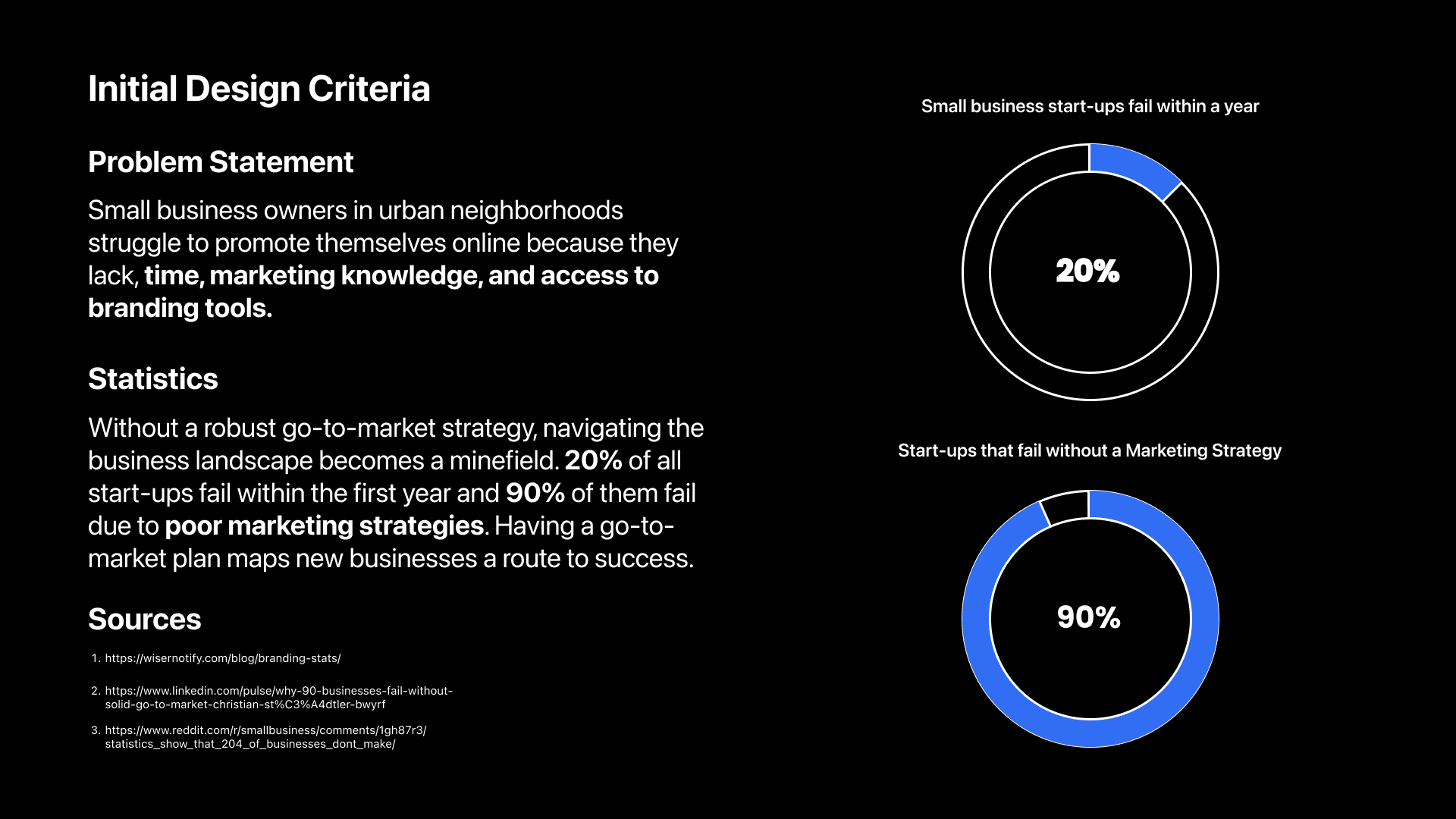
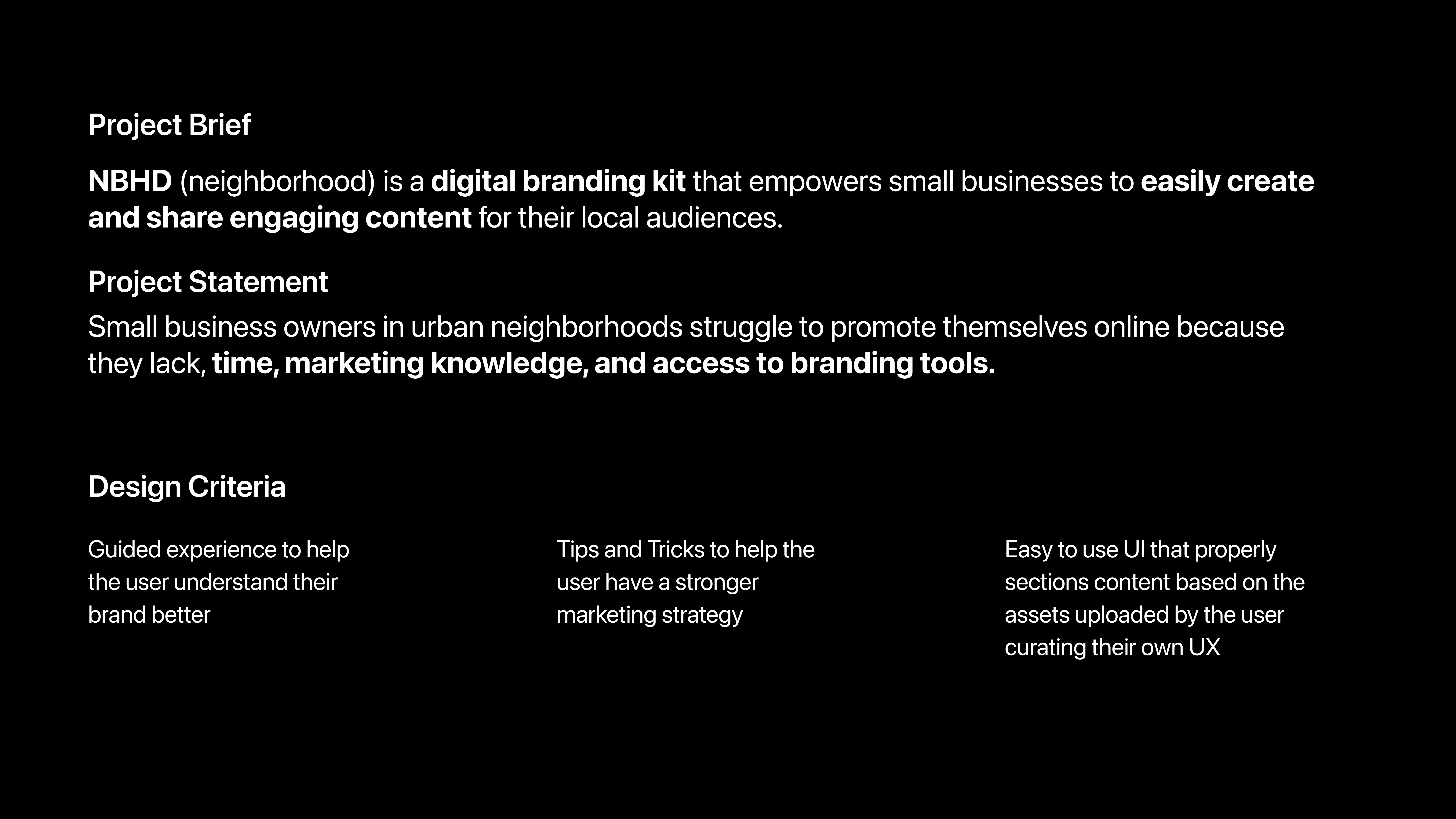
Small business owners in urban neighborhoods often struggle to promote themselves online due to limited marketing knowledge, time constraints, and lack of access to effective branding tools. Without a clear go-to-market strategy, many businesses fail to reach their intended communities. Nearly 20% of startups fail within their first year, and ineffective marketing strategies contribute to nearly 90% of startup failures.
Summary
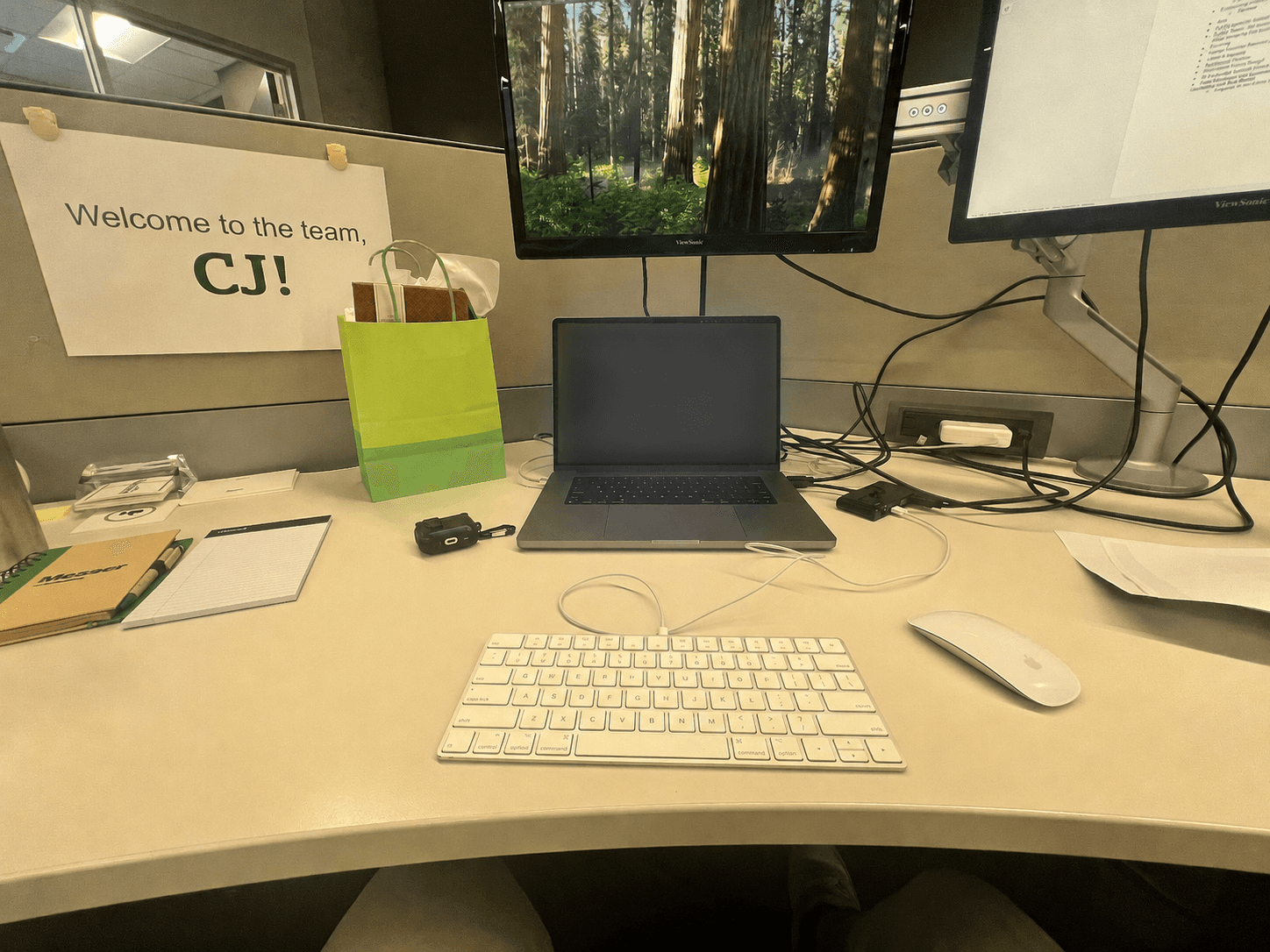
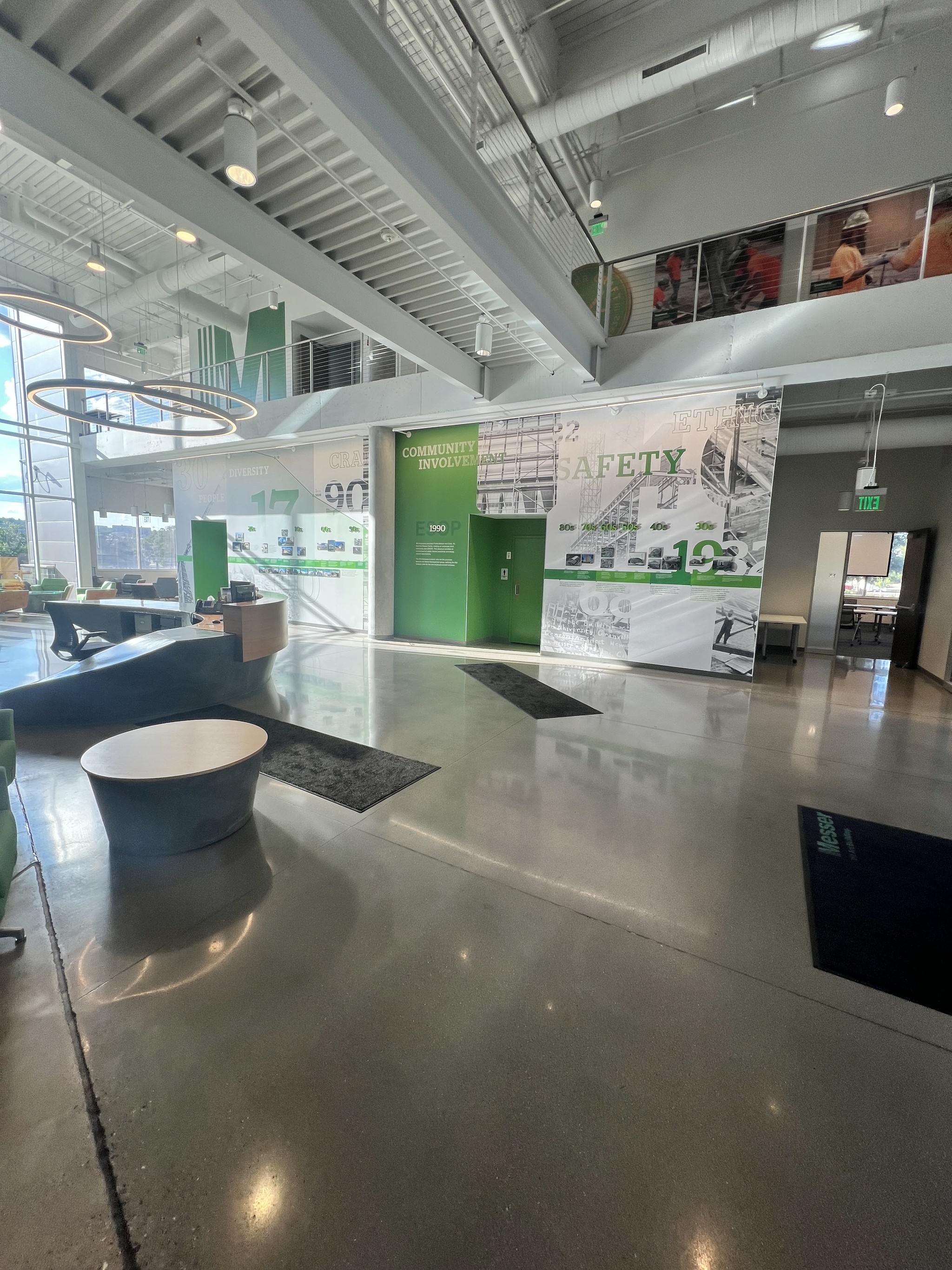
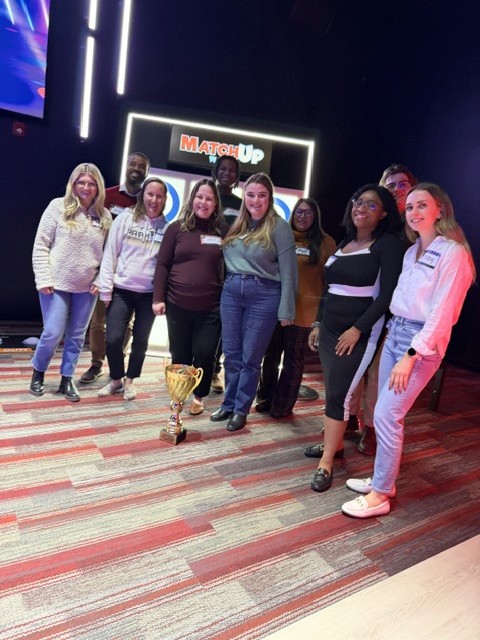
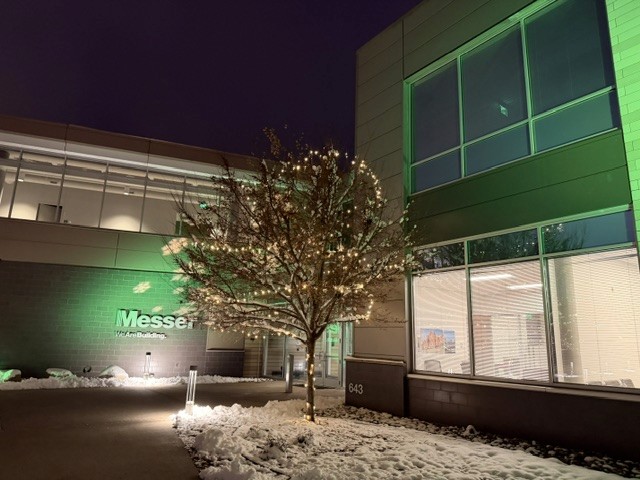
In Fall 2025 I had the opportunity to co-op at Messer Construction, headquartered in Cincinnati, Ohio. Joining the Pursuit Marketing team as a Graphic Designer, I collaborated on marketing proposals supporting new construction business development across Messer's 12 regional offices. Working alongside teams in Construction Safety, Virtual Design Construction, Operations, and Business Development gave me a unique perspective on how design functions inside a large scale organization. Messer's culture and the talent across that network made it one of the most memorable experiences of my co-op career.
Phase 01
Secondary Research
Design Constraints
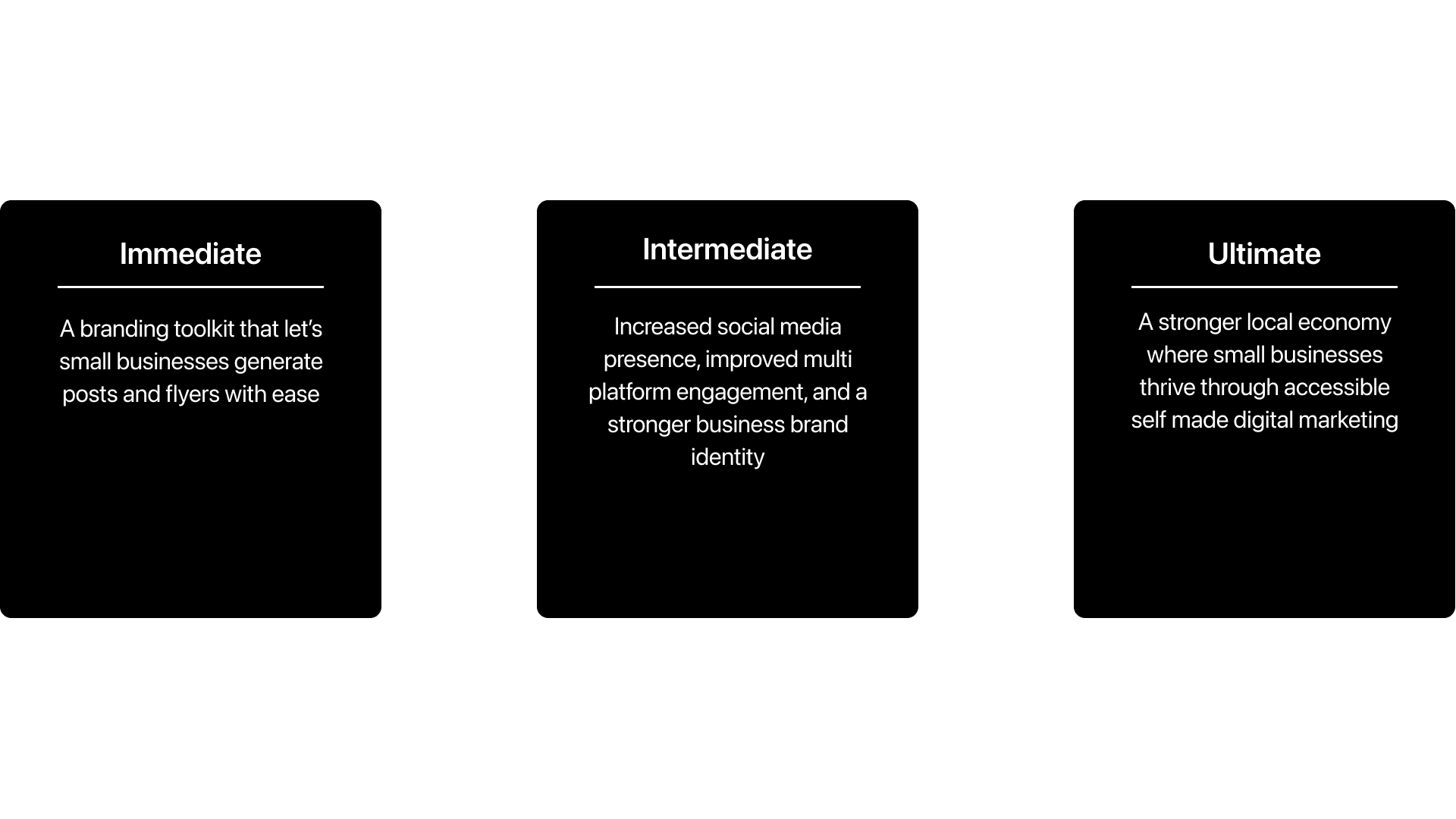
Intended Outcomes
Benchmarking Local Businesses
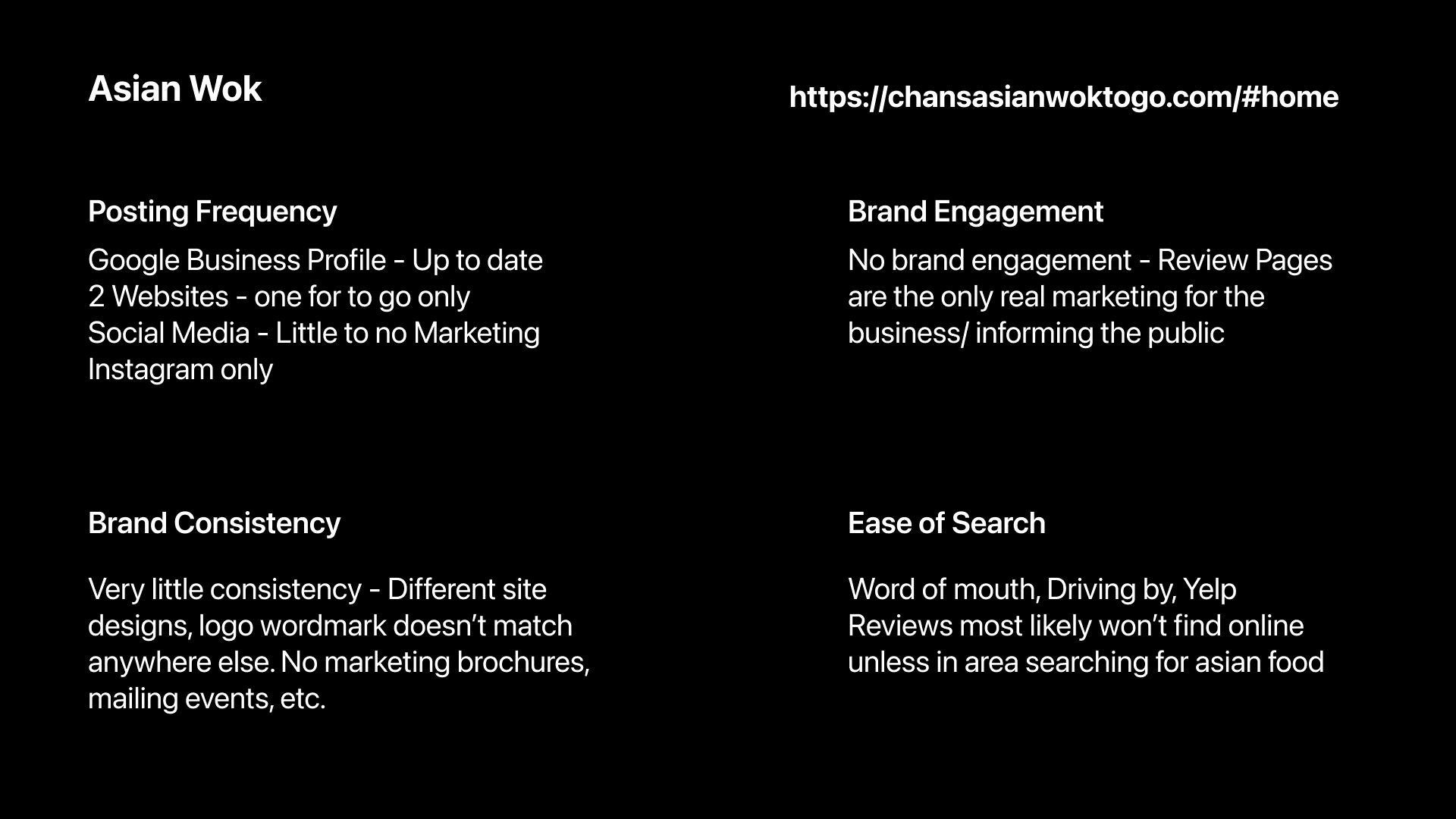
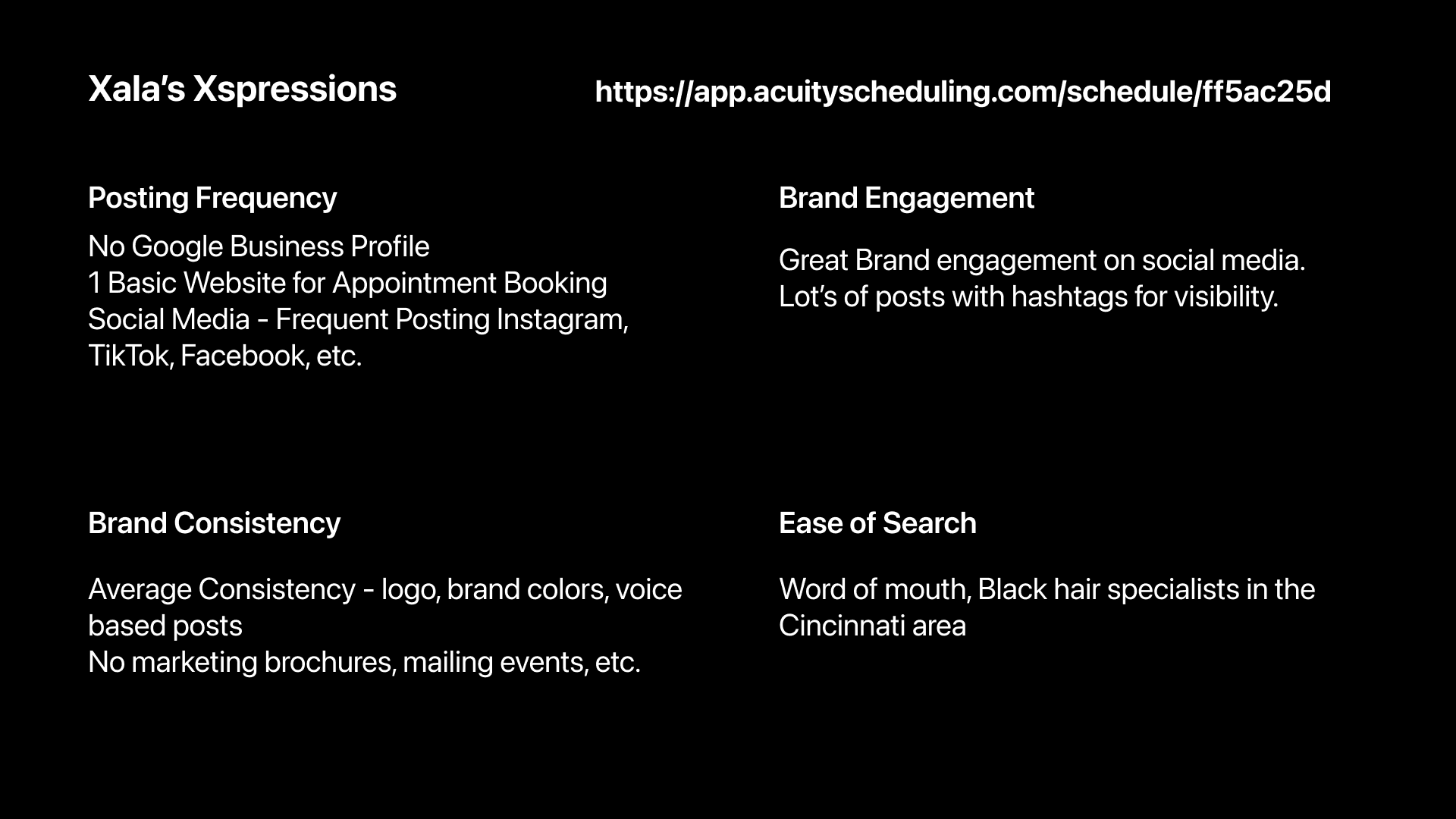
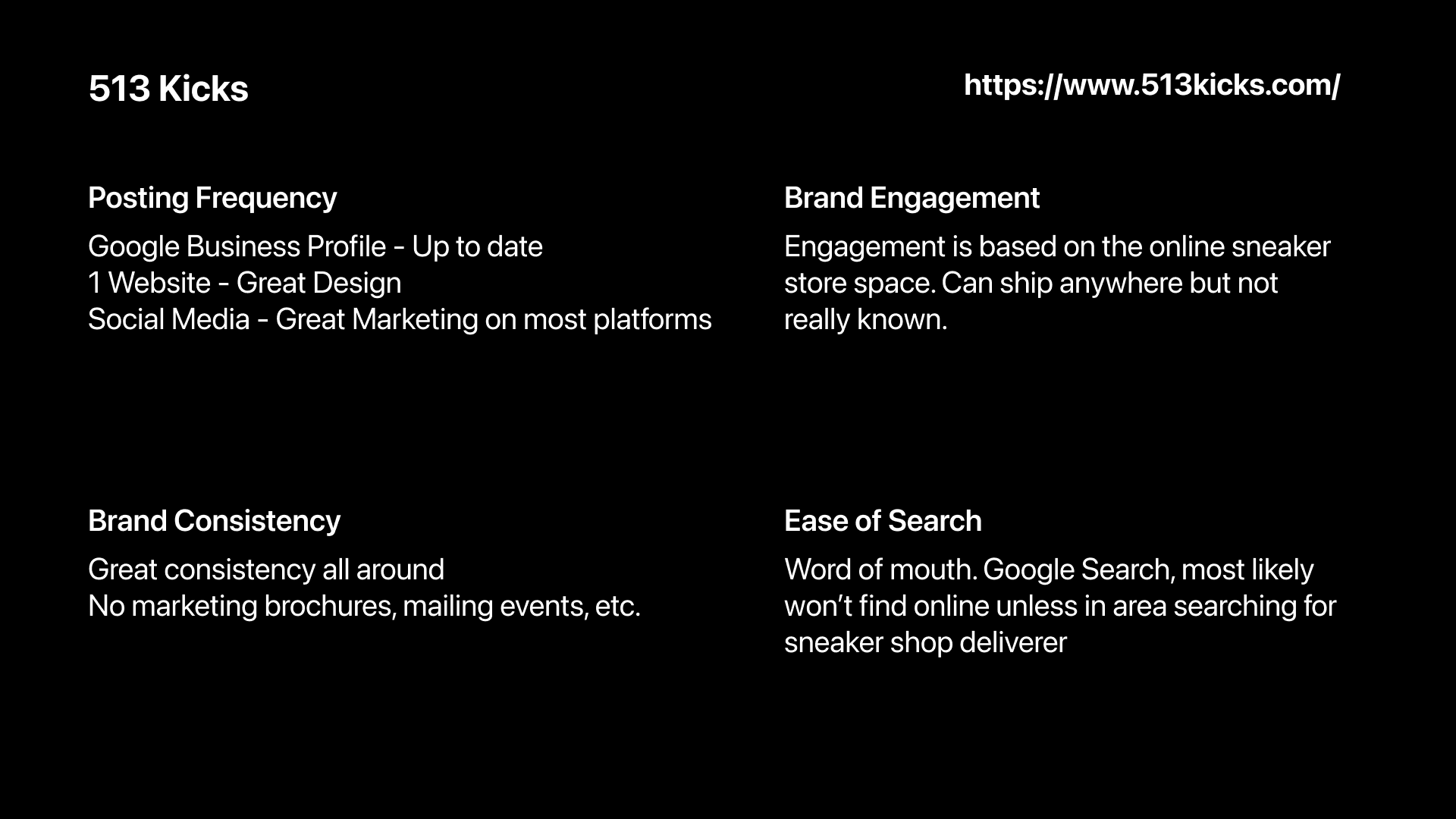
Benchmarking Reflection
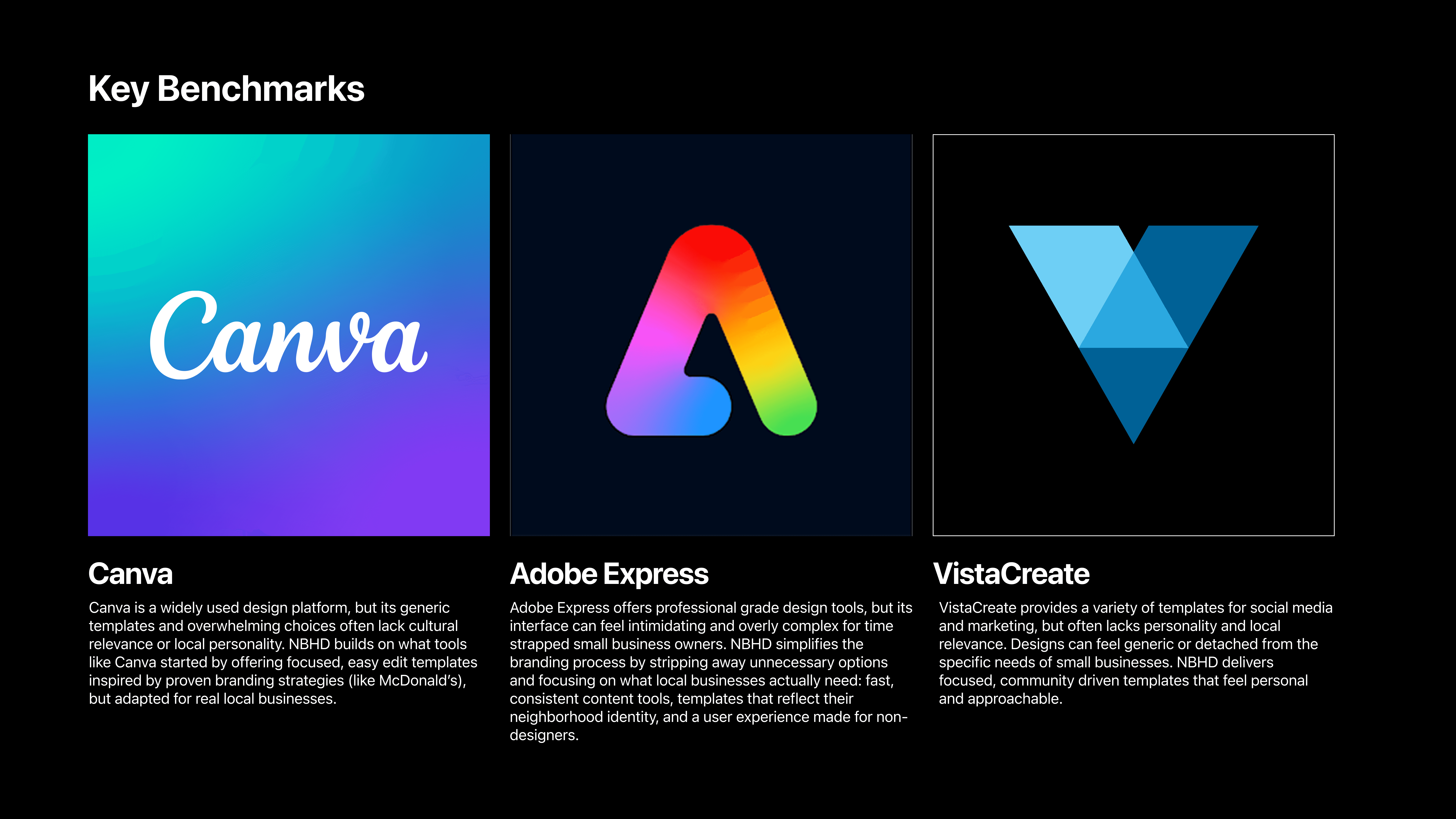
Local businesses like my benchmark examples each have an online presence, but none of them have a cohesive one. Inconsistent branding, limited social media activity, and poor search discoverability make it difficult for customers to find them unless they already know where to look. The problem is not effort, it is the lack of tools and knowledge to turn that effort into a strategy that actually works.
Key Competitor Benchmarks
Primary Research
Online Survey Results
Online Survey Insights - 15 Consumers Answered
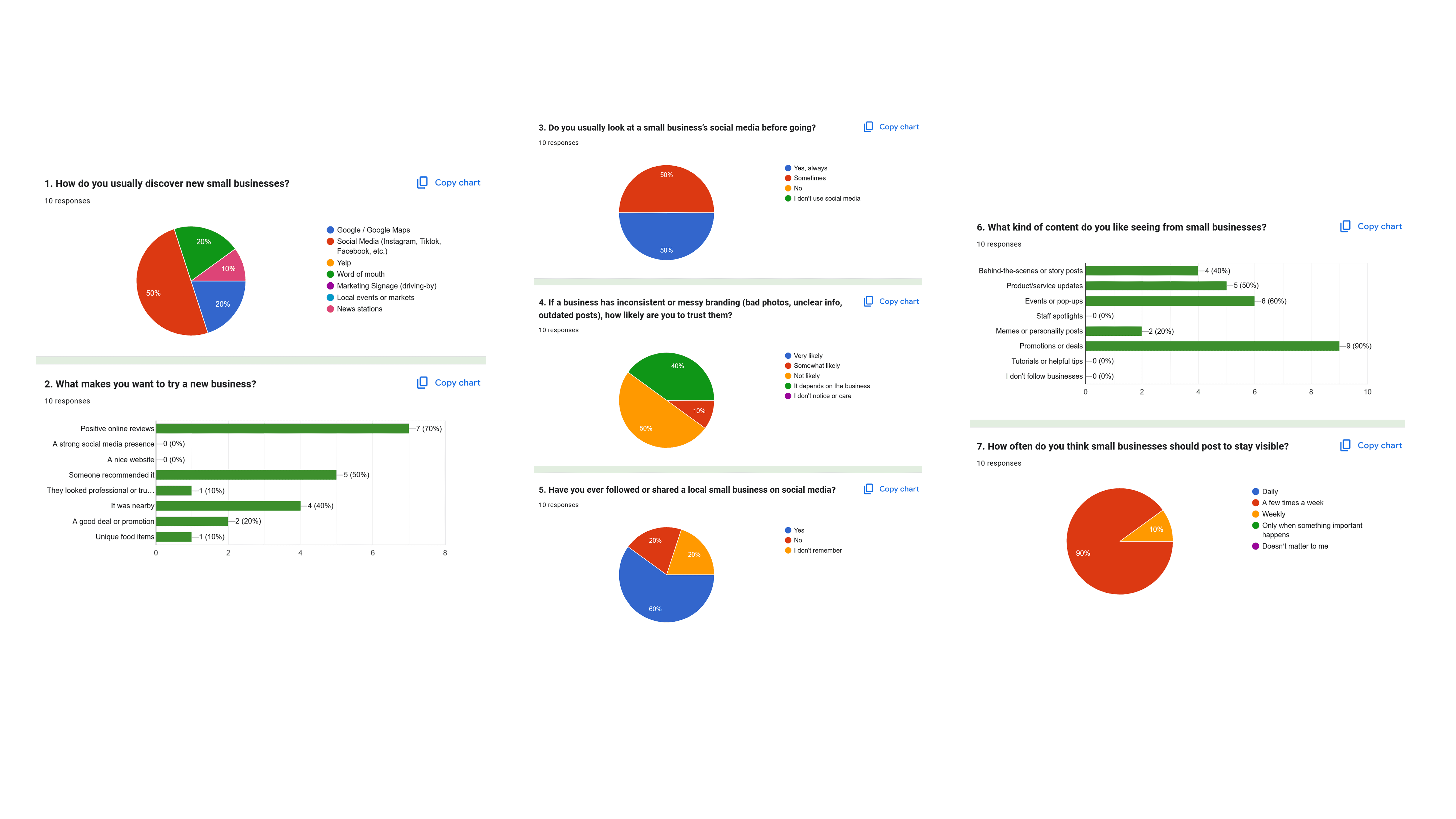
The survey reveals consumers primarily use Google for discovery. They find a mix of online content helpful, but typically do have low to no social media engagement with small businesses, often relying on word of mouth, photos, and live videos for information.
Interviews
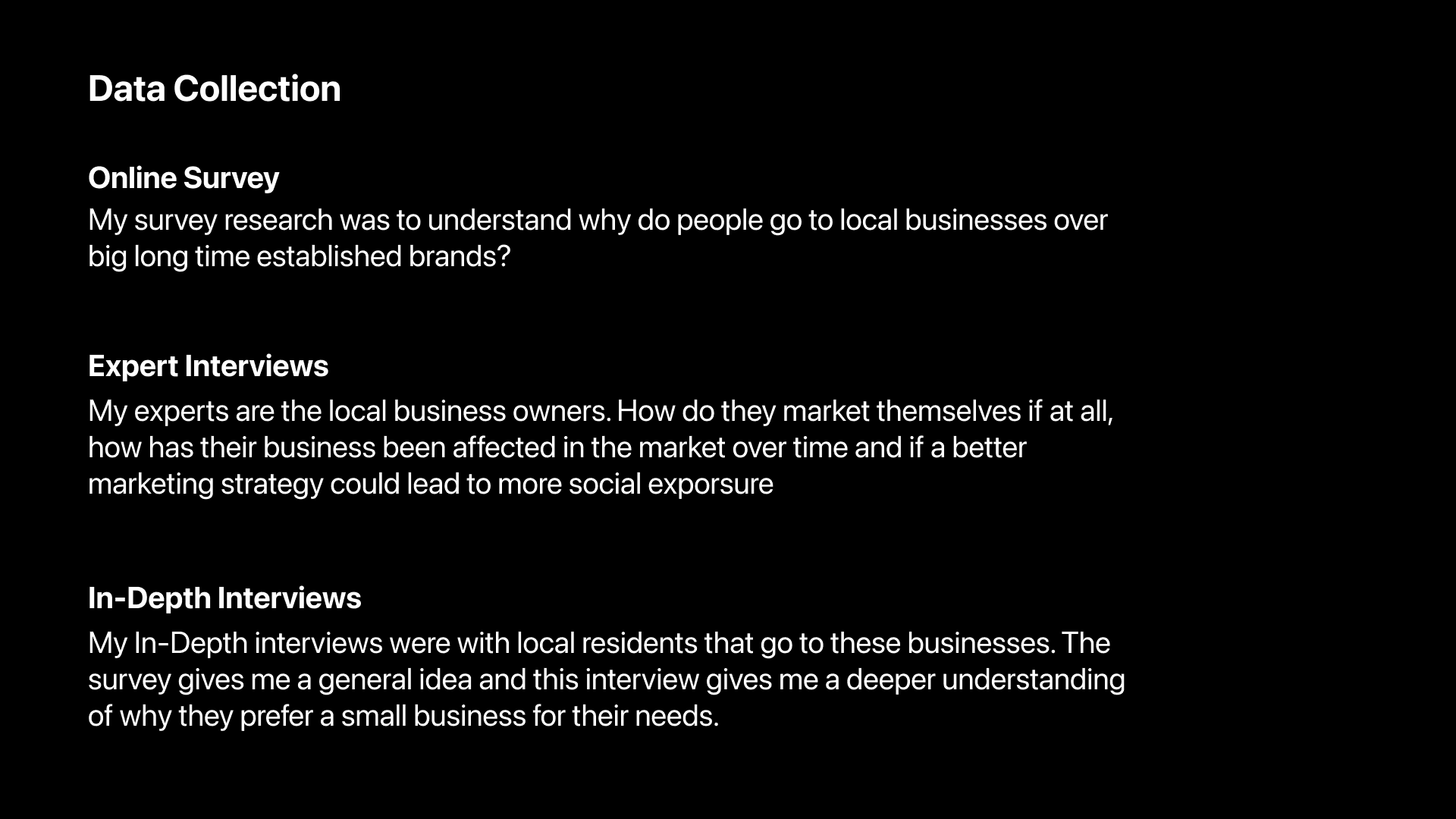
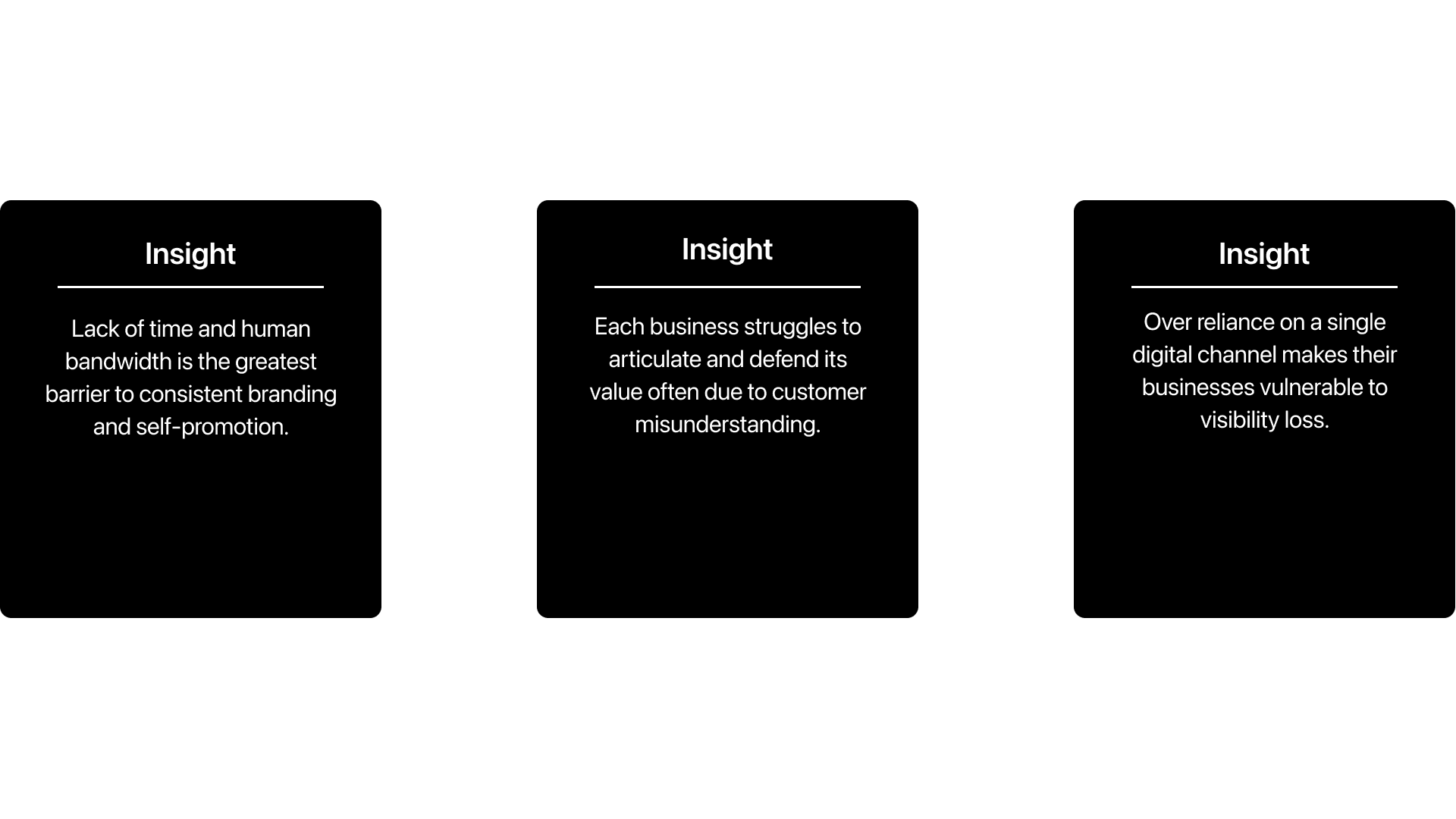
My primary research included consumer interviews exploring how people discover and engage with local businesses, alongside direct conversations with small business owners navigating the challenges of marketing with limited time and resources. These insights grounded the design process in real experience rather than assumption.
Interview Insights
Personas
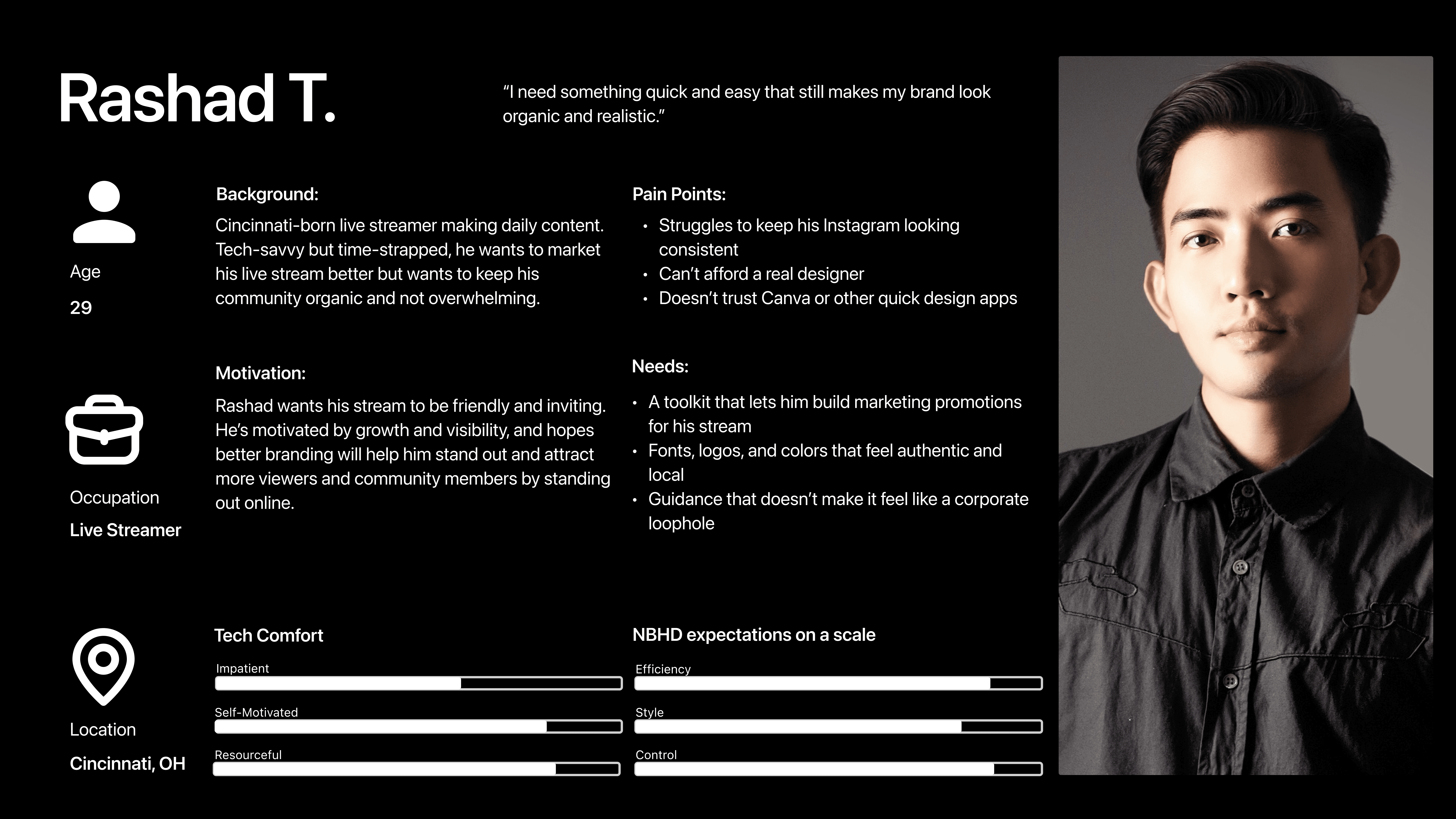
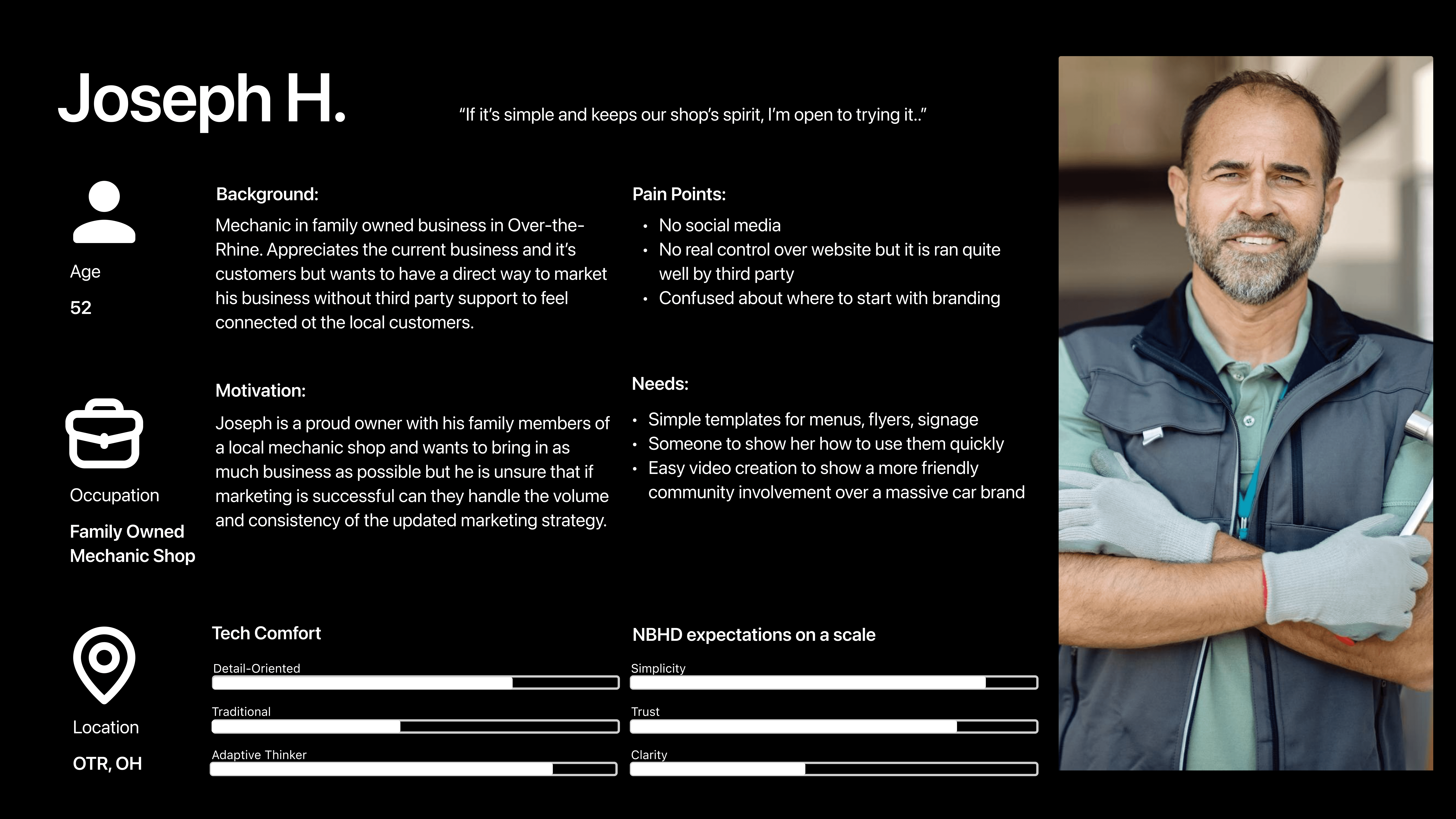
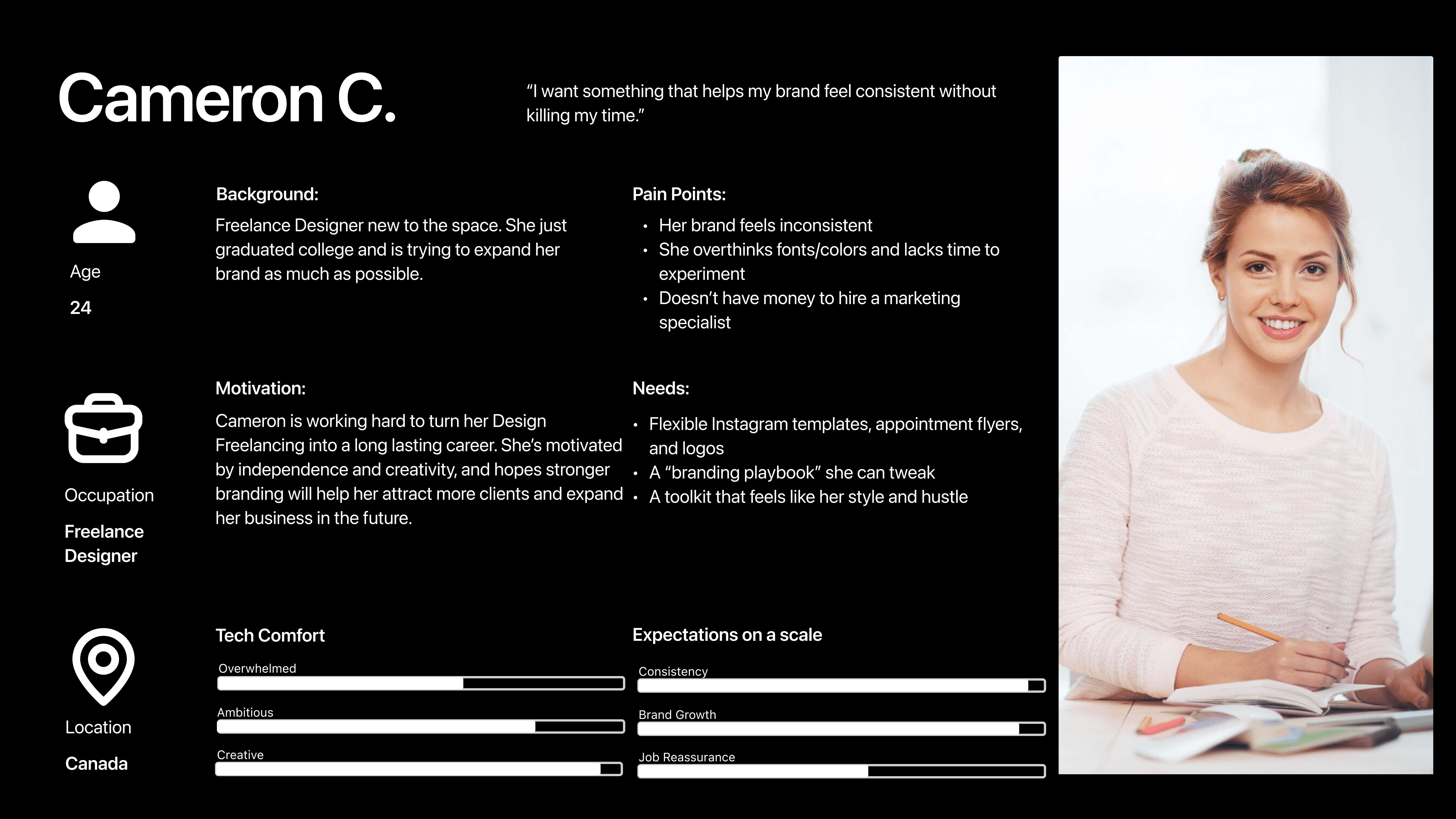
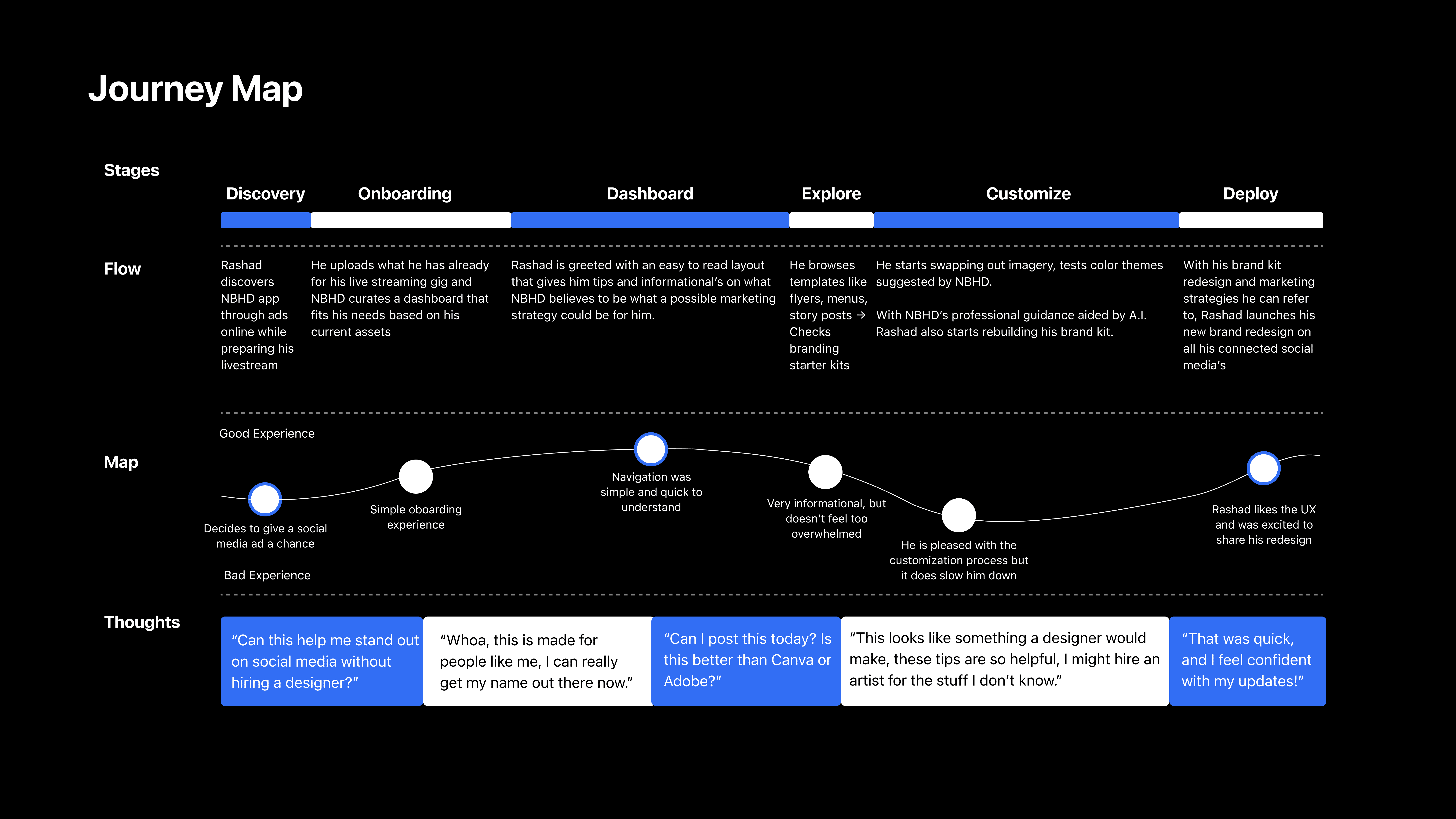
Persona Journey Map - Rashad T.
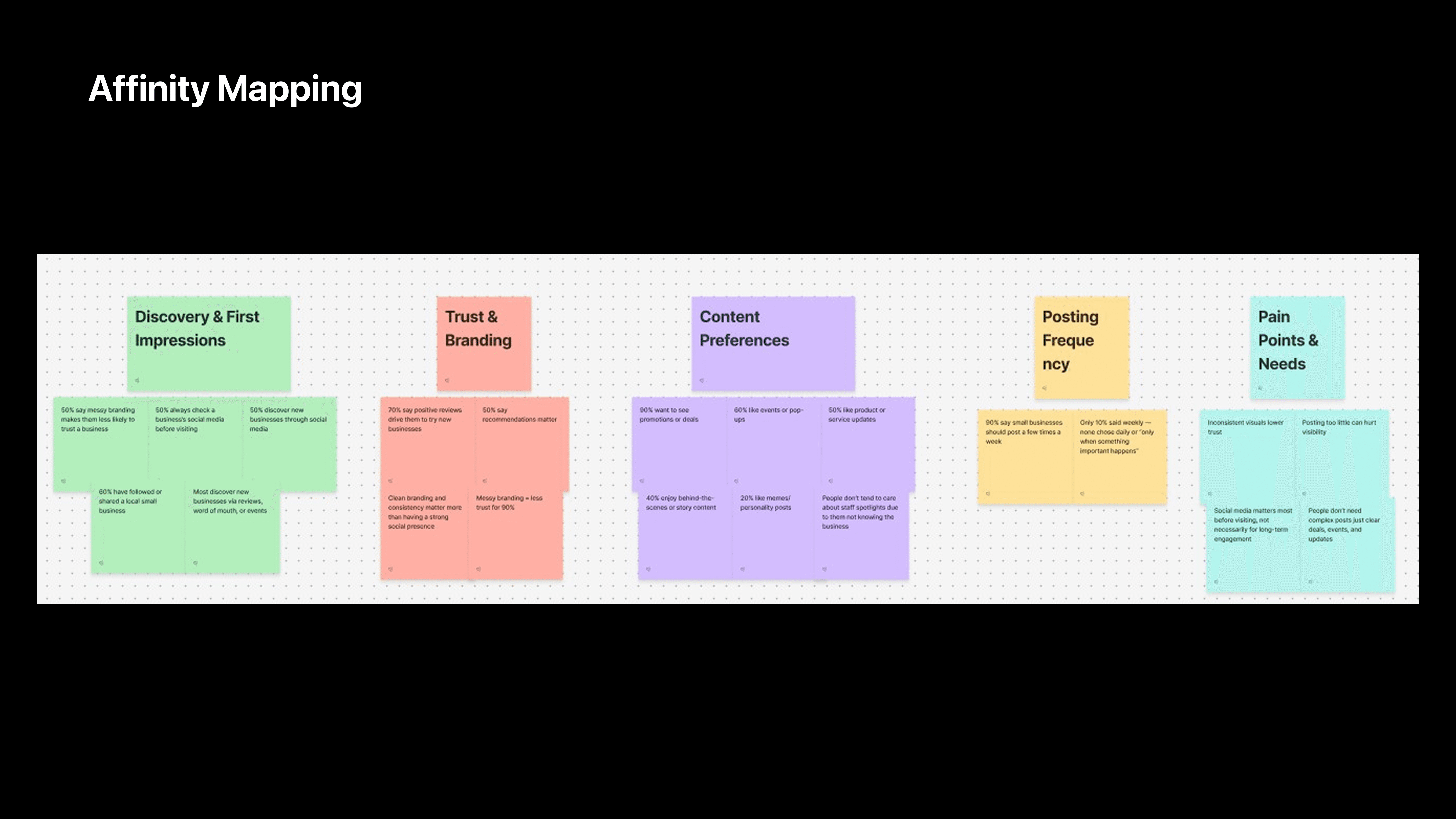
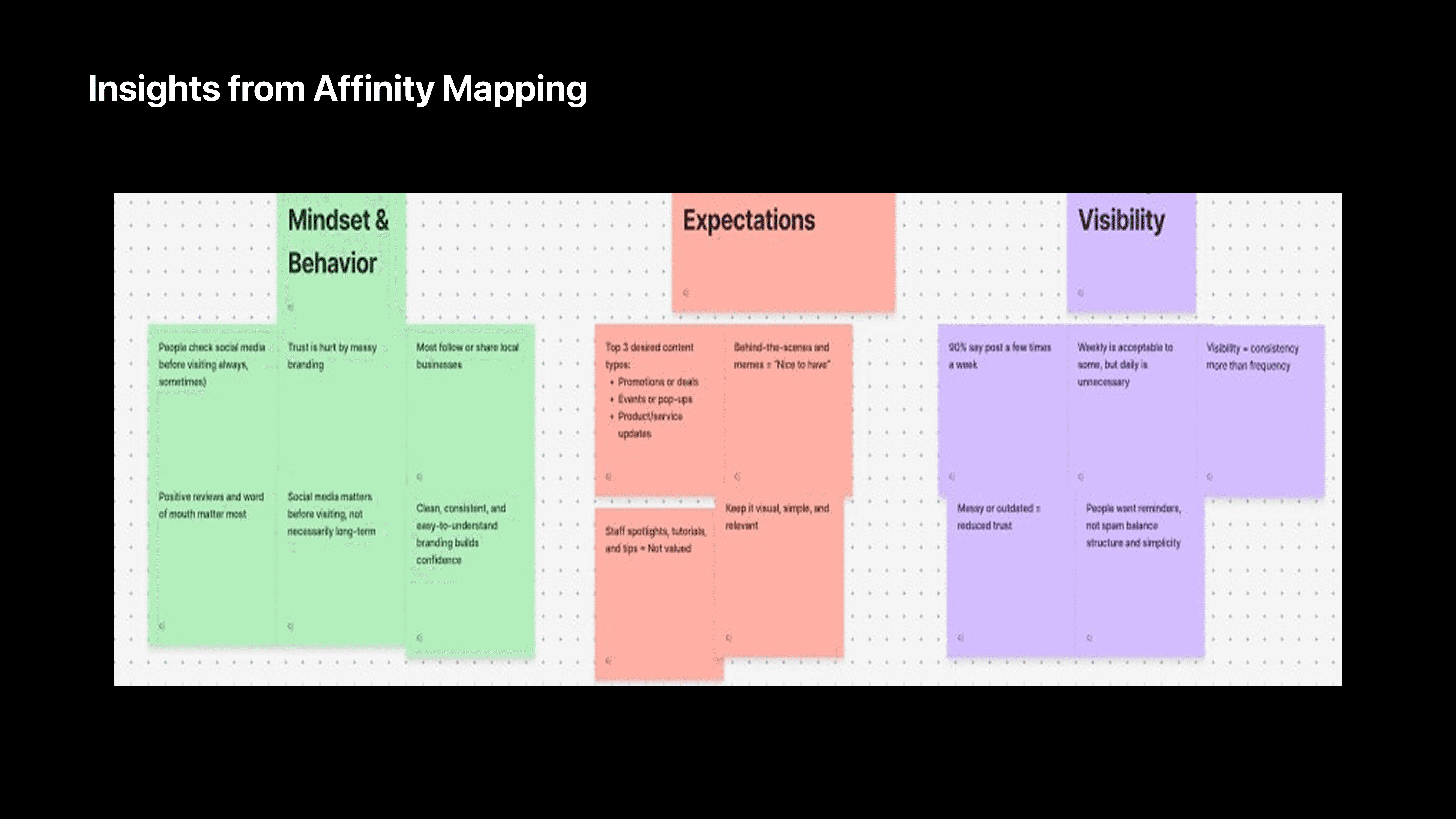
Affinity Mapping
Redefined Design Criteria
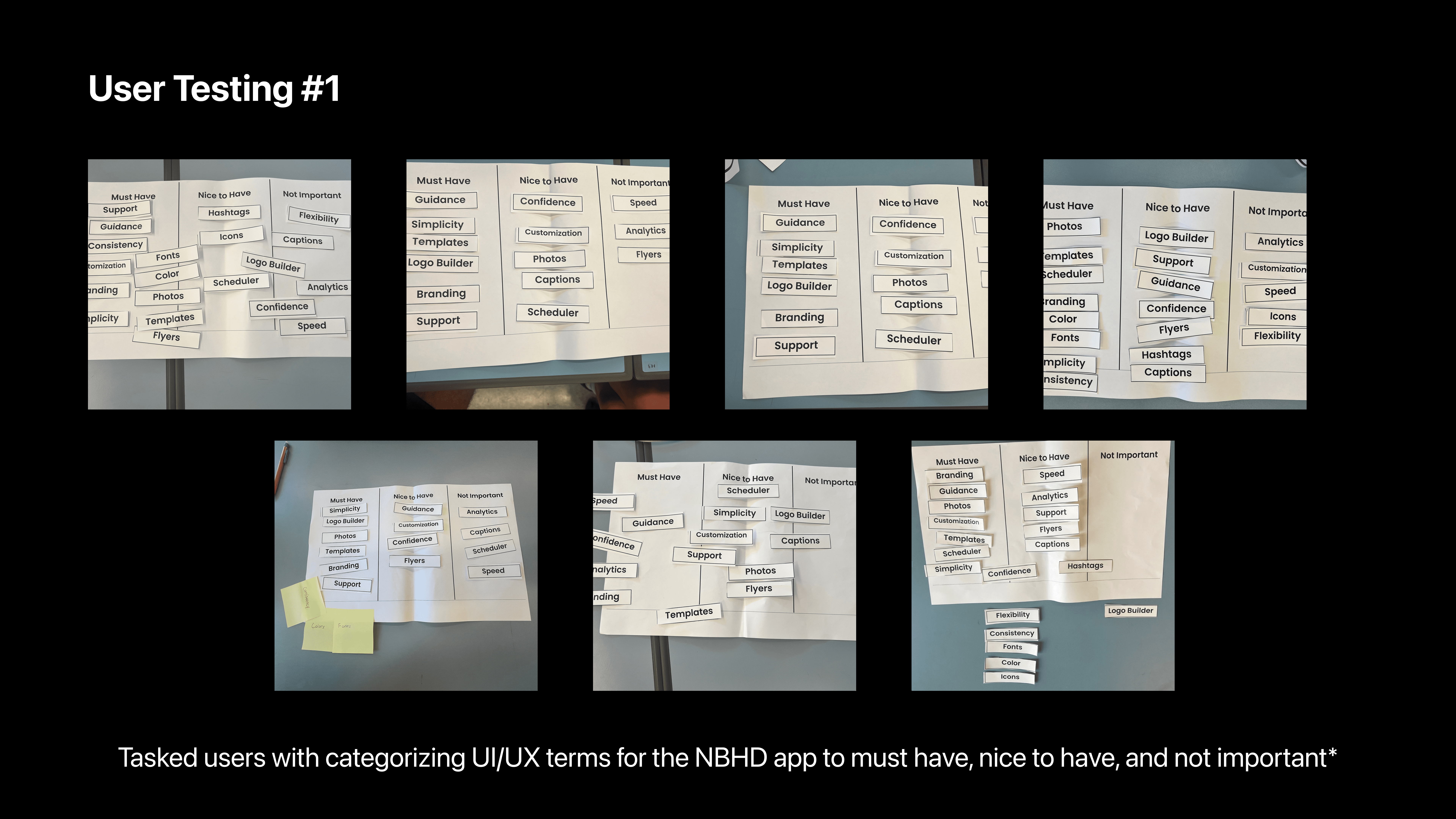
User Testing
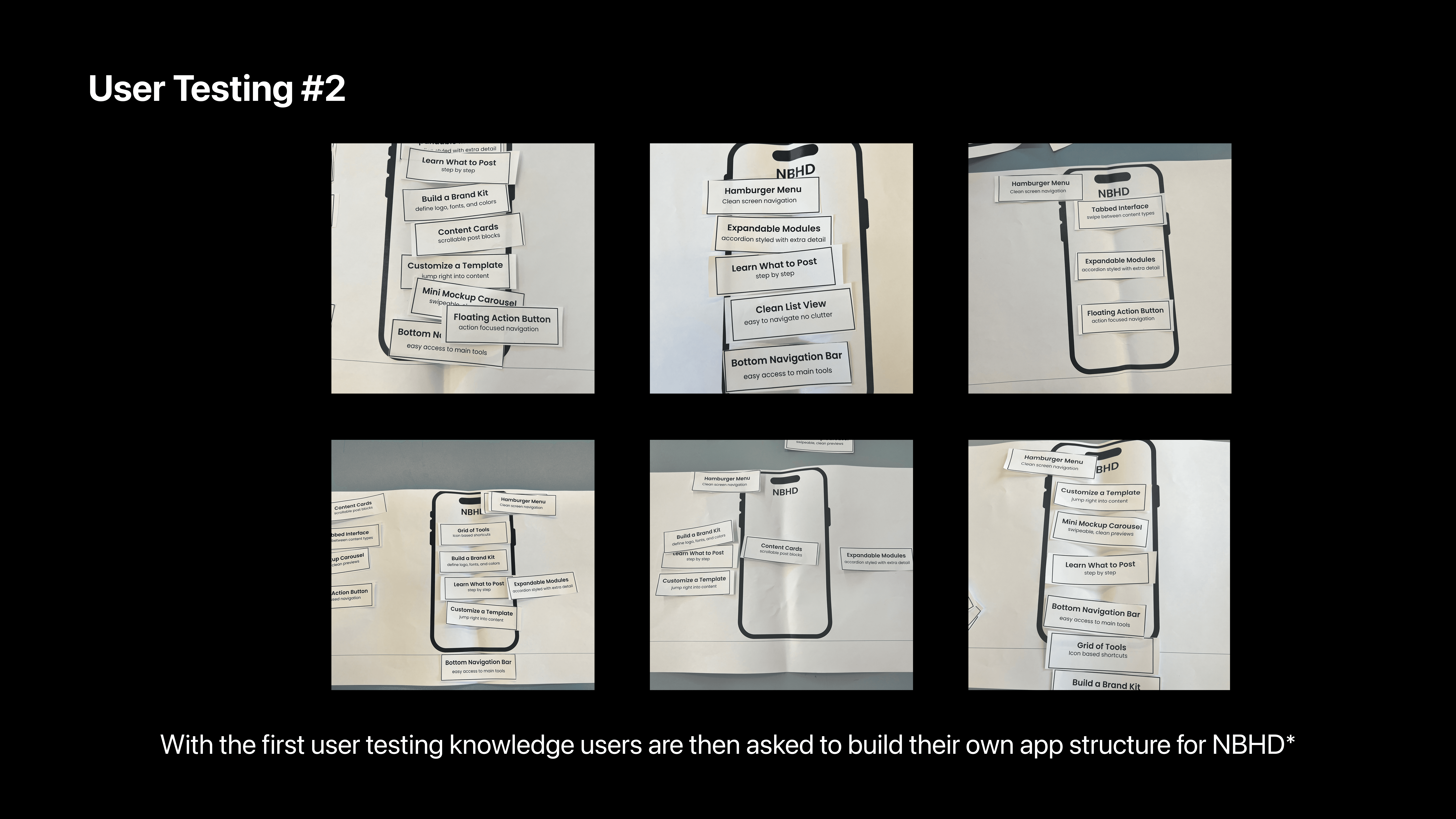
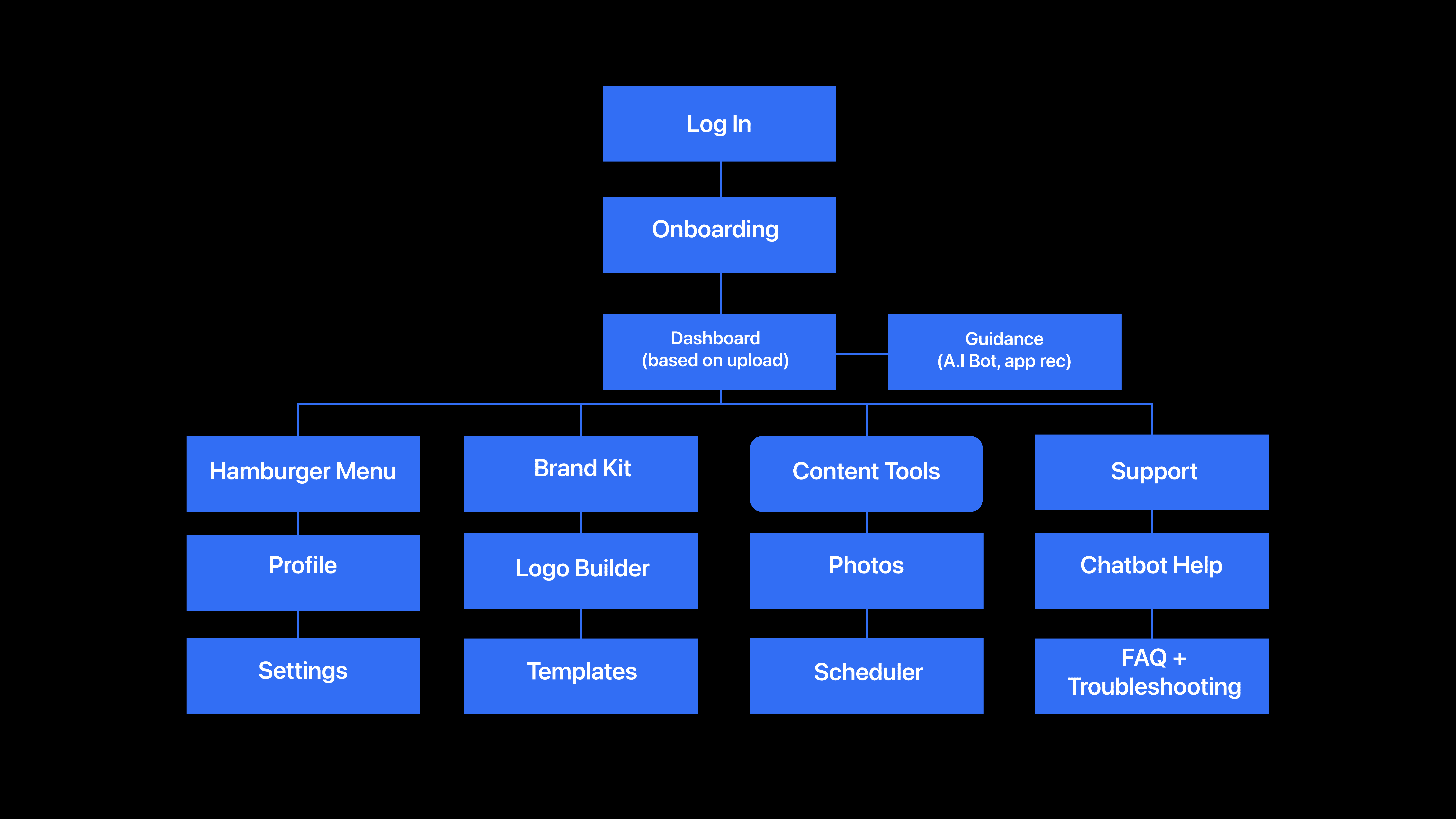
Initial Information Architecture
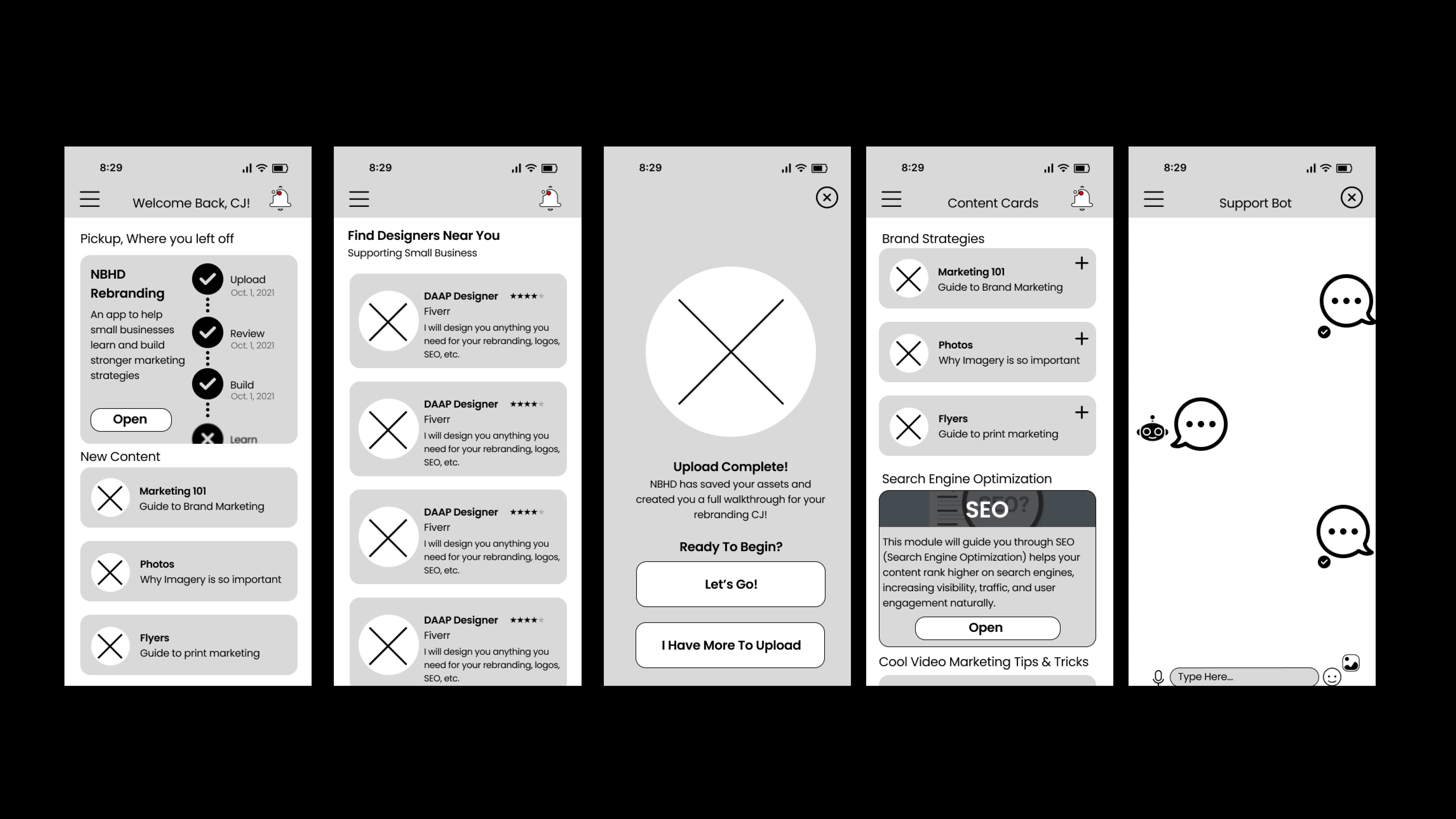
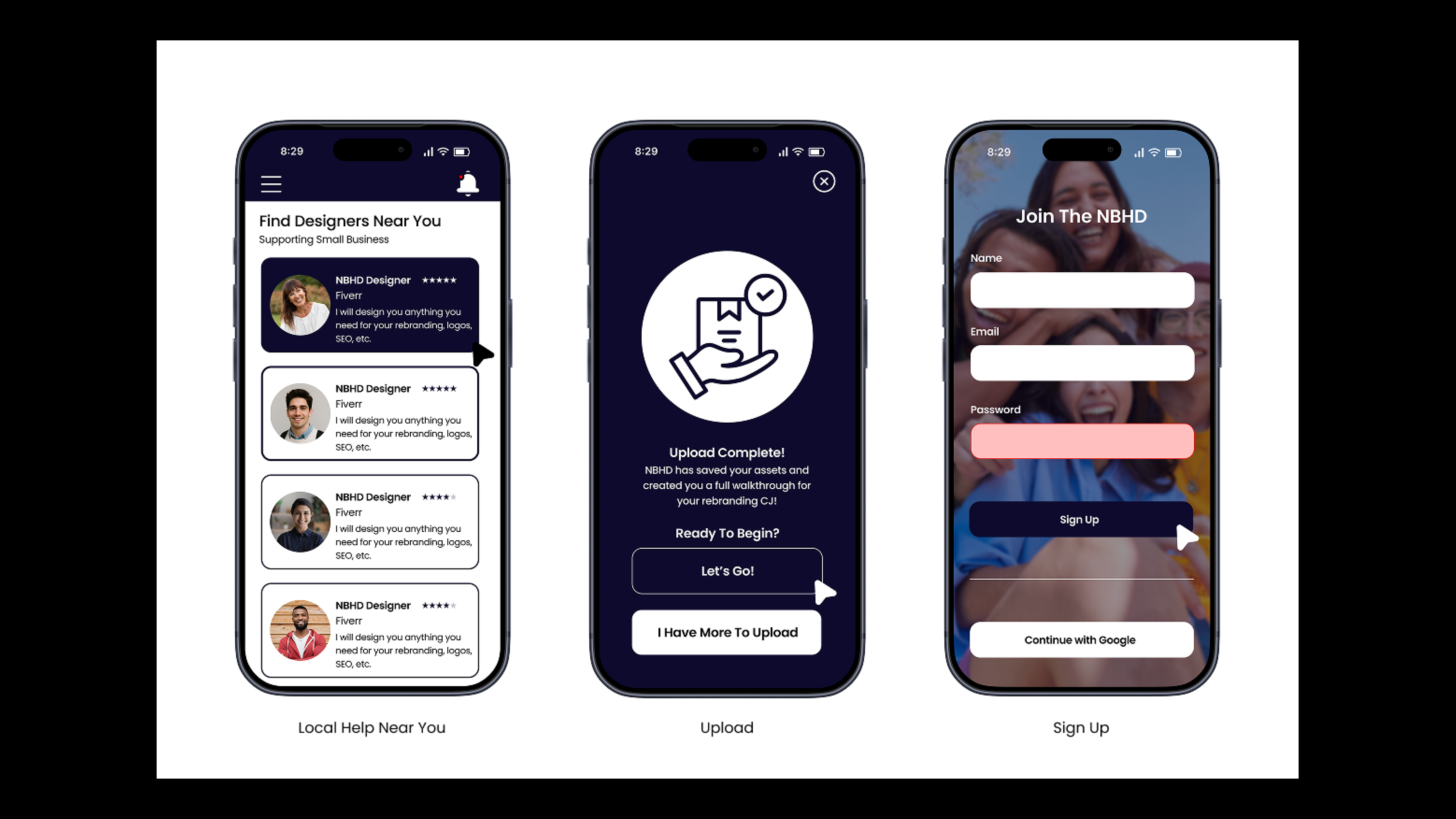
Initial Low Fidelity Digital Mockups
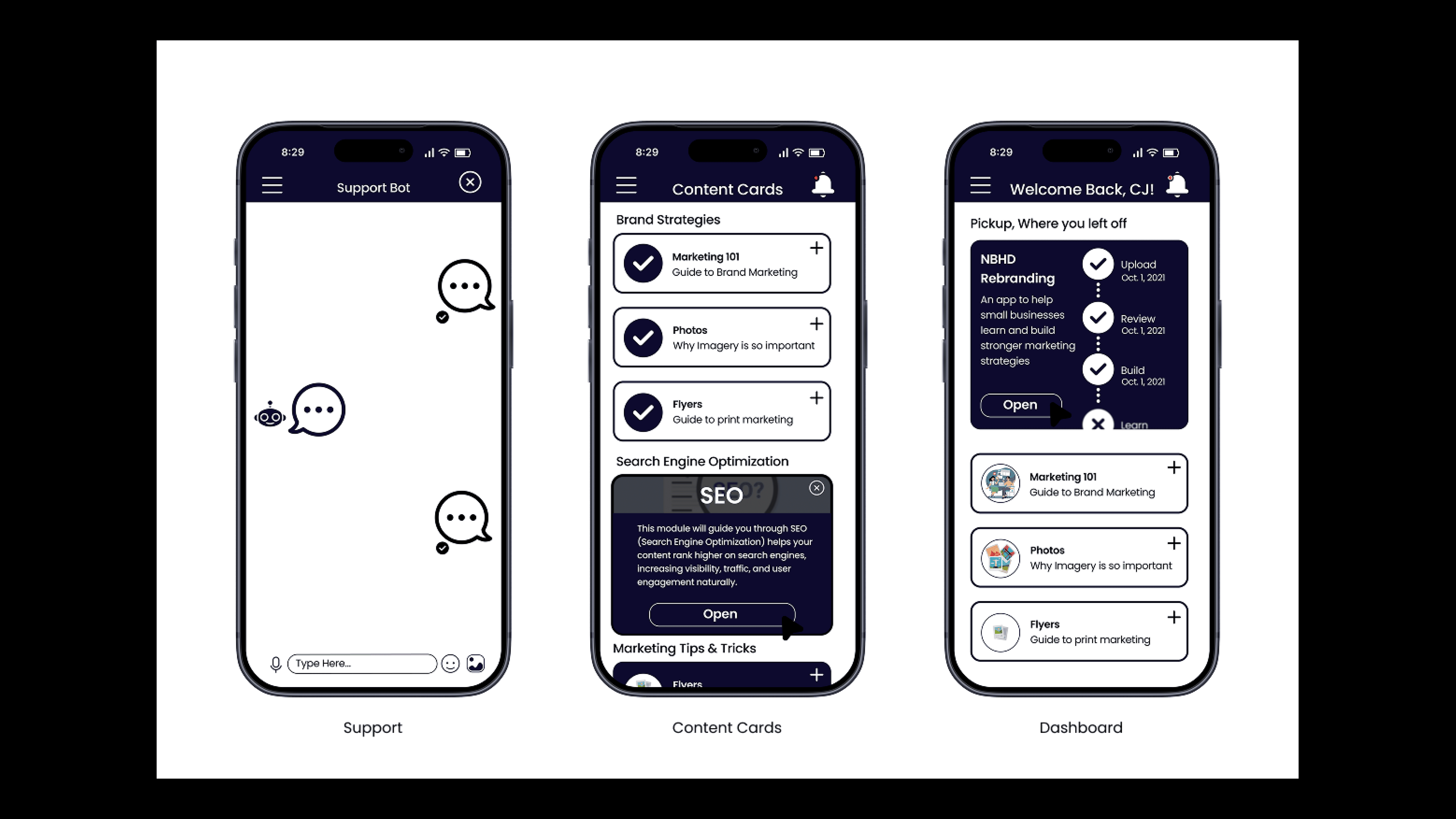
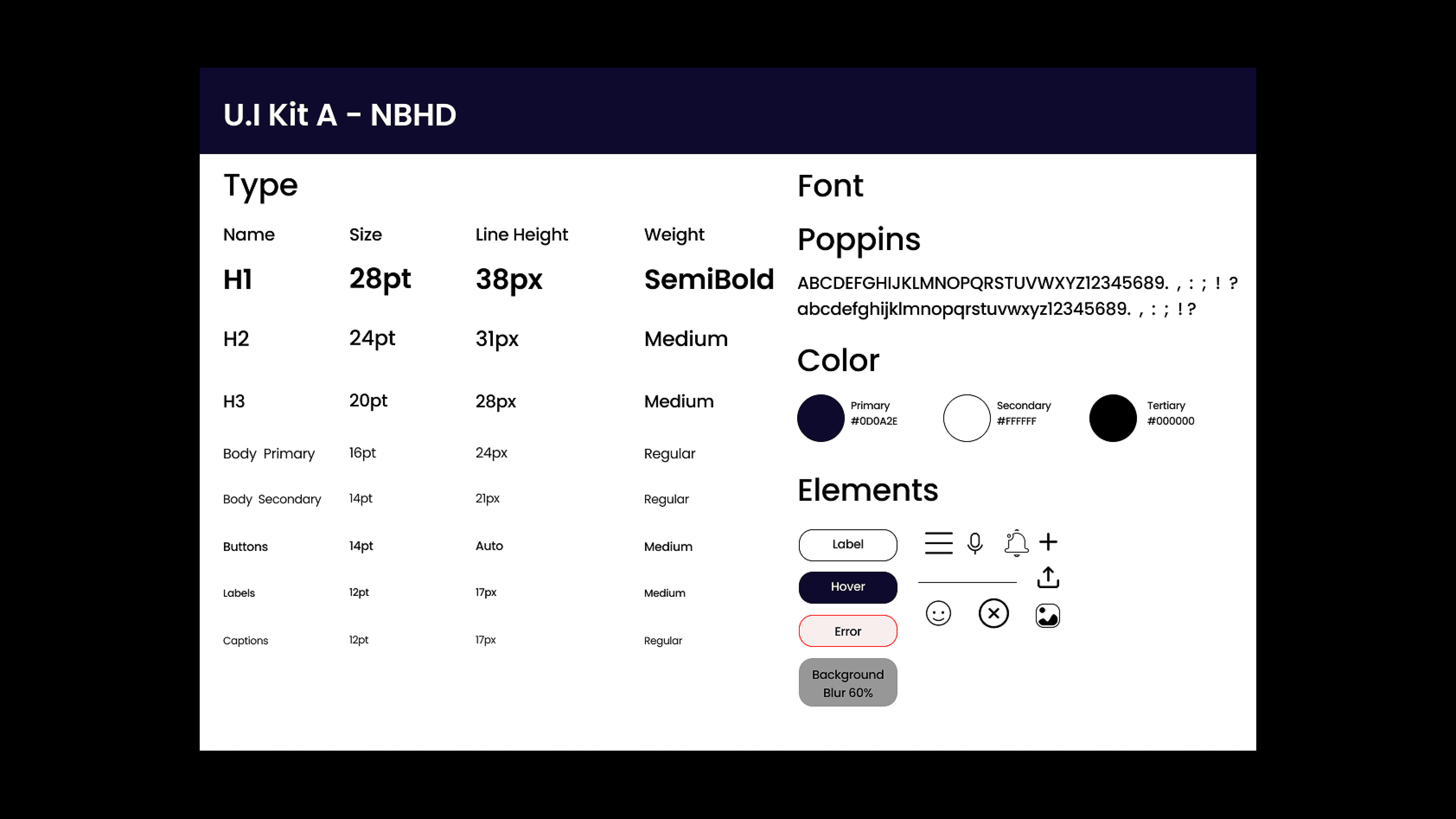
Initial Style Guide
Phase 02
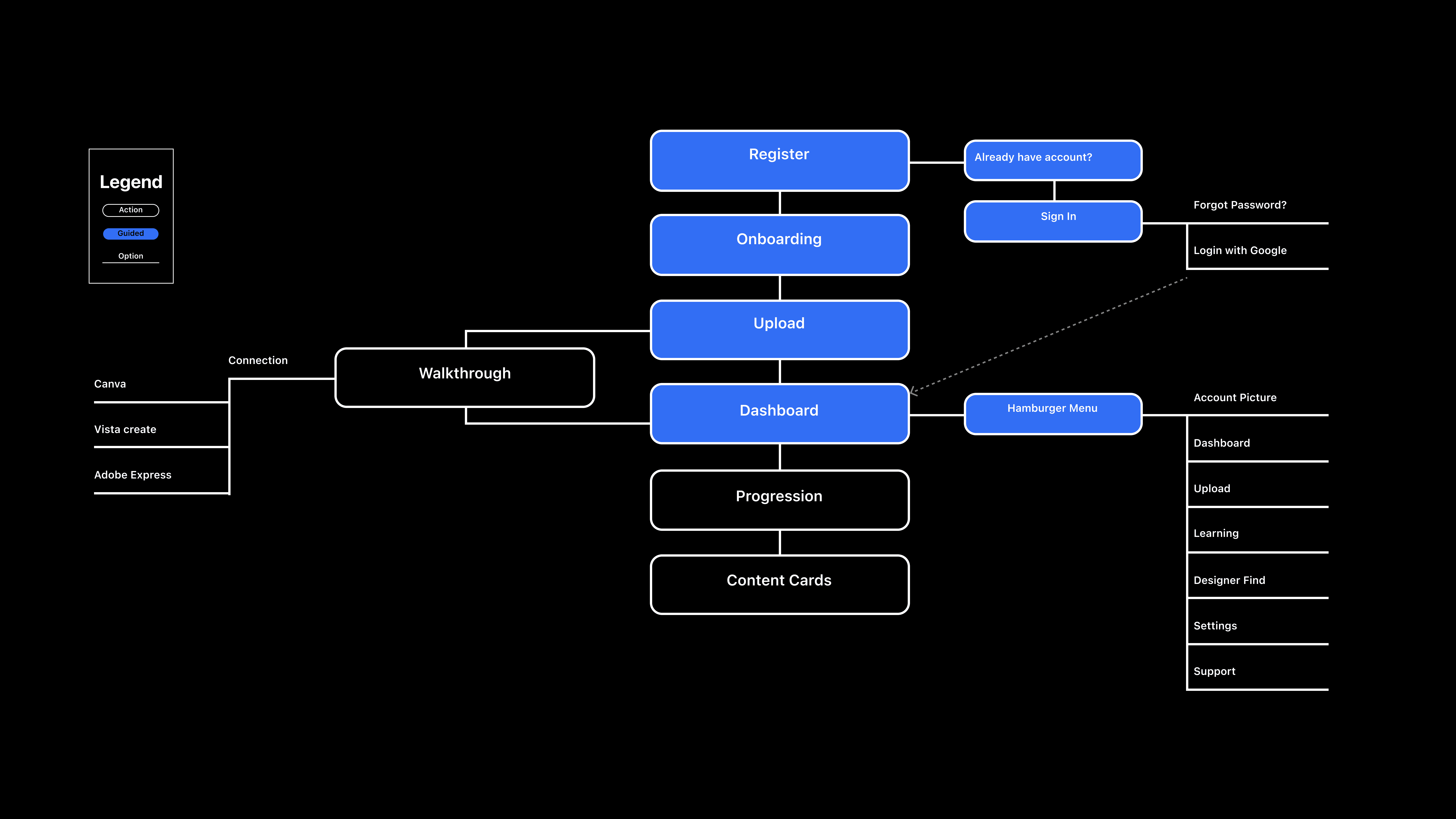
Revised Information Architecture
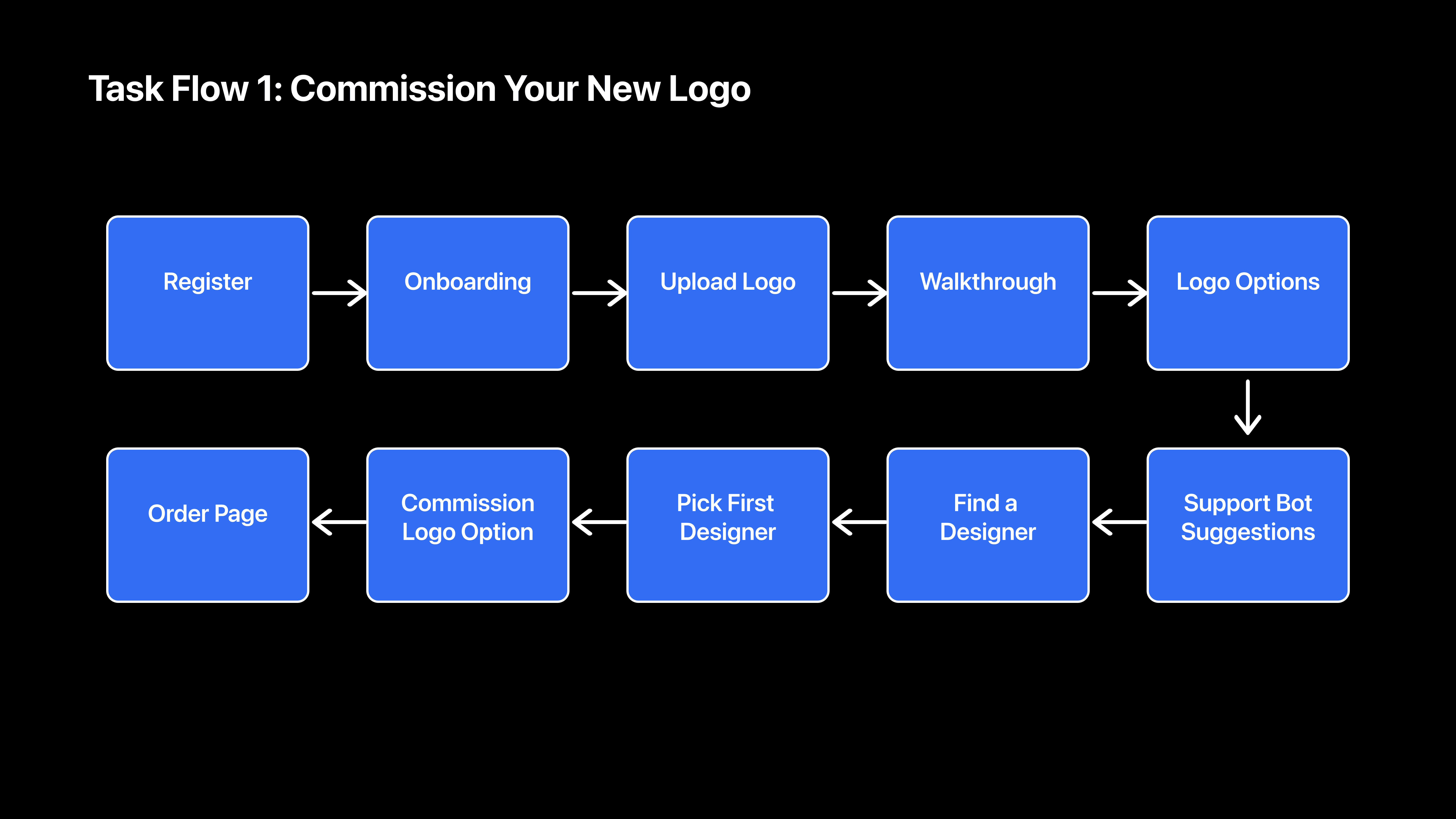
User Task Flows
Redefined UX Reflection
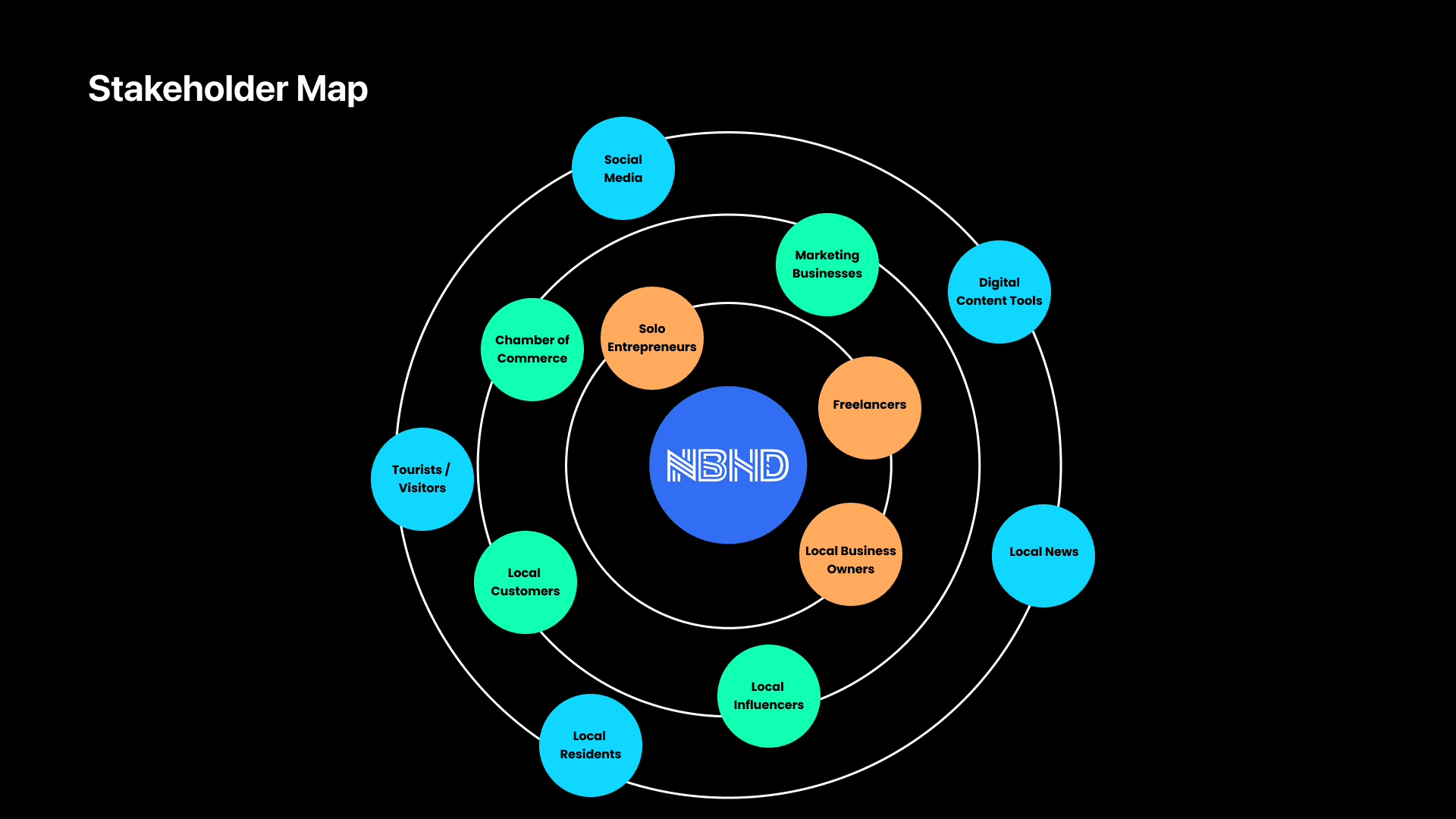
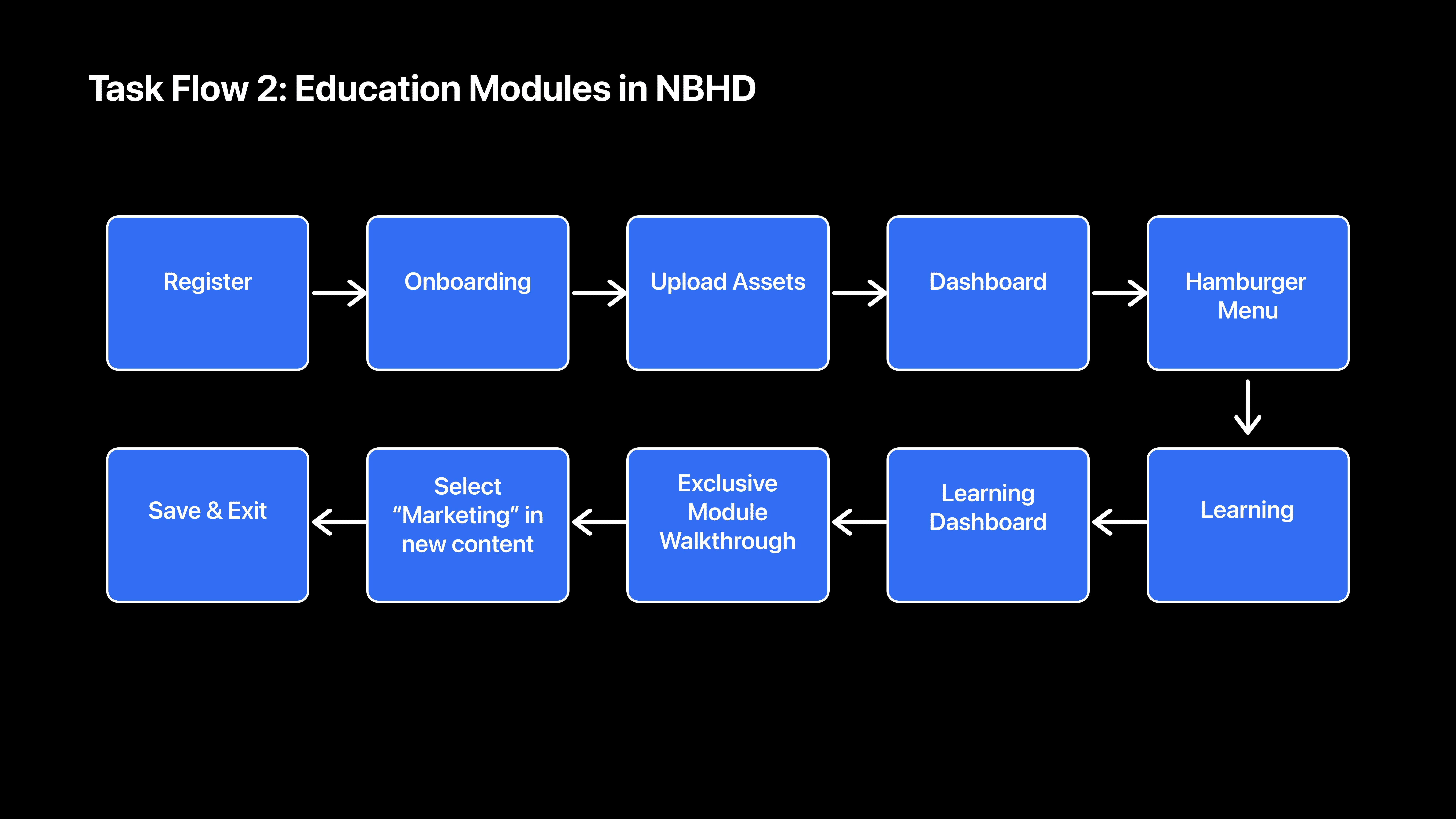
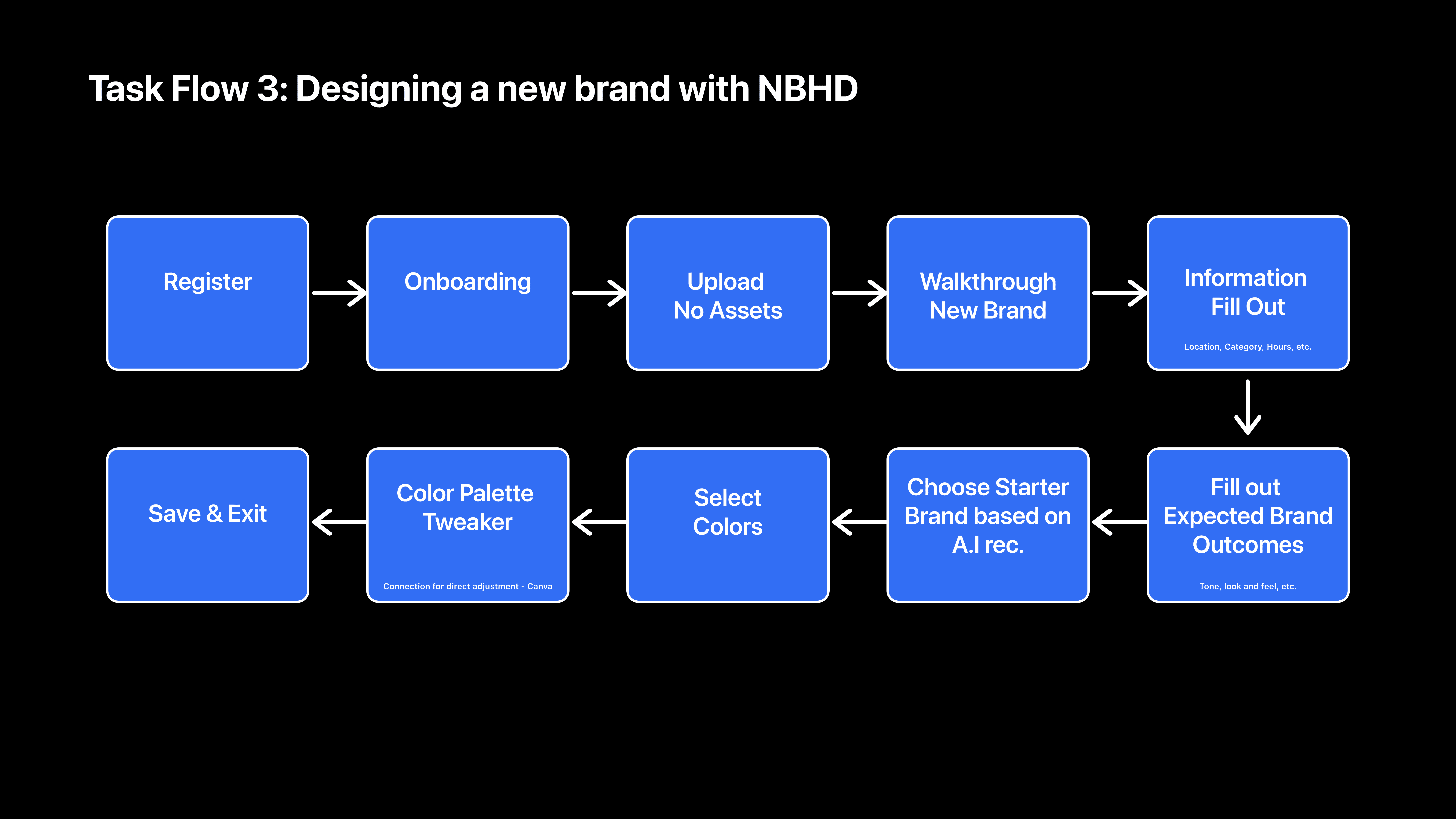
NBHD doesn't compete with tools like Canva, Adobe Express, or Figma. It integrates with them. The platform sits at the intersection of design education and professional collaboration, reducing the friction, cost, and miscommunication that small business owners face before ever hiring a designer. Through a personalized onboarding experience, NBHD uses AI to evaluate uploaded brand assets and generate actionable recommendations while giving users complete control over every decision. New and returning users receive a curated brand journey that produces usable files ready for editing across connected applications. The goal is design fluency. Before a business owner commissions a designer, NBHD ensures they understand their own brand well enough to communicate it clearly, collaborate effectively, and spend confidently. When they're ready, NBHD connects them directly with a local verified designer for one on one refinement.
The result is a continuous loop. Assets feed back into the platform, recommendations improve over time, and the brand gets sharper with every iteration. NBHD makes professional design accessible, not intimidating.
Logo

Final Logo
Logo Reflection
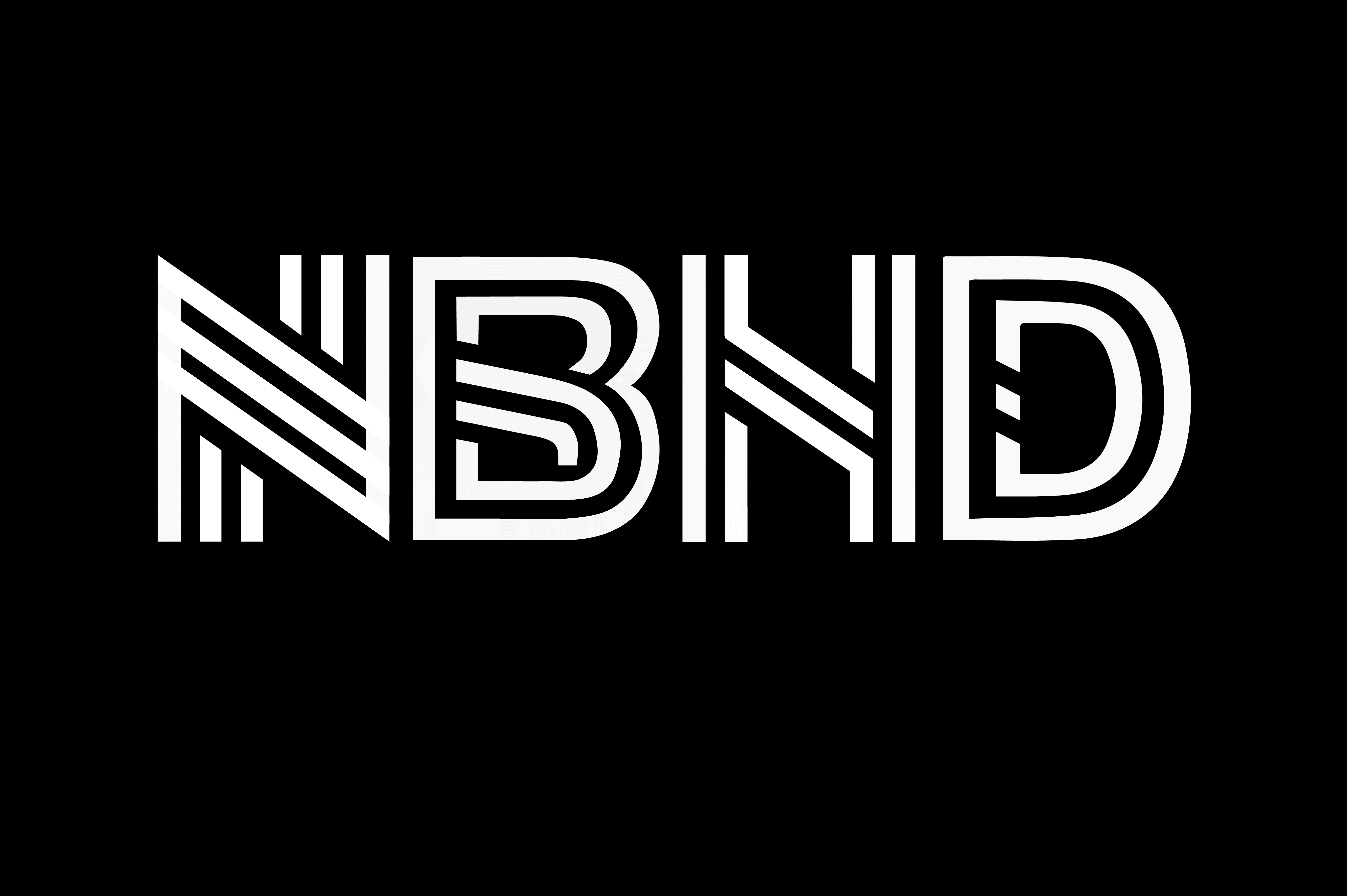
The NBHD wordmark was a month-long design process rooted in a single concept: an interlocking, community-driven mark that felt modern without being decorative. What appeared simple in concept became one of the most time-intensive parts of the project.
Post-DAAPWorks feedback revealed something unexpected. Visitors engaged with the logo more than the product itself, which prompted genuine reflection. The wordmark and the platform felt like two strong but isolated pieces rather than one unified system. The logo met every intention I set for it, but its visual strength may have worked against the broader project by drawing attention away from the UI/UX work it was meant to support.
At one point I considered pivoting the capstone entirely into a typography project to fully explore what this wordmark could become. That instinct still lingers. With more time, I would either simplify the logo development process to better serve the product, or lean into the mark fully and let it become the project. That tension is worth exploring in a "next steps" phase of NBHD.
Phase 03
Revised Style Guide
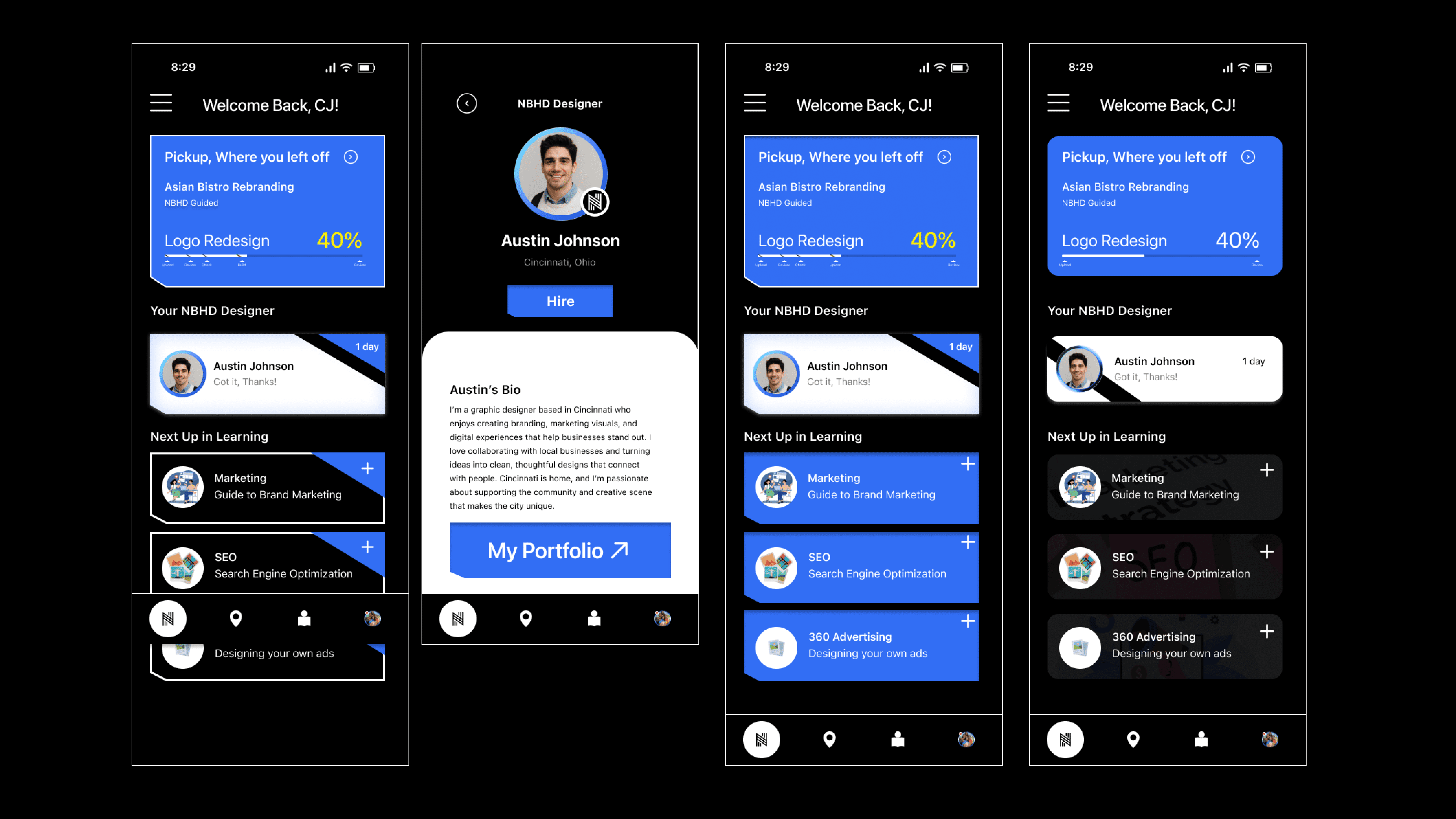
Revised Mobile Mockups
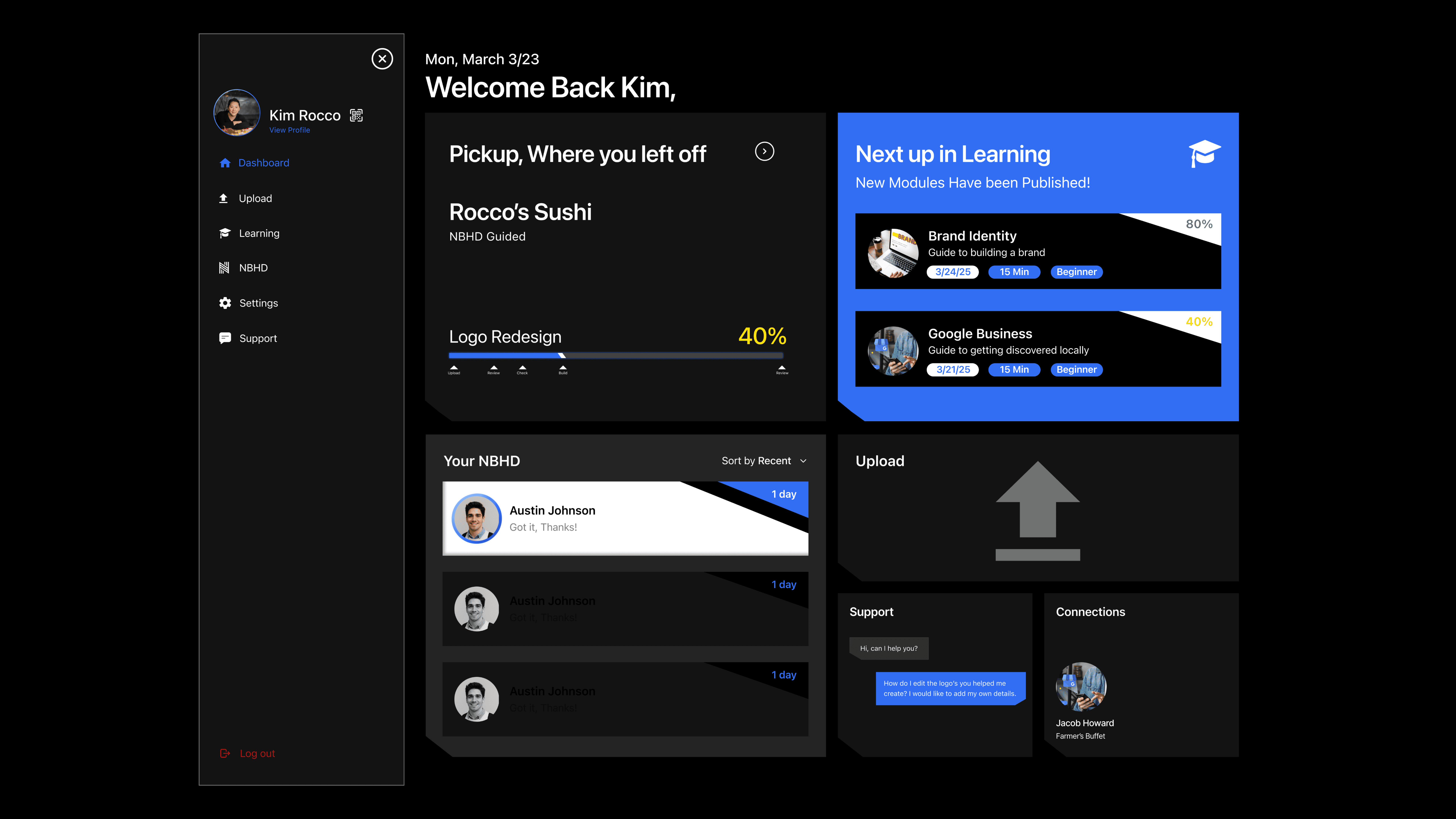
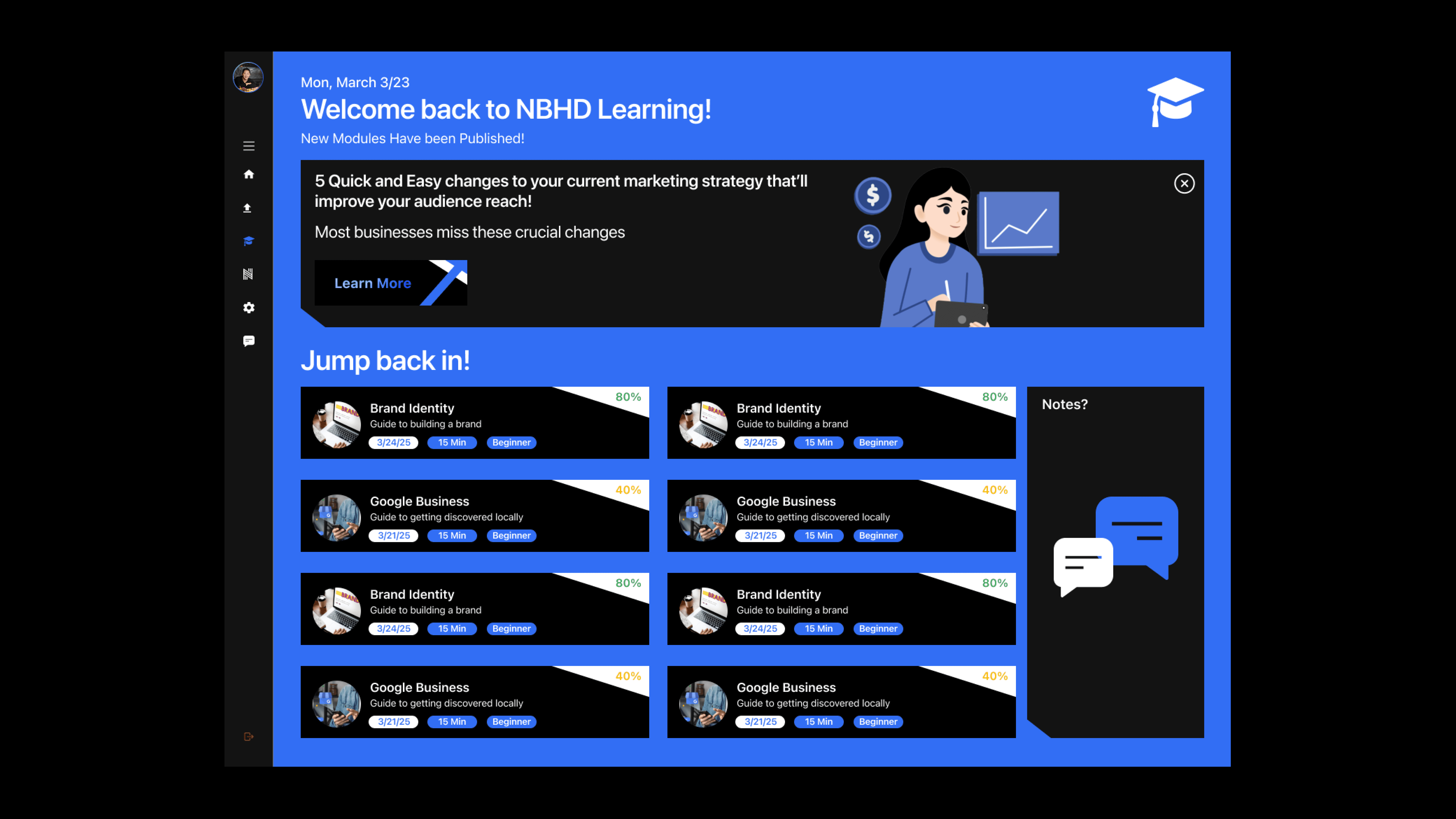
Desktop Mockups

Final Style Guide
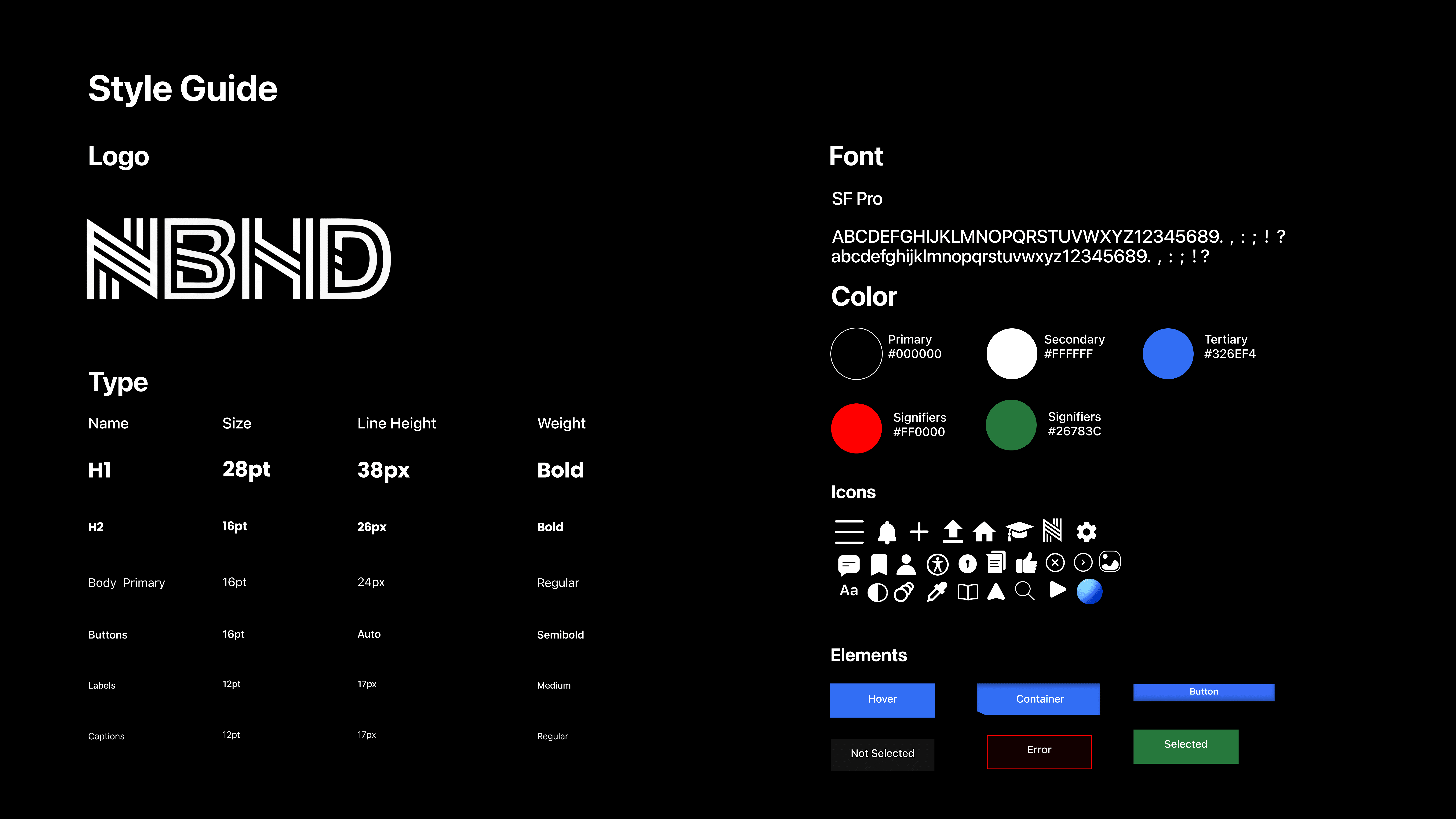
Revised Visual System Reflection
As DAAPWorks approached, the focus shifted to identifying the most impactful way to communicate NBHD rather than building everything at once. In-class critique feedback raised a valid point: not every business owner works primarily from a mobile device, and most original brand asset files live on a desktop computer rather than a phone.
Rather than designing two separate UI systems for mobile and desktop, a more efficient solution emerged. NBHD's AI simply recognizes assets from a mobile photo, meaning an owner can photograph files directly from their computer screen during onboarding. As long as they hold the copyright, NBHD builds their experience from that image. The need for a dedicated desktop application becomes secondary.
This compromise actually strengthened the core UX principle behind NBHD: the platform should be simple, approachable regardless of design knowledge, and efficient in delivering results. Desktop integration remains a next steps consideration, but the photo-based asset recognition made the mobile experience more complete.
Final Mobile User Interface Screens
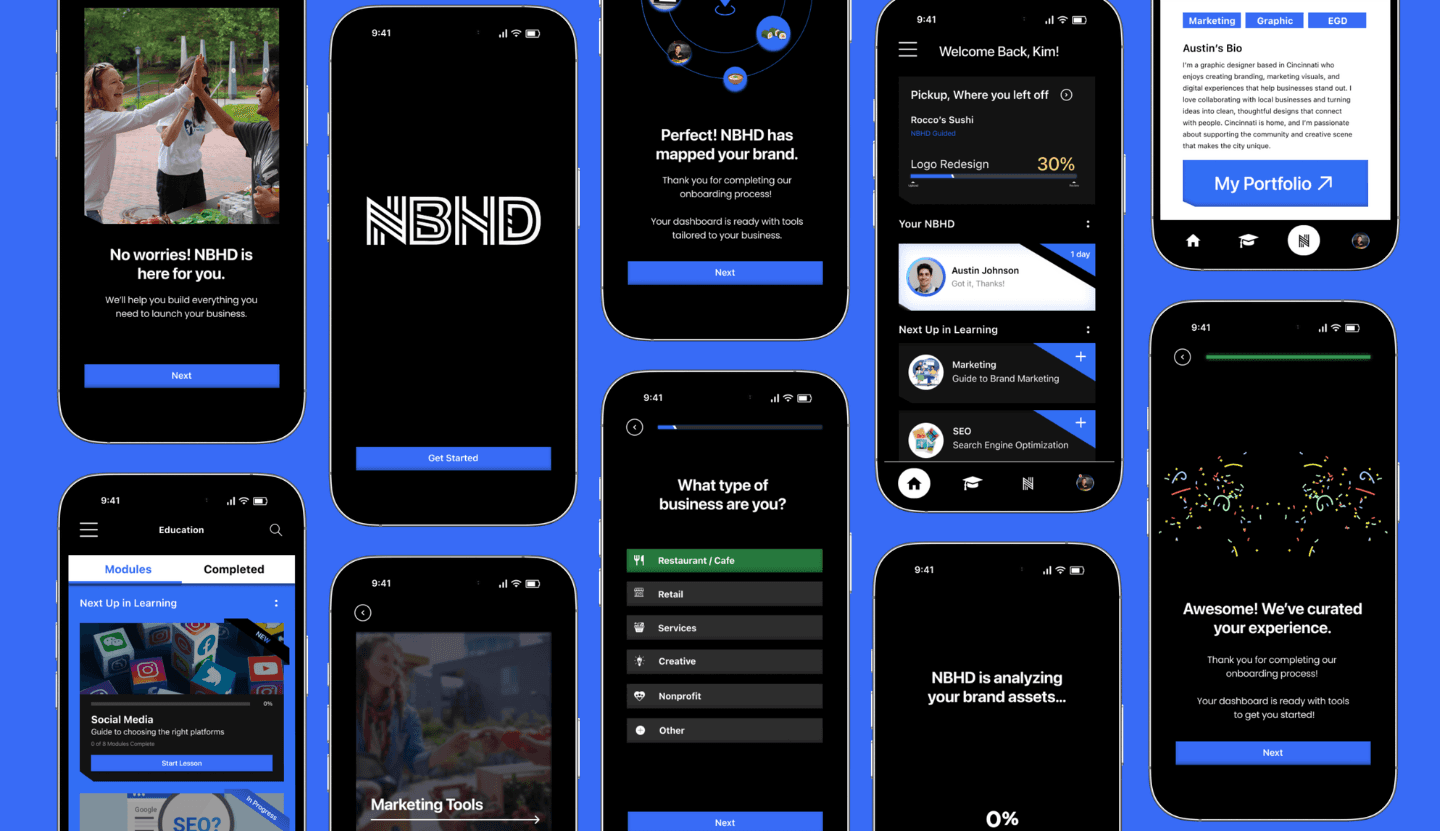
Experience NBHD for yourself
Next Steps
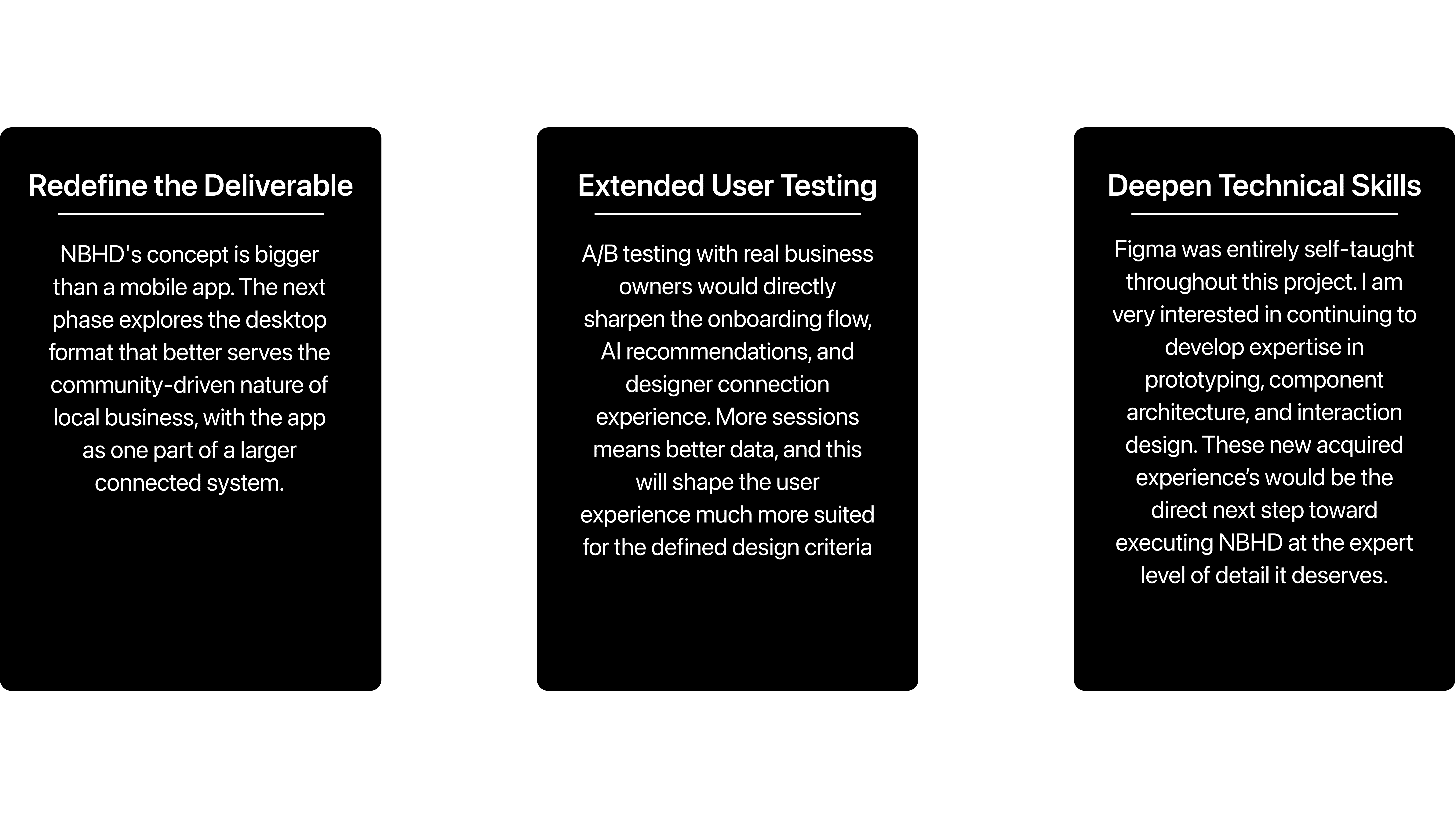
NBHD was one of the most challenging and rewarding projects of my academic career. The research process was thorough and grounding, with insights gathered from several participants, business owners, and designers that validated the platform's core purpose. But the honest truth is that the scope of this project grew beyond what one person could fully execute in a single semester for the UI/UX development, and that tension shaped every phase of the work. What surprised me most was how impactful the concept became. What started as a throwaway idea in my notebook turned into something I genuinely believe has real potential with more development time. I have already outlined the next steps I would take if I were to revisit and continue this project.
Project Highlights