Role
Tools
Timeline
Problem Space
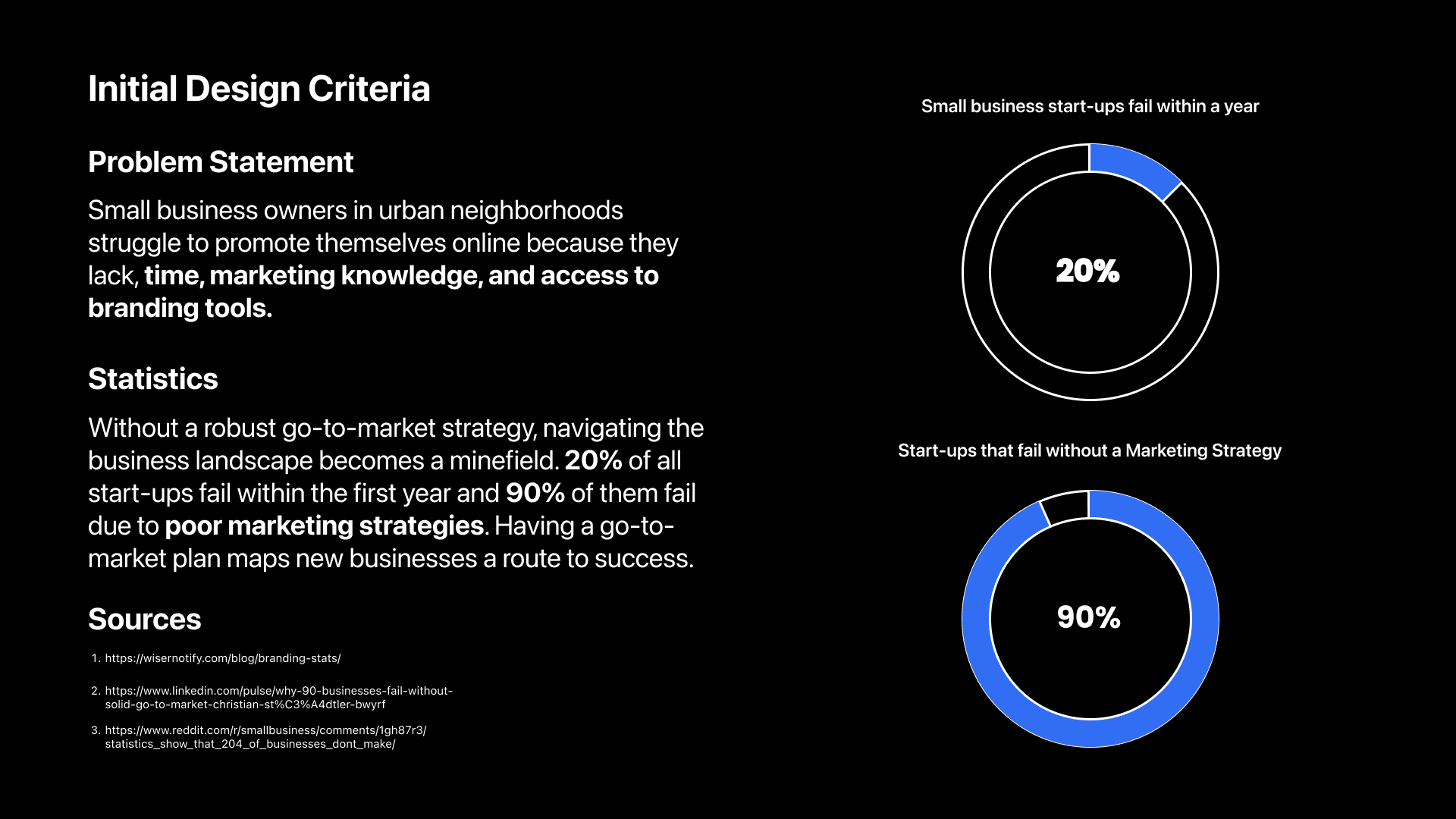
Small business owners in urban neighborhoods often struggle to promote themselves online due to limited marketing knowledge, time constraints, and lack of access to effective branding tools. Without a clear go-to-market strategy, many businesses fail to reach their intended communities. Nearly 20% of startups fail within their first year, and ineffective marketing strategies contribute to nearly 90% of startup failures.
Design Solution
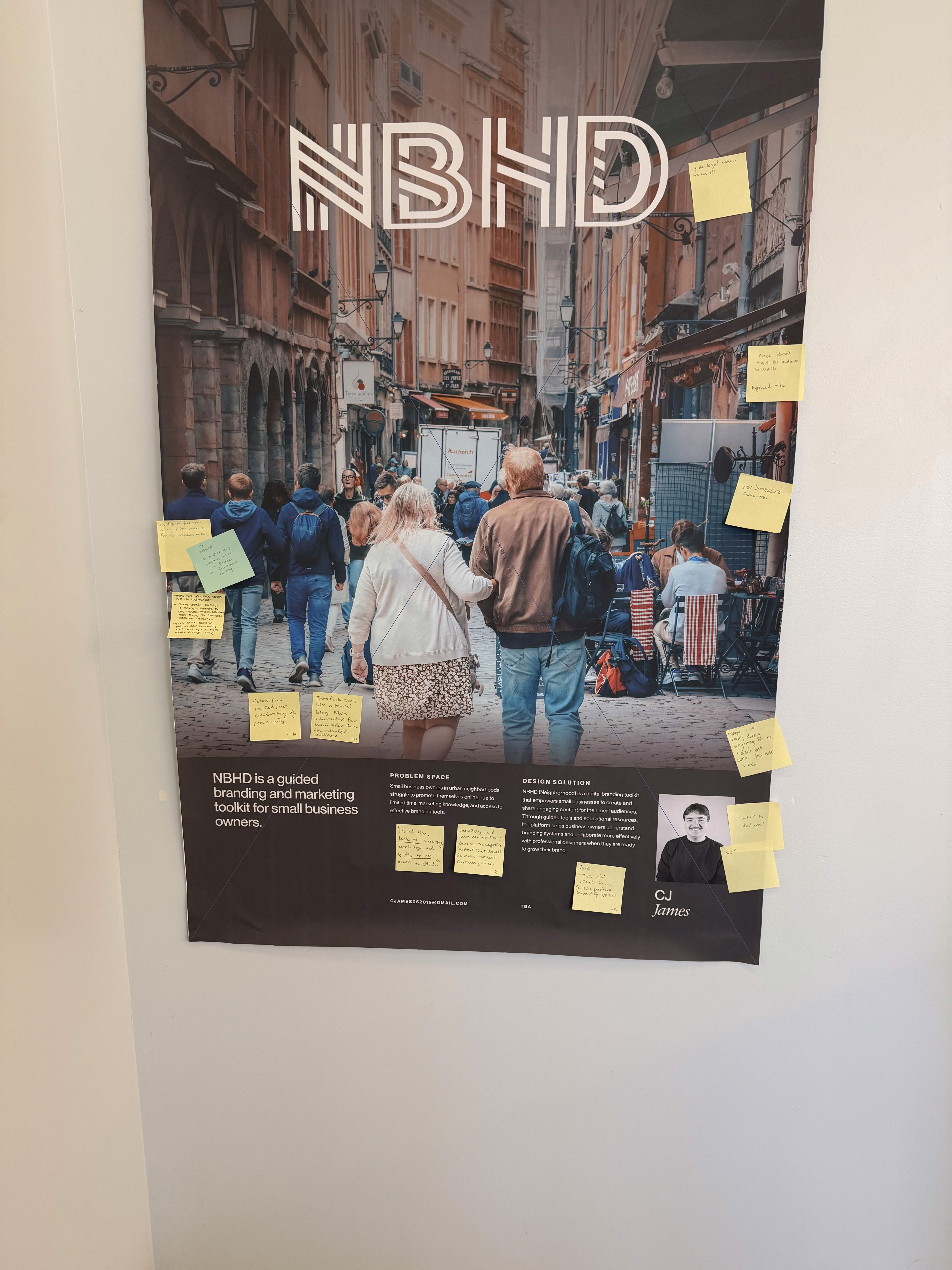
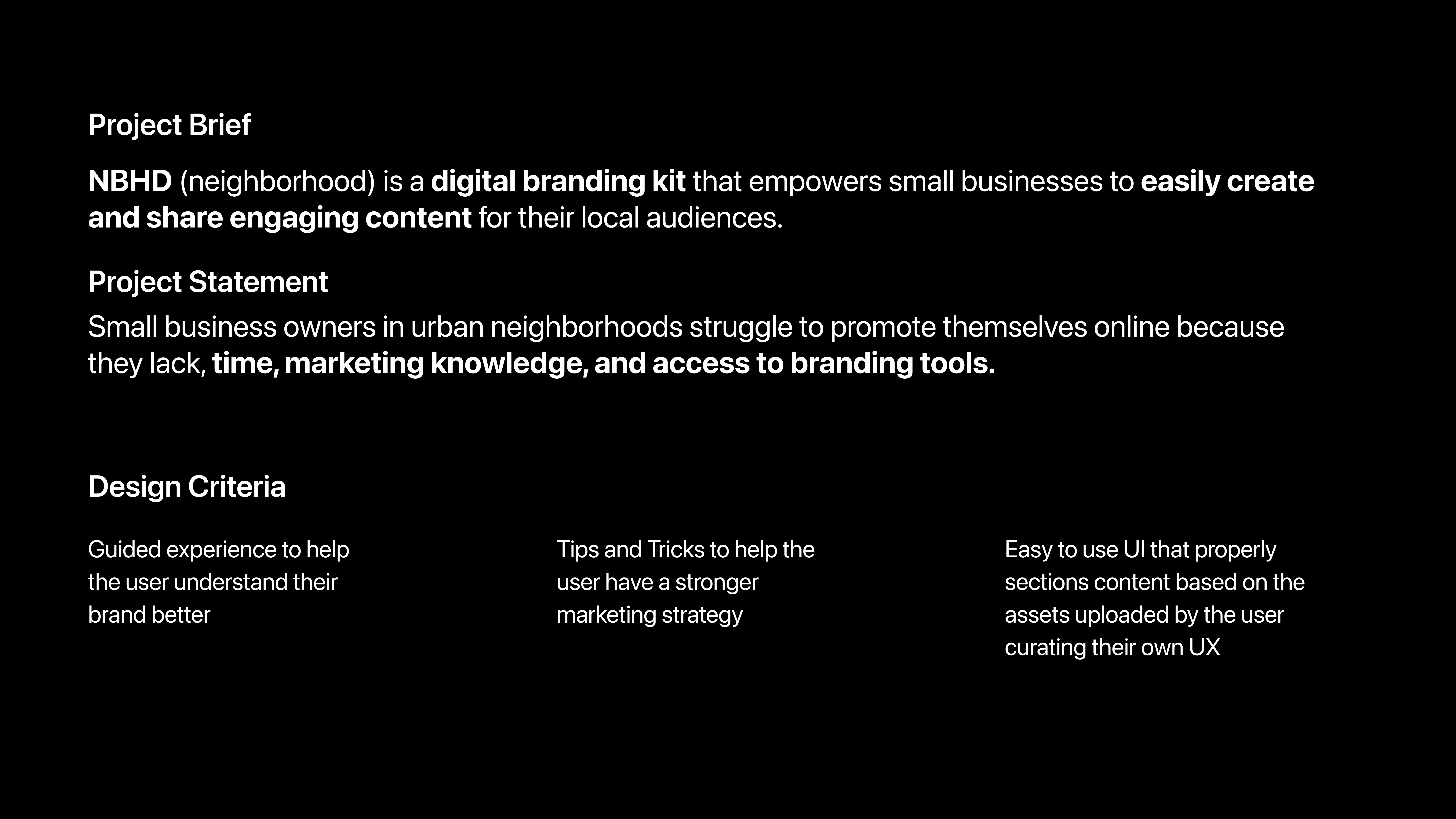
NBHD (Neighborhood) is a digital branding toolkit that empowers small businesses to create and share engaging content for their local communities. Through guided tools and educational resources, the platform helps business owners understand branding systems and collaborate more effectively with professional designers when they are ready to grow their brand. This will result in more effective marketing strategies and improved long-term success for small businesses.
Phase 01
Secondary Research
Design Constraints
Intended Outcomes
Why These Outcomes?
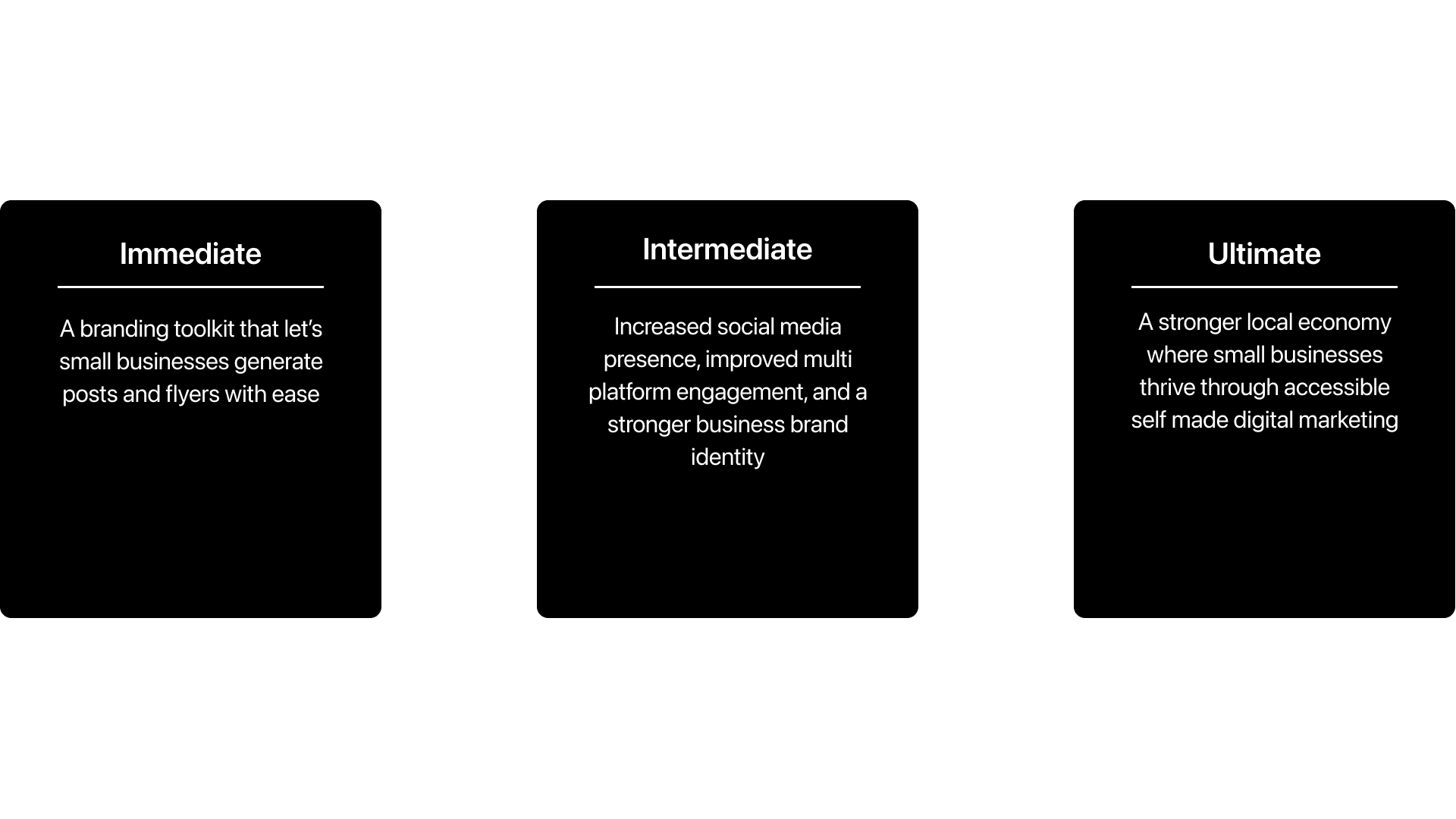
These outcomes are staged intentionally, because small business owners don't need a complete branding overhaul overnight, they need something usable right away that can grow with them. The immediate outcome gets a business owner producing consistent, on-brand content without needing design expertise or a big time investment. From there, that consistency compounds: better content leads to stronger engagement and a more recognizable presence across platforms. The ultimate outcome reflects why NBHD exists in the first place, not just better-looking posts, but small businesses that are genuinely more competitive and self-sufficient in how they market themselves, strengthening the local economy around them.
Benchmarking Local Businesses
Benchmarking Reflection
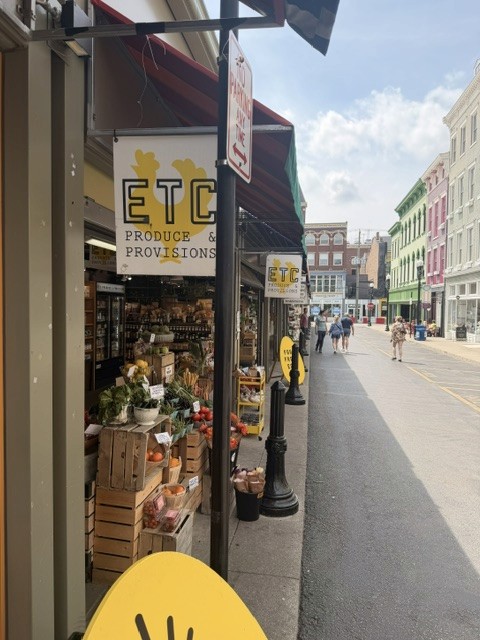
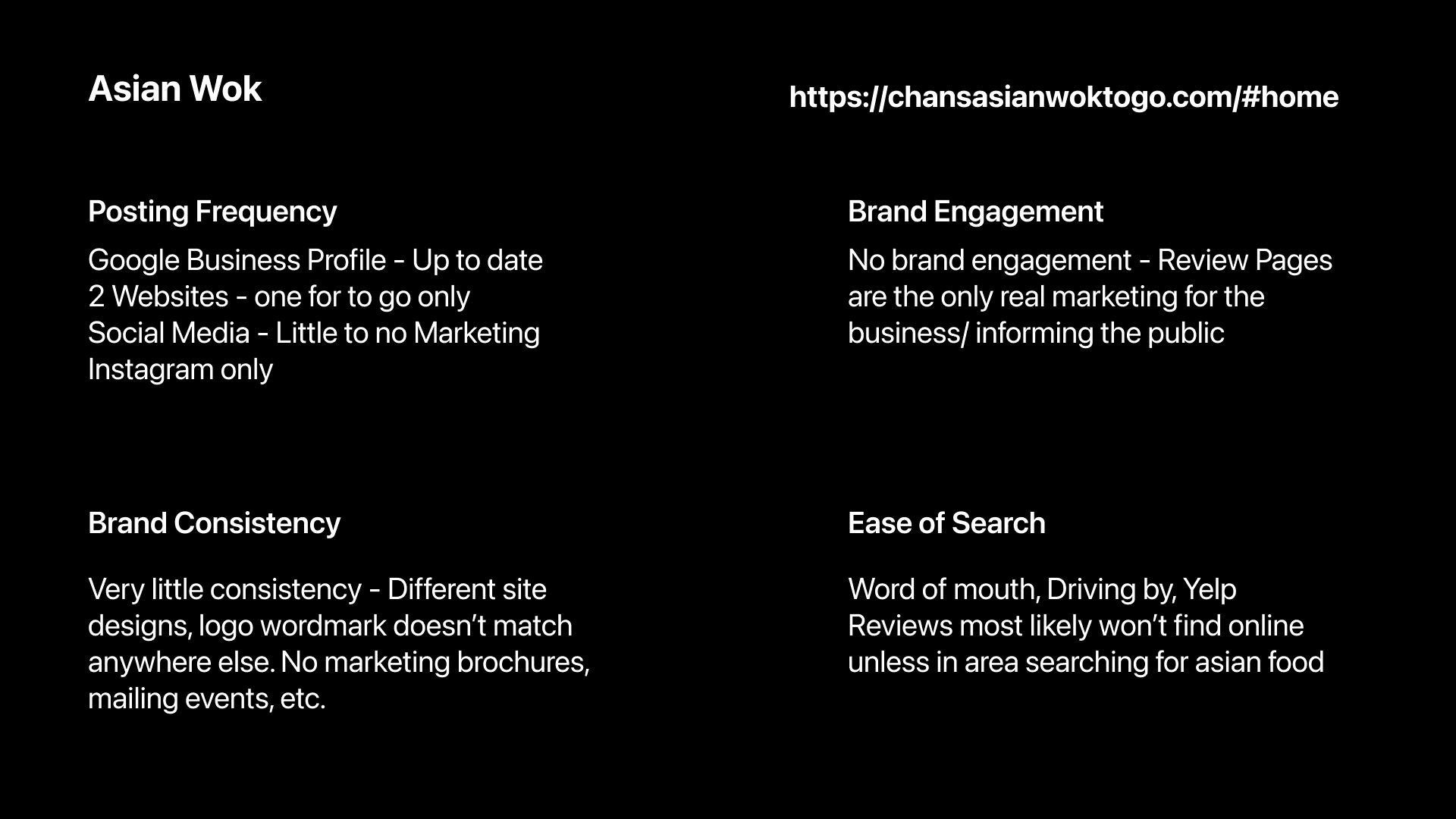
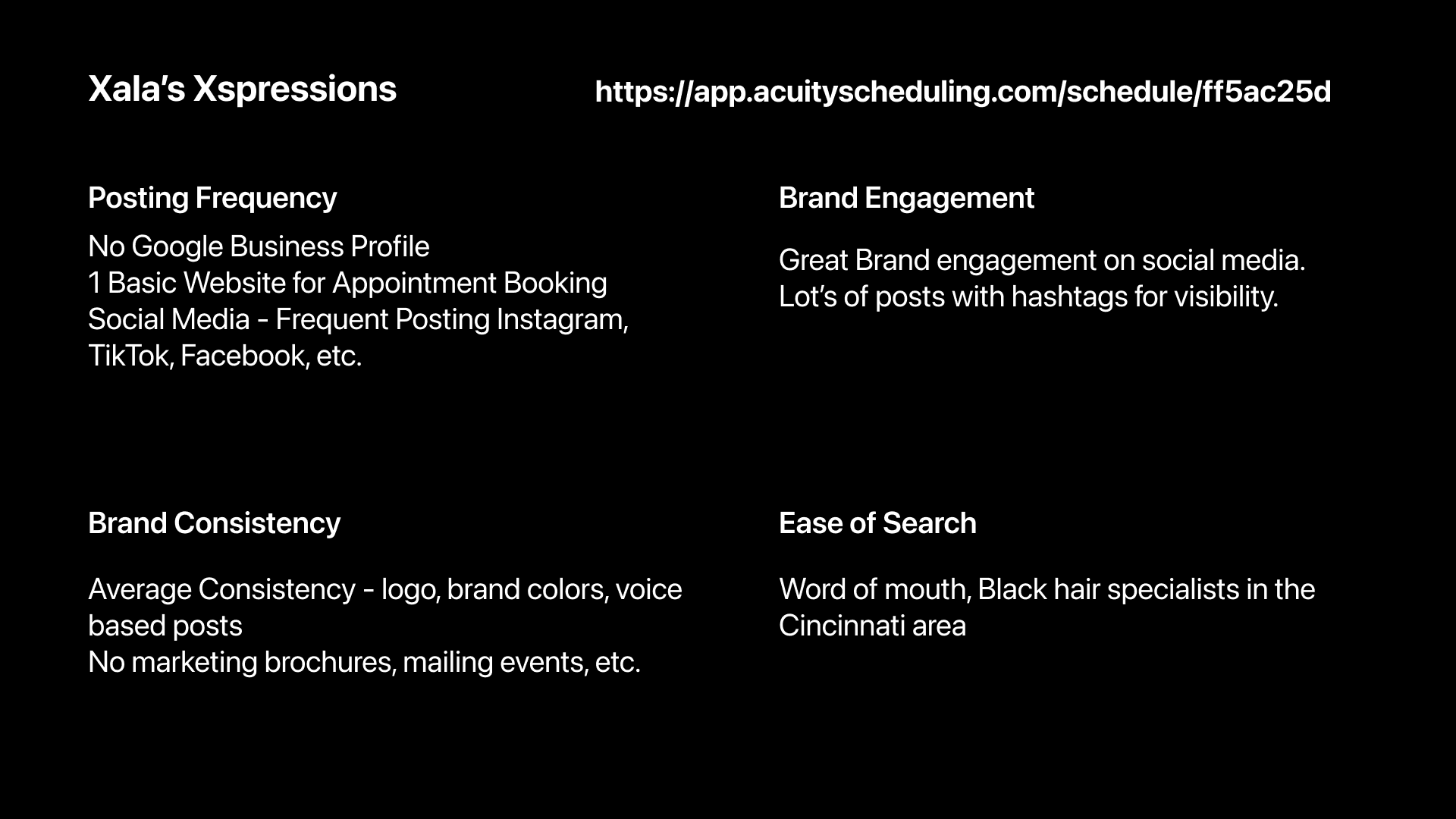
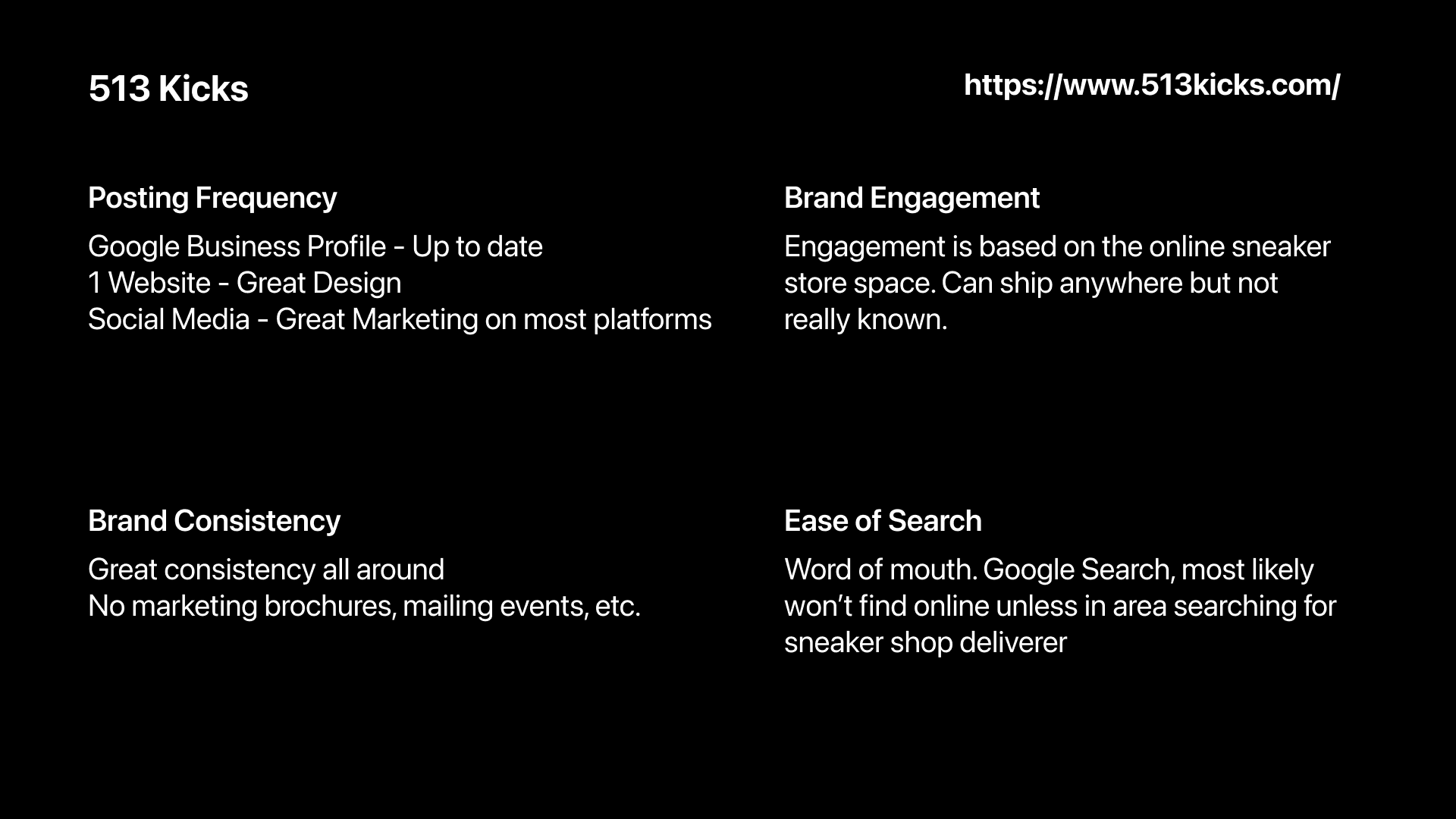
Local businesses like my benchmark examples each have an online presence, but none of them have a cohesive one. Inconsistent branding, limited social media activity, and poor search discoverability make it difficult for customers to find them unless they already know where to look. The problem is not effort, it is the lack of tools and knowledge to turn that effort into a strategy that actually works.
Key Competitor Benchmarks
Primary Research
Online Survey Results
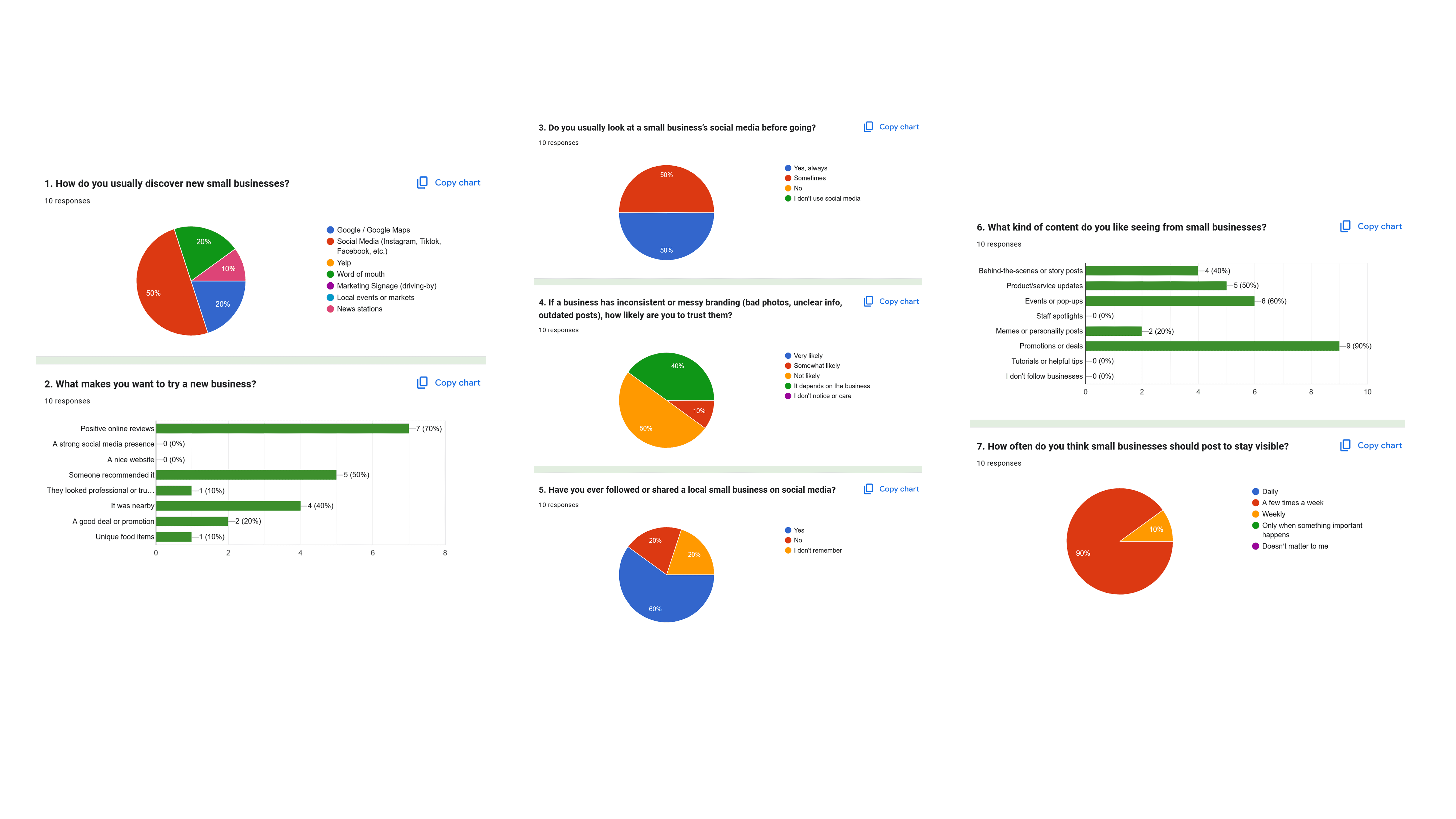
Online Survey Insights - 15 Consumers Answered
The survey reveals consumers primarily use Google for discovery. They find a mix of online content helpful, but typically do have low to no social media engagement with small businesses, often relying on word of mouth, photos, and live videos for information.
Interviews
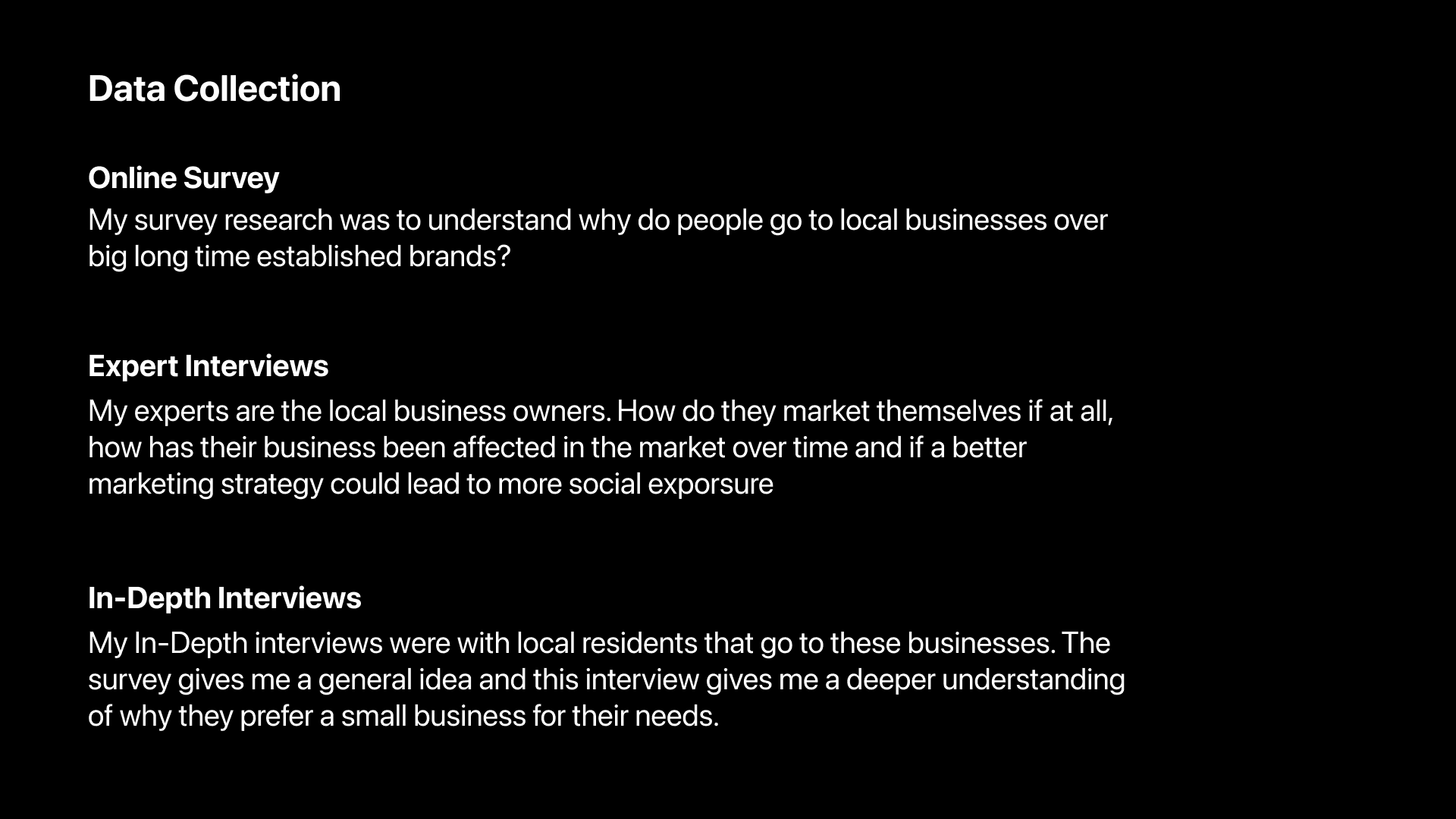
My primary research included consumer interviews exploring how people discover and engage with local businesses, alongside direct conversations with small business owners navigating the challenges of marketing with limited time and resources. These insights grounded the design process in real experience rather than assumption.
Interview Insights
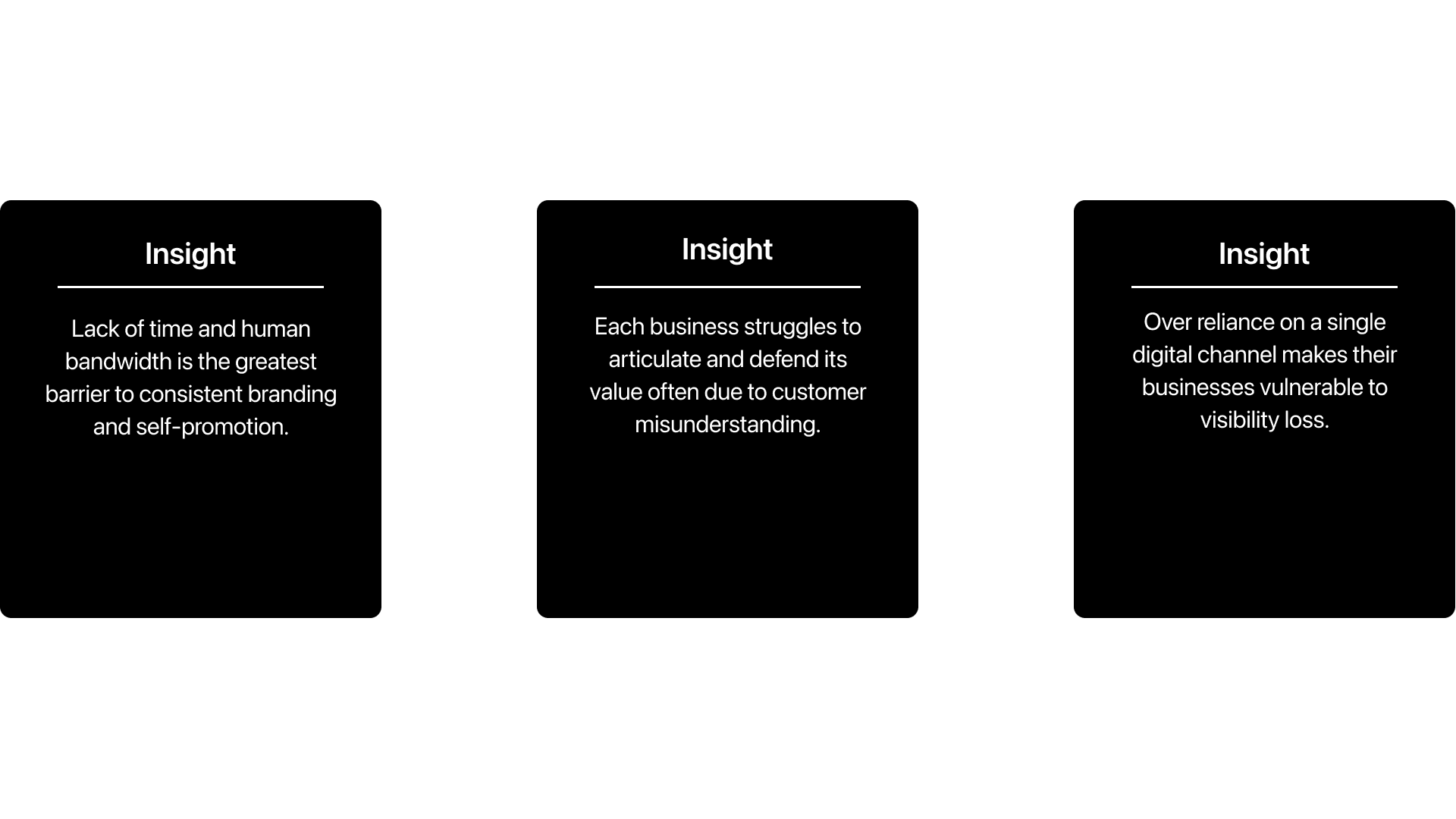
How Did These Insights Shape My Research?
These three insights reframed the entire direction of the project. If the core barrier was time and bandwidth rather than access to design tools, then NBHD couldn't just be another tool competing for a small business owner's attention, it needed to reduce effort, not add to it. The insight about businesses struggling to articulate their value pushed me toward AI-assisted recommendations that could help translate existing brand assets into something clearer, rather than asking owners to define their brand from scratch. And the risk of over-relying on a single platform reinforced why NBHD needed to support a consistent identity across channels, not just optimize for one. Together, these insights shifted my focus from "build more branding tools" to "reduce the friction between having a business and having a brand."
Personas
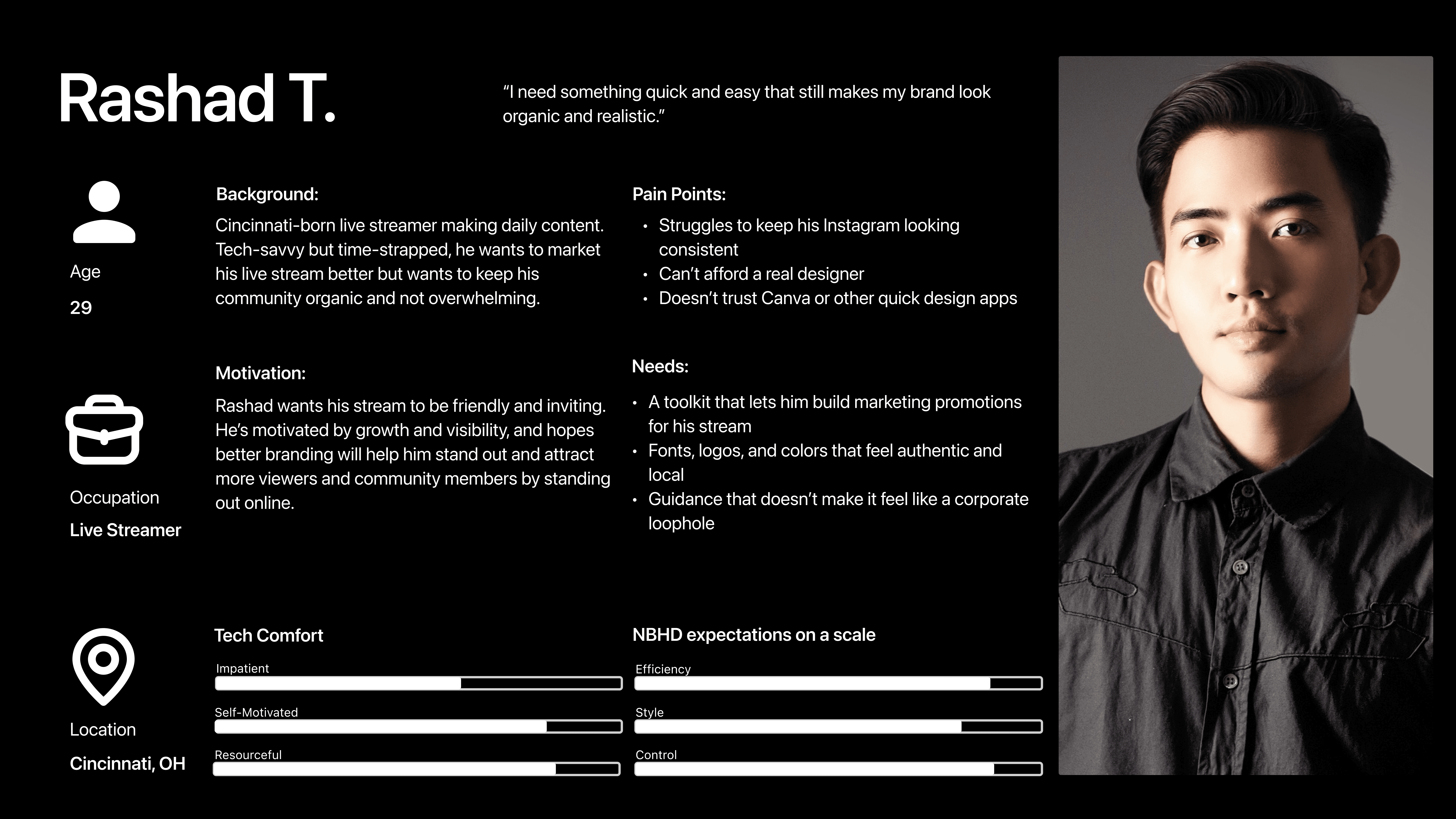
Persona Journey Map - Rashad T.
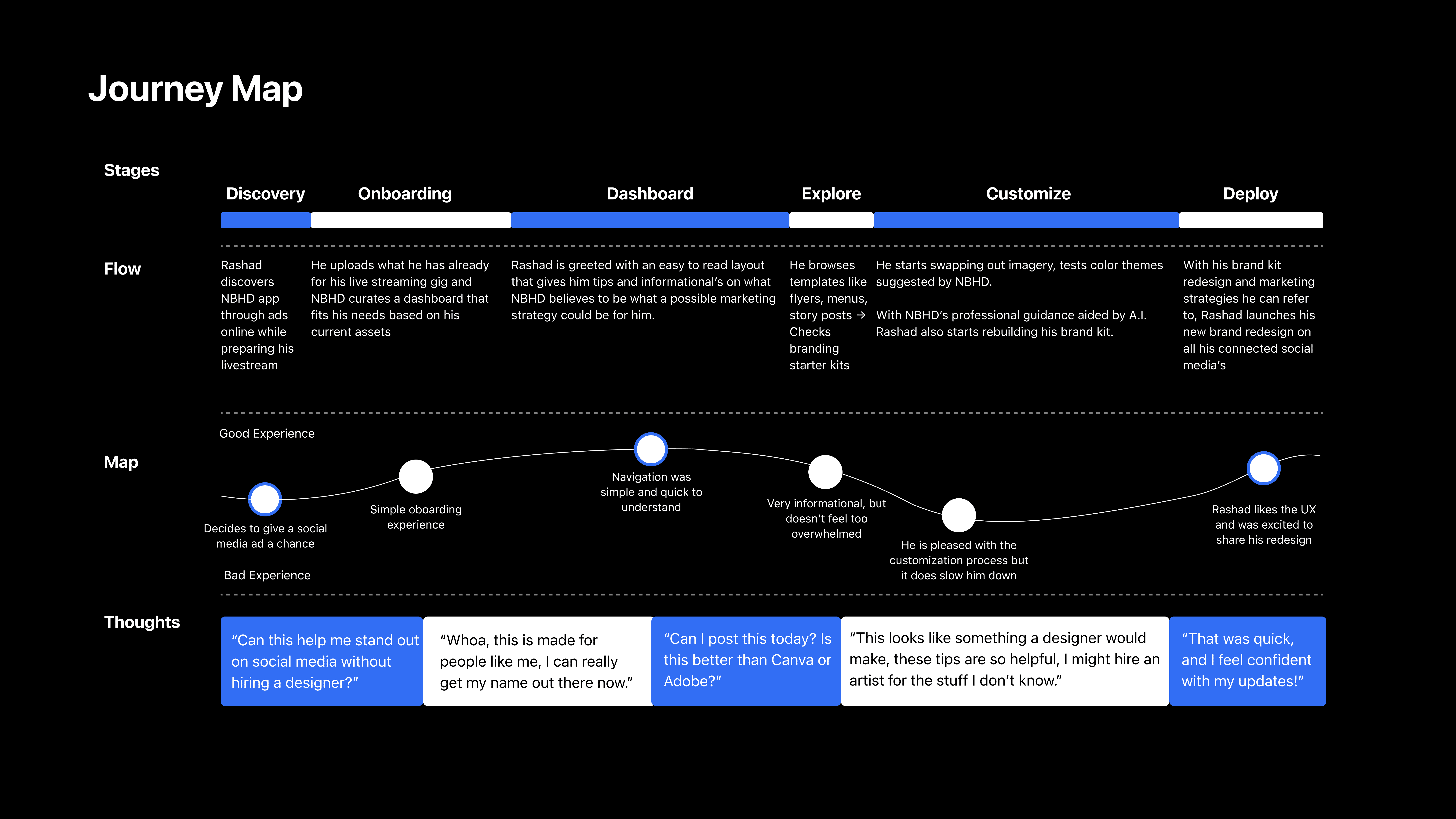
Is One Persona Journey Map Enough?
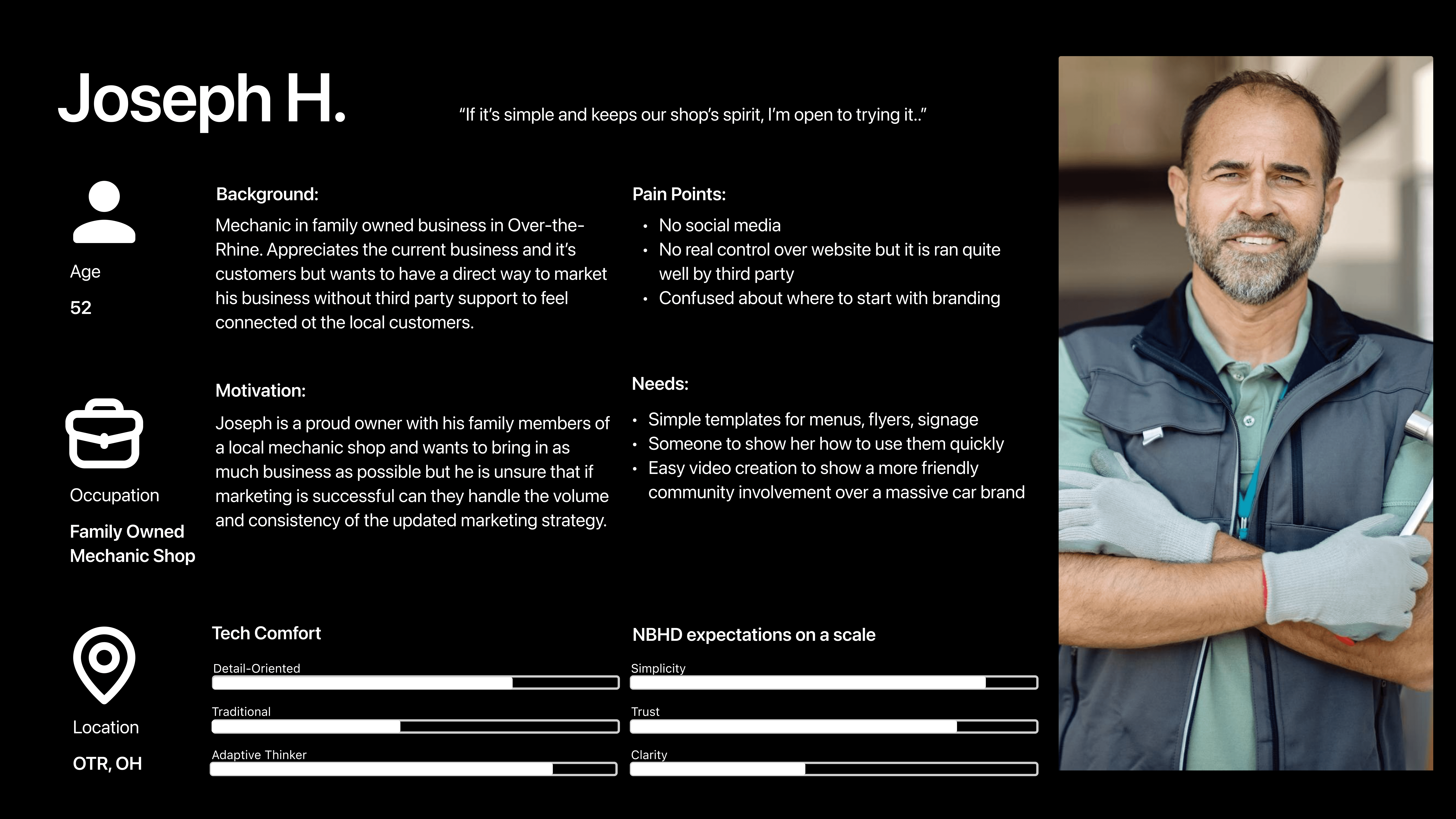
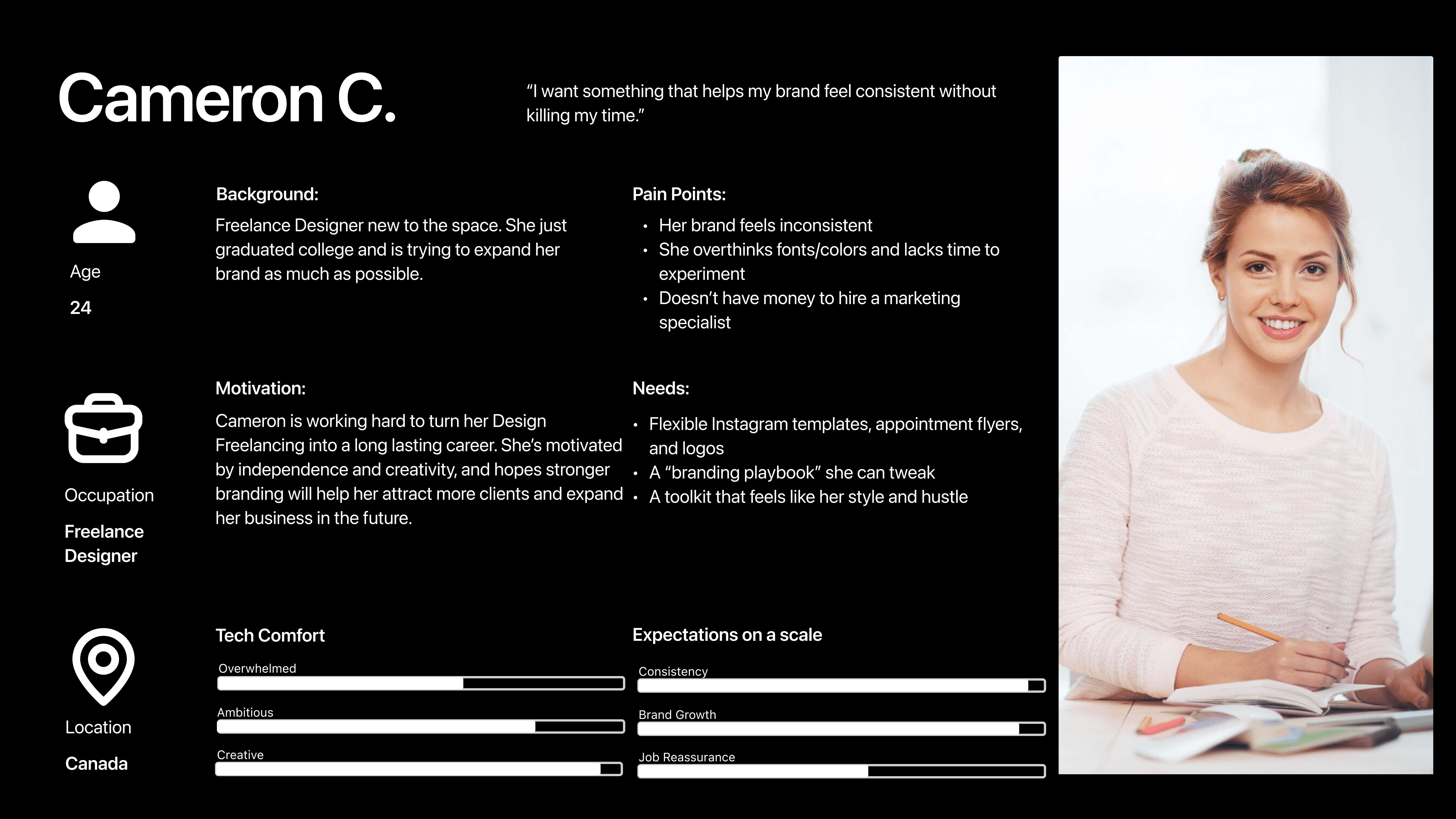
Three personas, Rashad, Joseph, and Cameron, represent meaningfully different relationships to branding: a content creator who wants his brand to feel organic, a small-business owner who needs simplicity over sophistication, and a freelancer trying to build consistency on her own. Mapping only one of their journeys would have flattened those differences into a single "average" user that doesn't actually exist. I built out Rashad's journey map first because his pain points around cost and trust in quick-design tools were the sharpest and most representative of the core problem. But one map only tells part of the story, Joseph's low tech confidence and Cameron's need for flexibility would each stress-test the flow differently, especially at the onboarding and customize stages. Expanding this to cover all three personas is a next step I'd prioritize, since where their journeys diverge is exactly where NBHD's design decisions matter most.
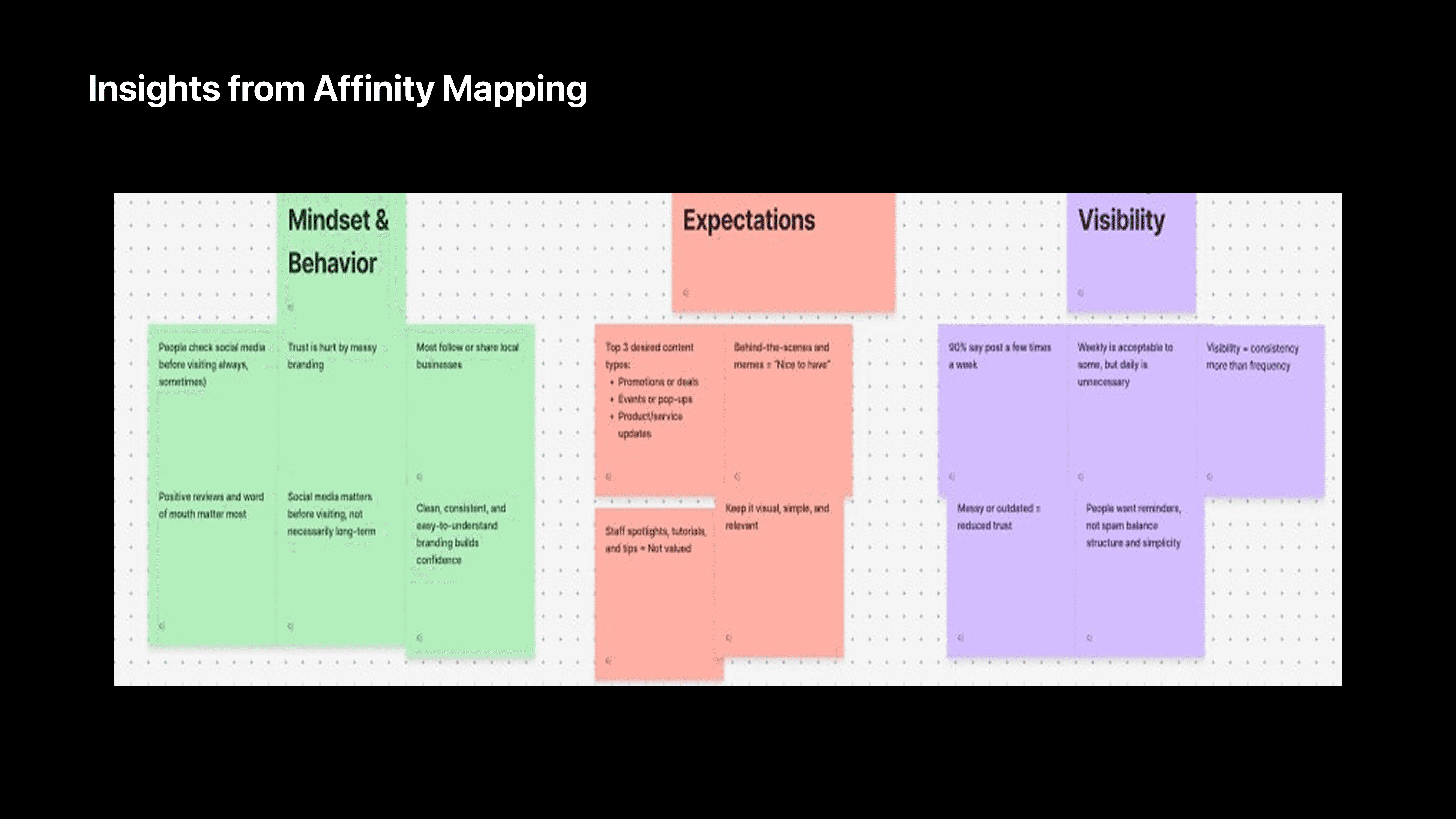
Affinity Mapping
Redefined Design Criteria
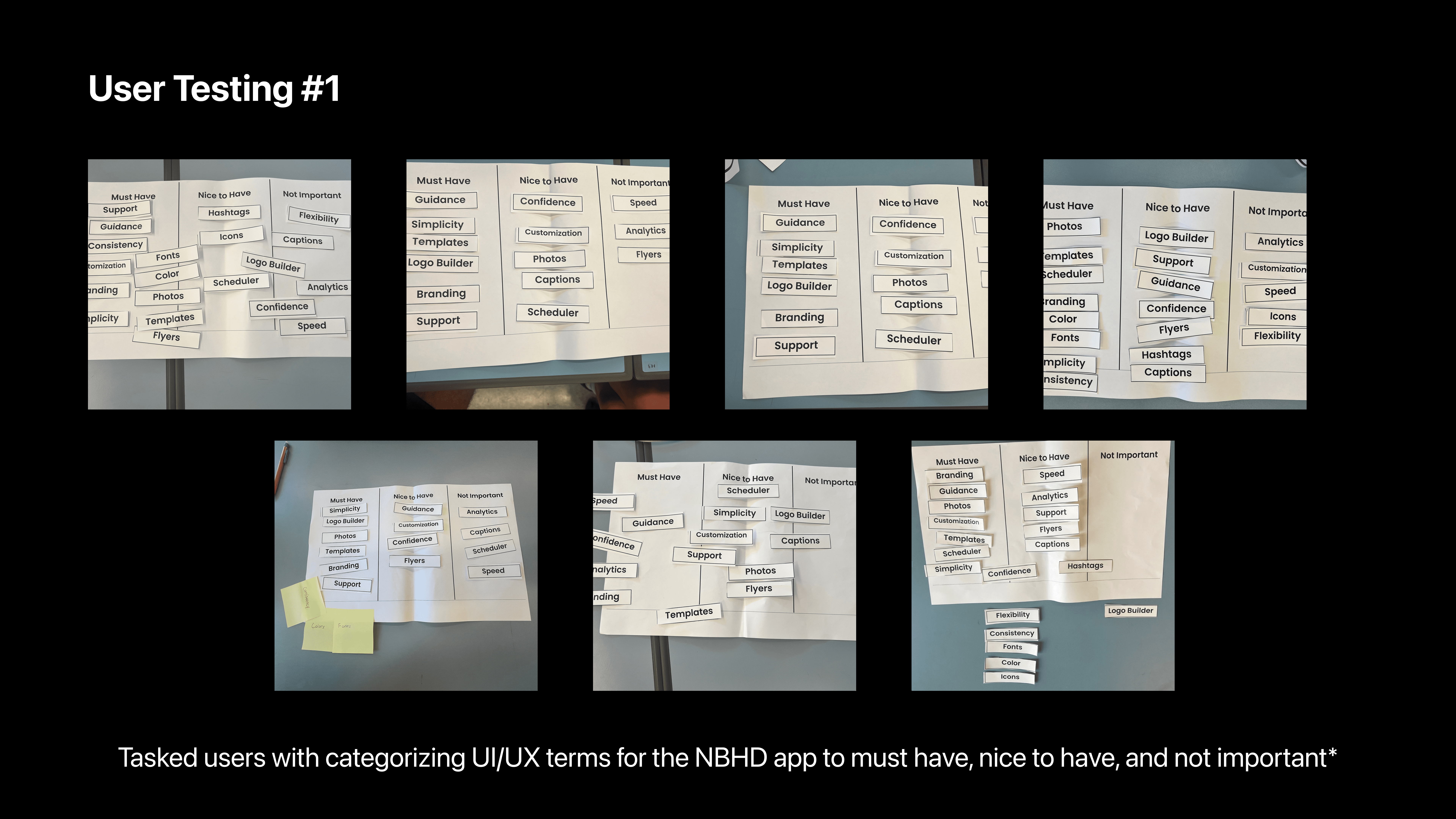
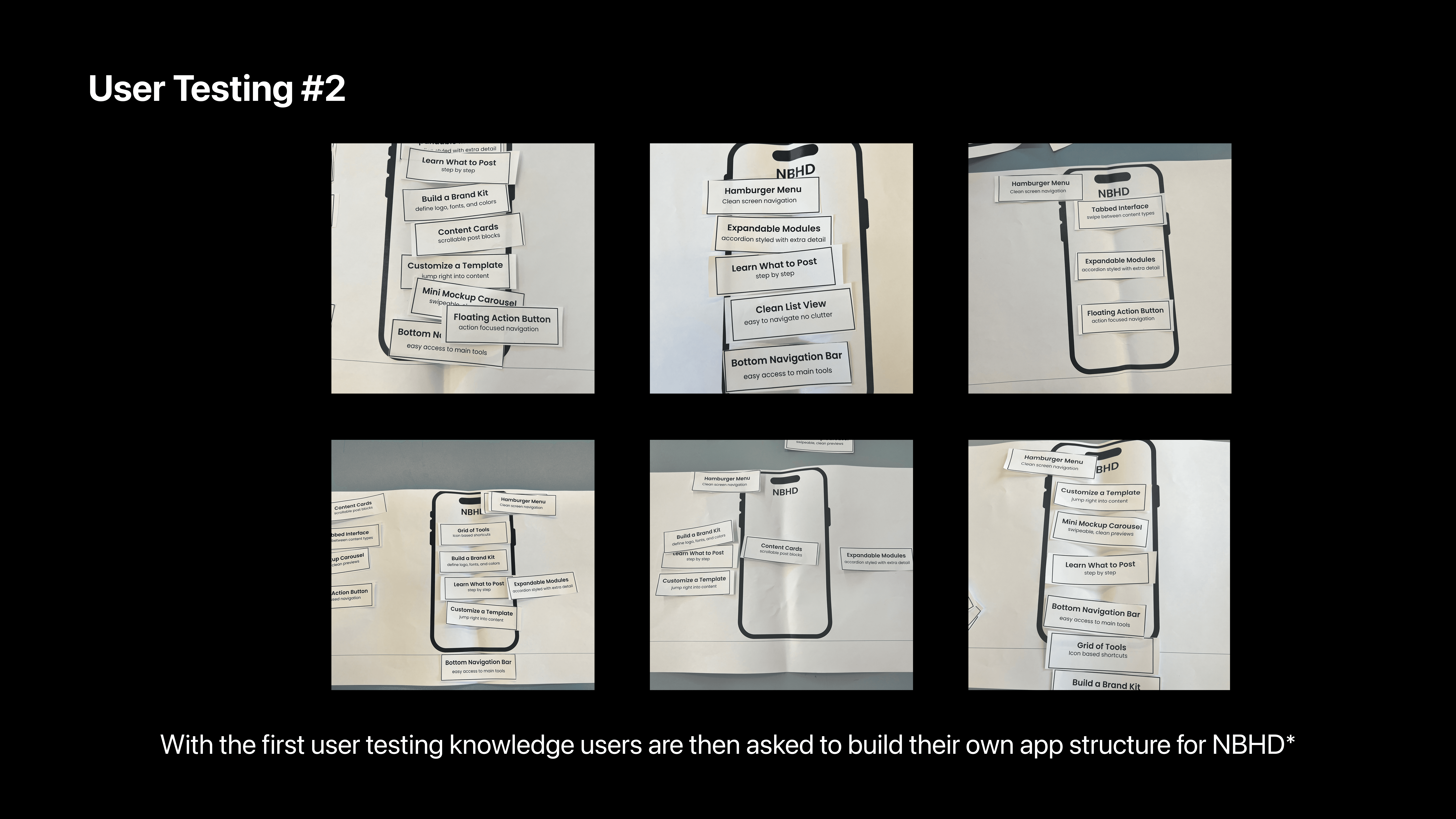
User Testing
Initial Information Architecture
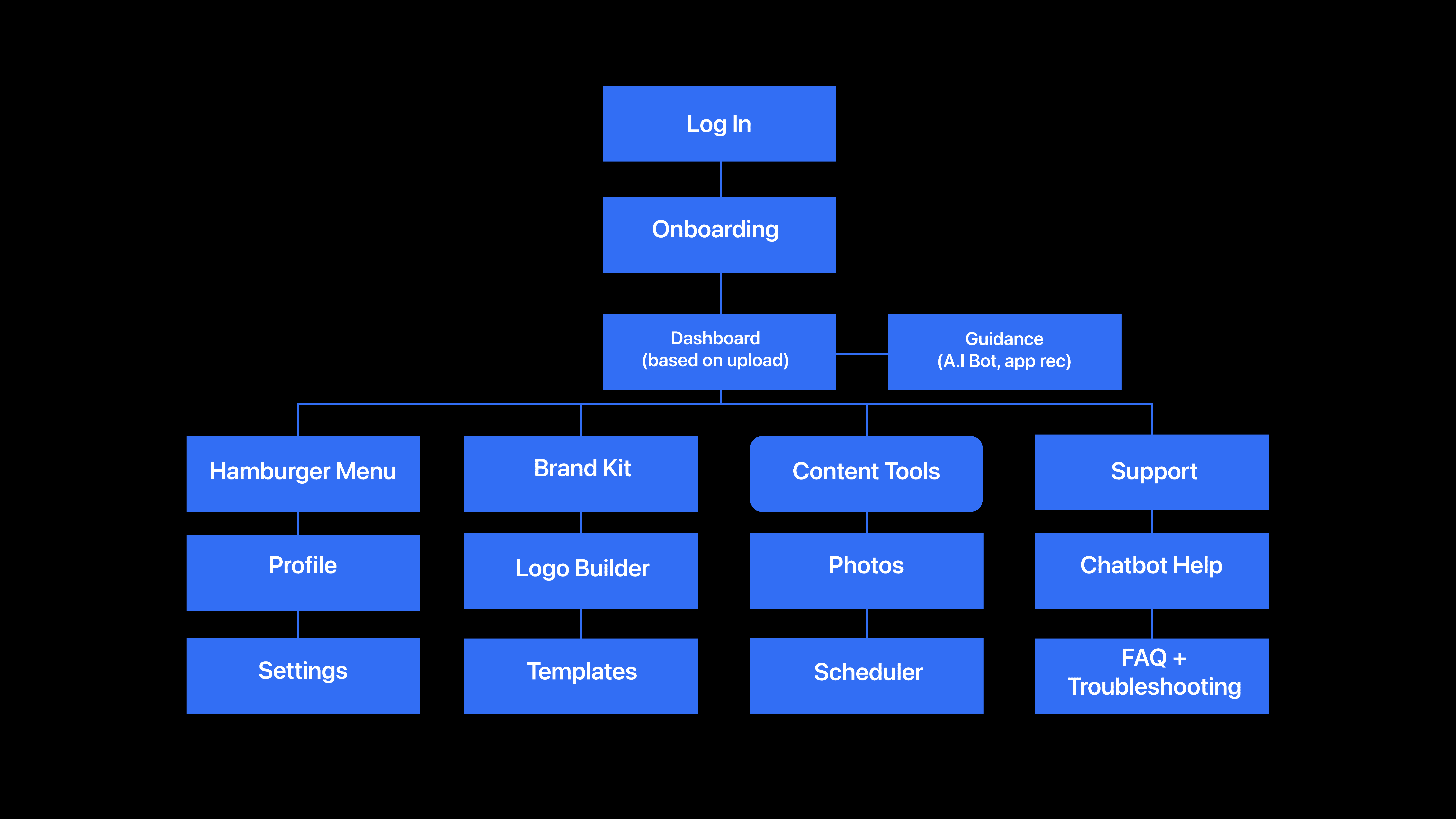
Did This Early Architecture Hold Up?
This initial structure gave the project a starting point, a login and onboarding flow leading into a dashboard, with core functions like Brand Kit, Content Tools, and Support branching out beneath it. But once I moved into early mockups and got real feedback, the flow itself turned out to be confusing. Users struggled to understand how the dashboard connected to the tools underneath it, and the hierarchy didn't map cleanly to how people actually think about their workflow. I ended up scrapping this architecture entirely. Even so, it wasn't wasted work, it forced me to identify what wasn't working early, and it became the foundation the actual UX was built from going forward.
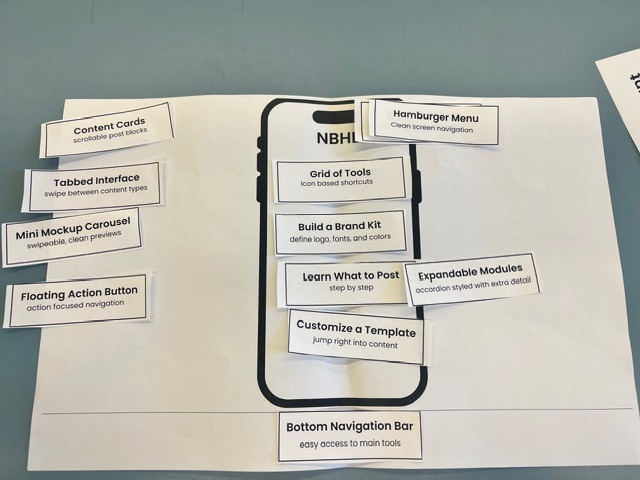
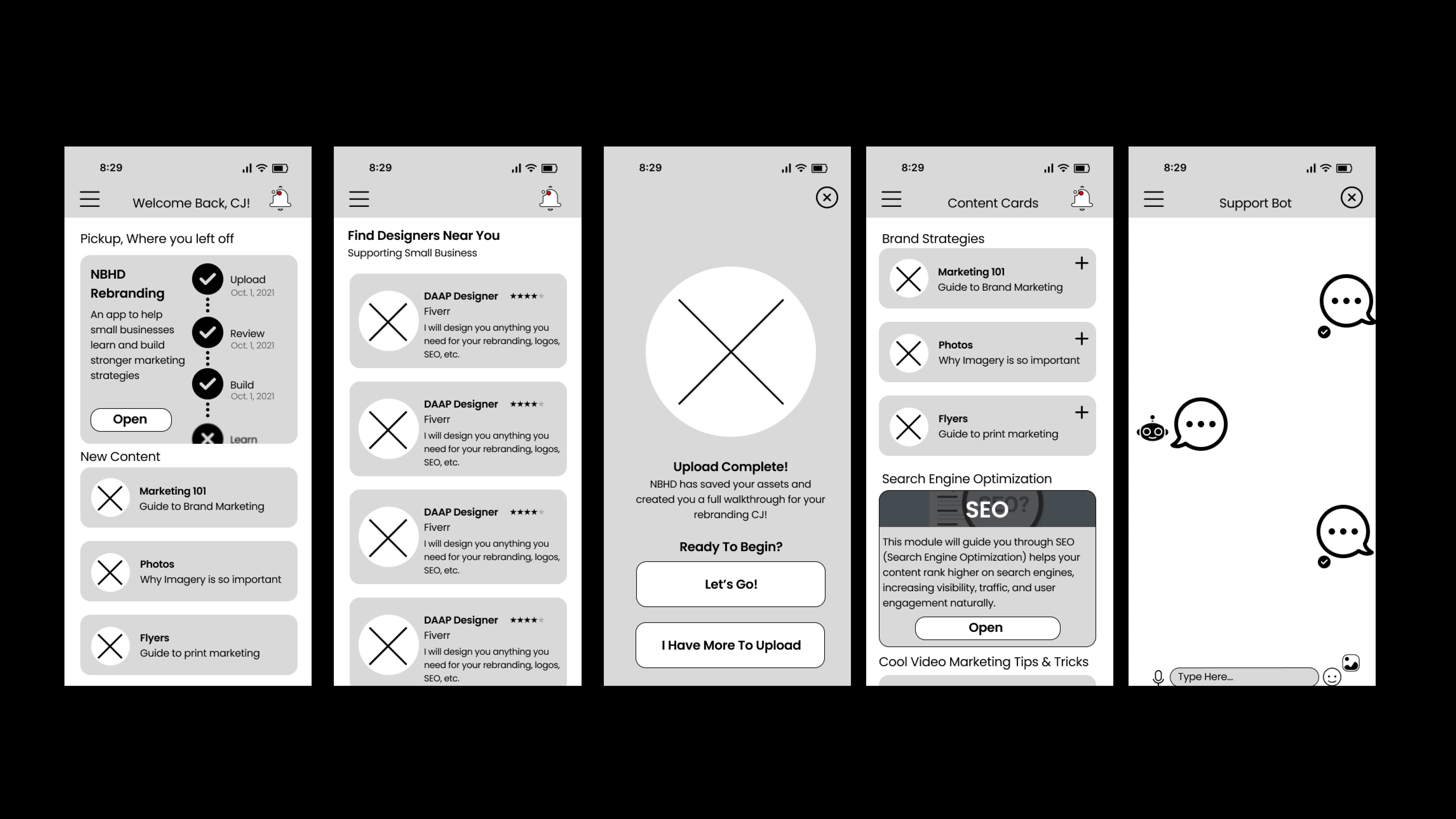
Initial Low Fidelity Digital Mockups
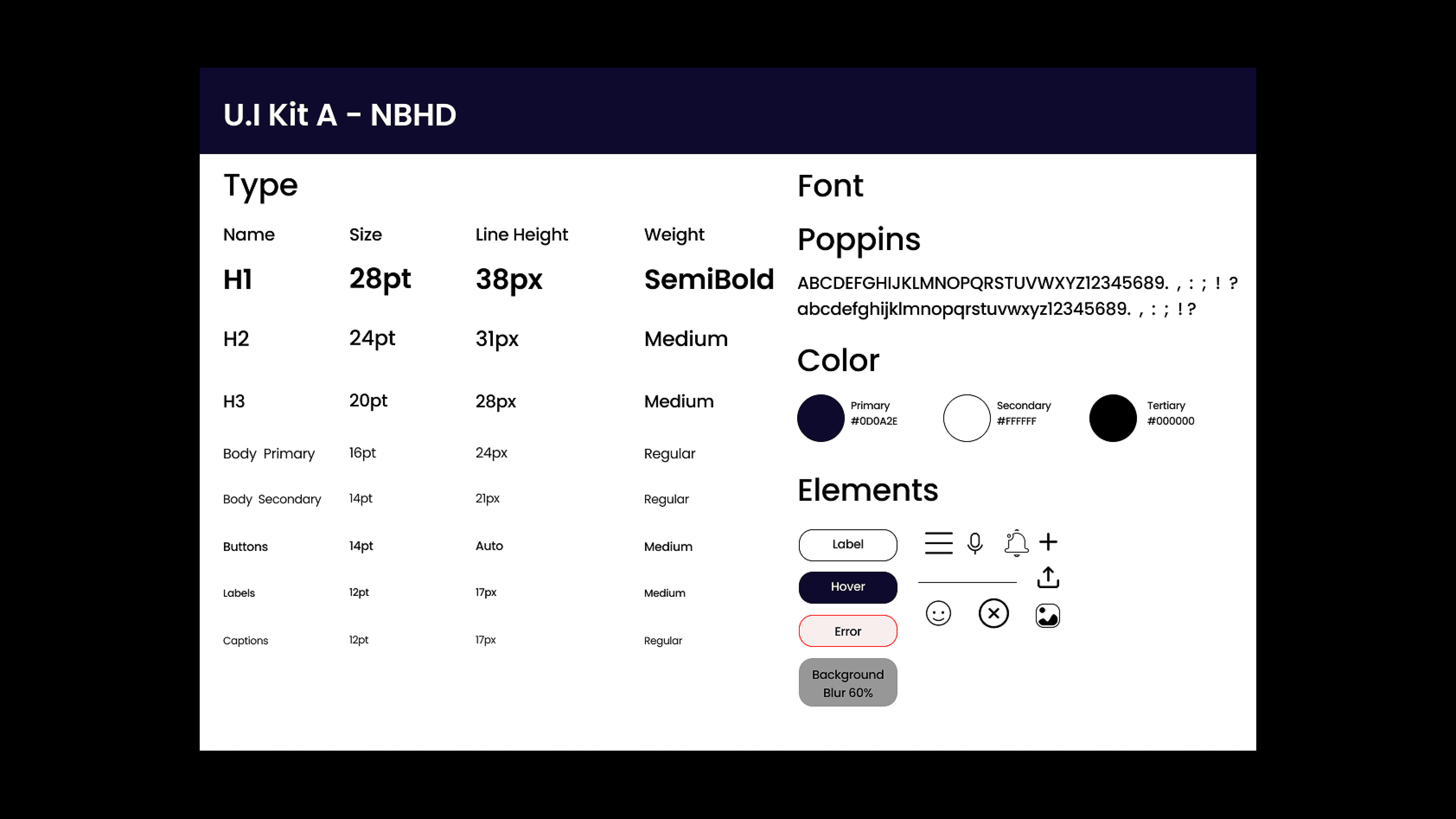
Initial Style Guide
Phase 02
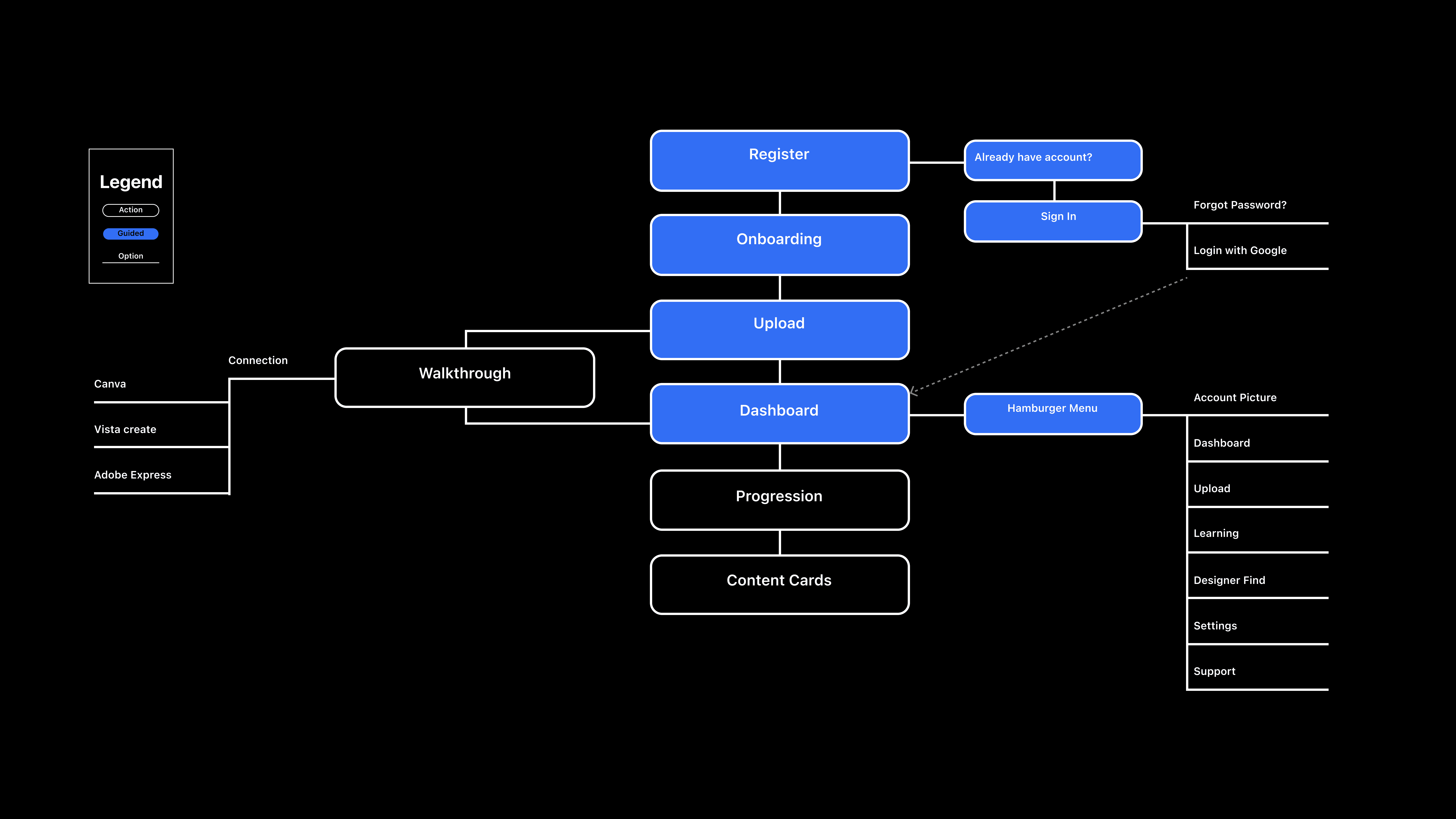
Revised Information Architecture
User Task Flows
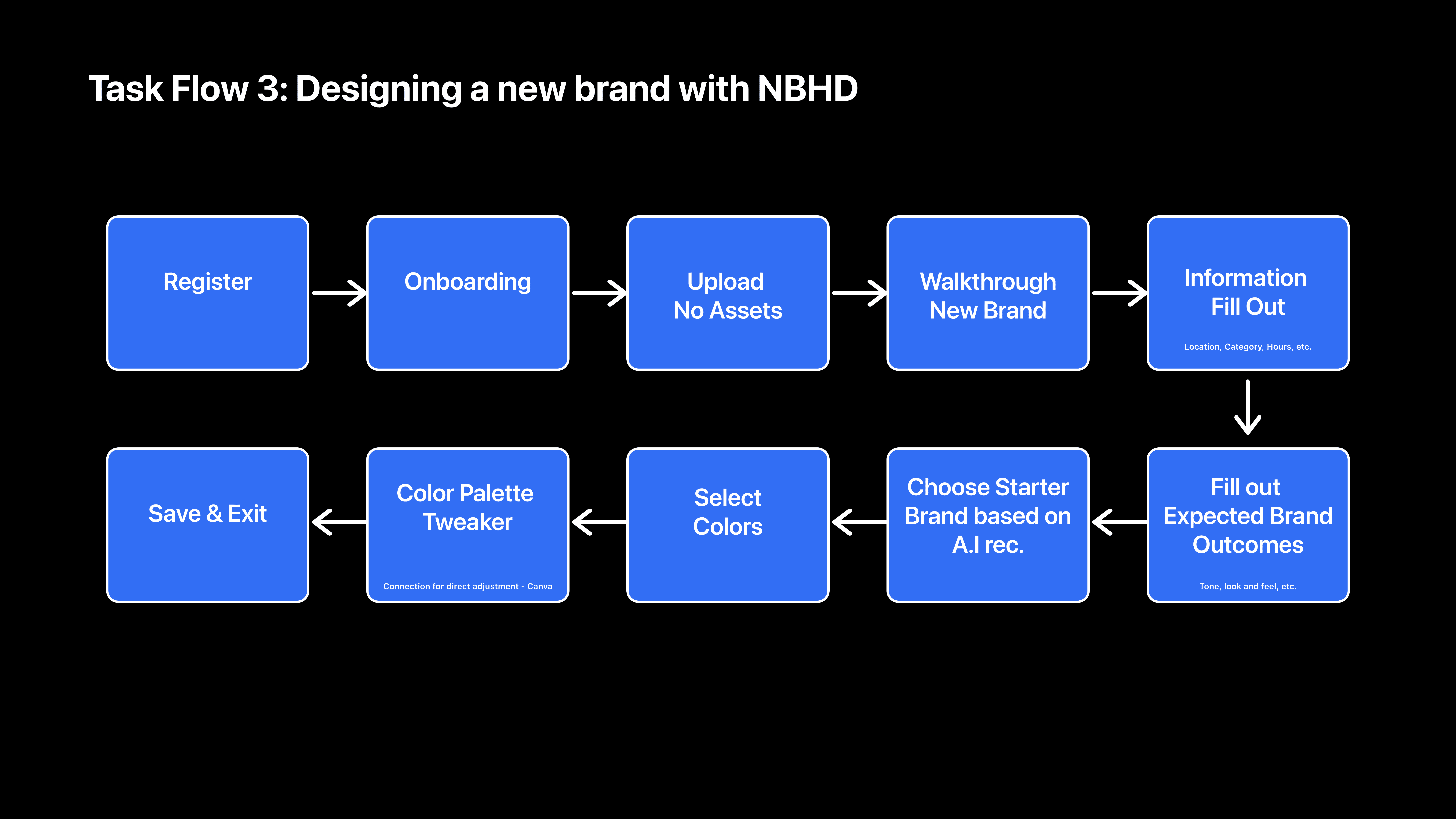
Redefined UX Reflection
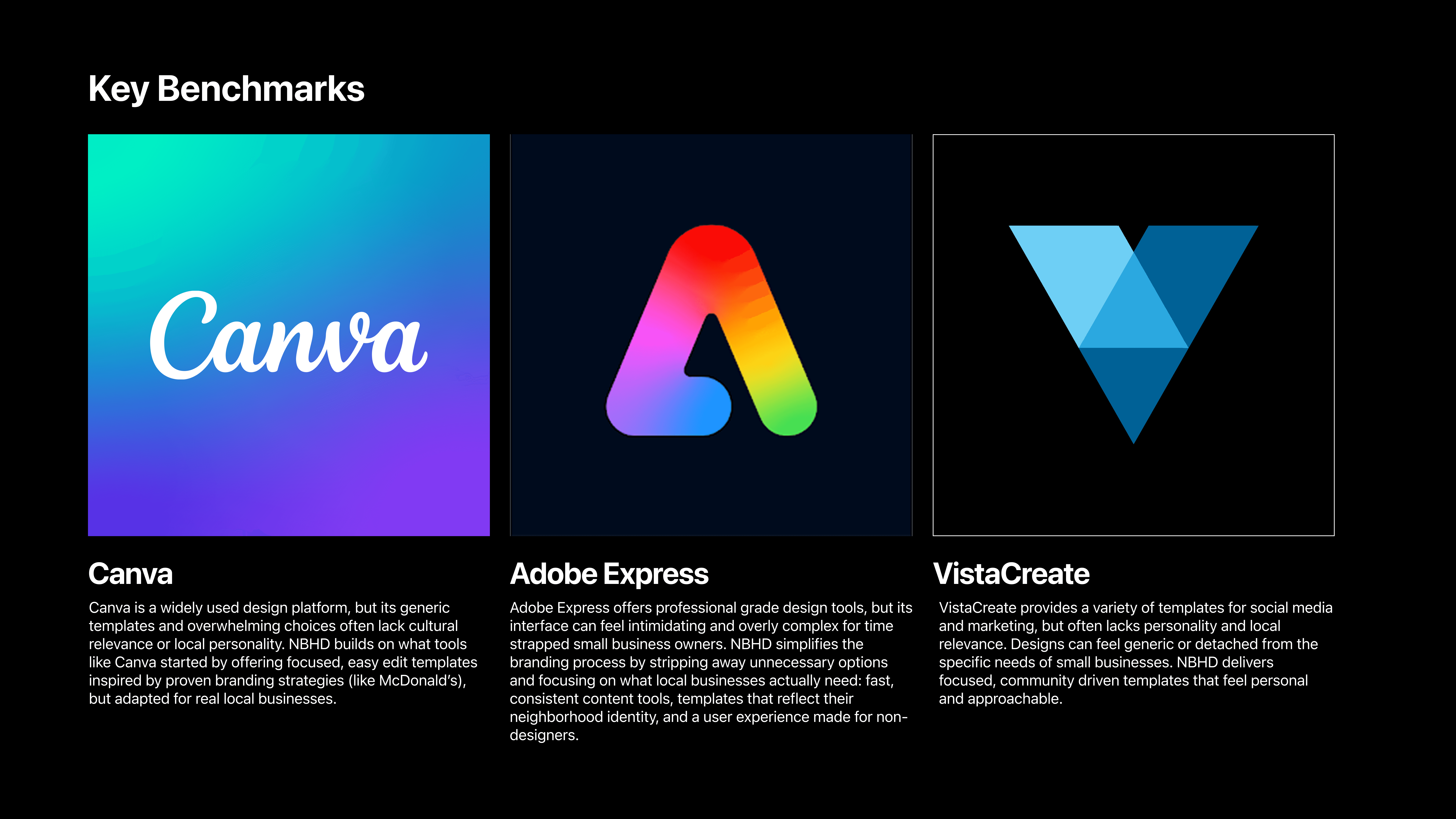
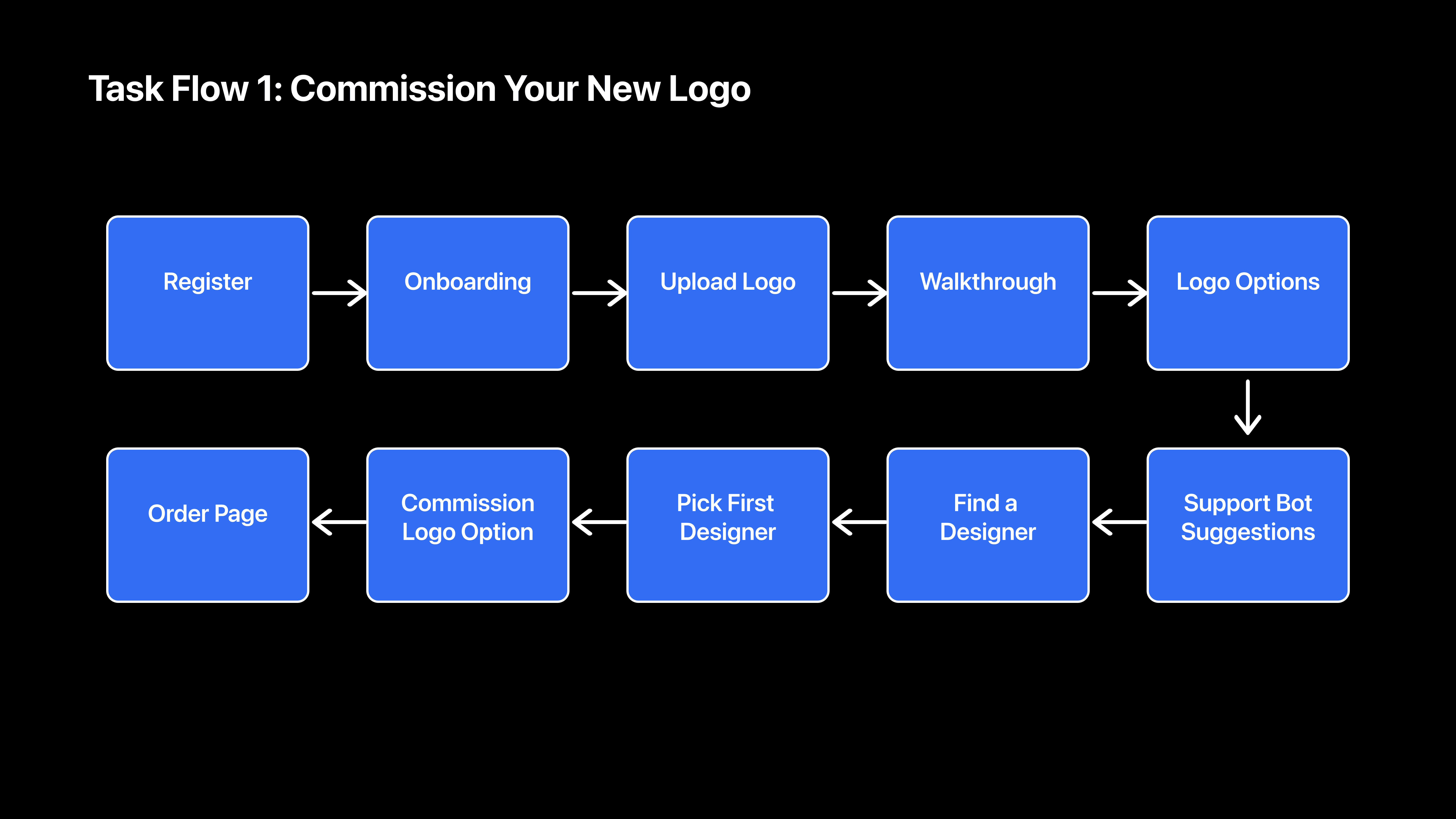
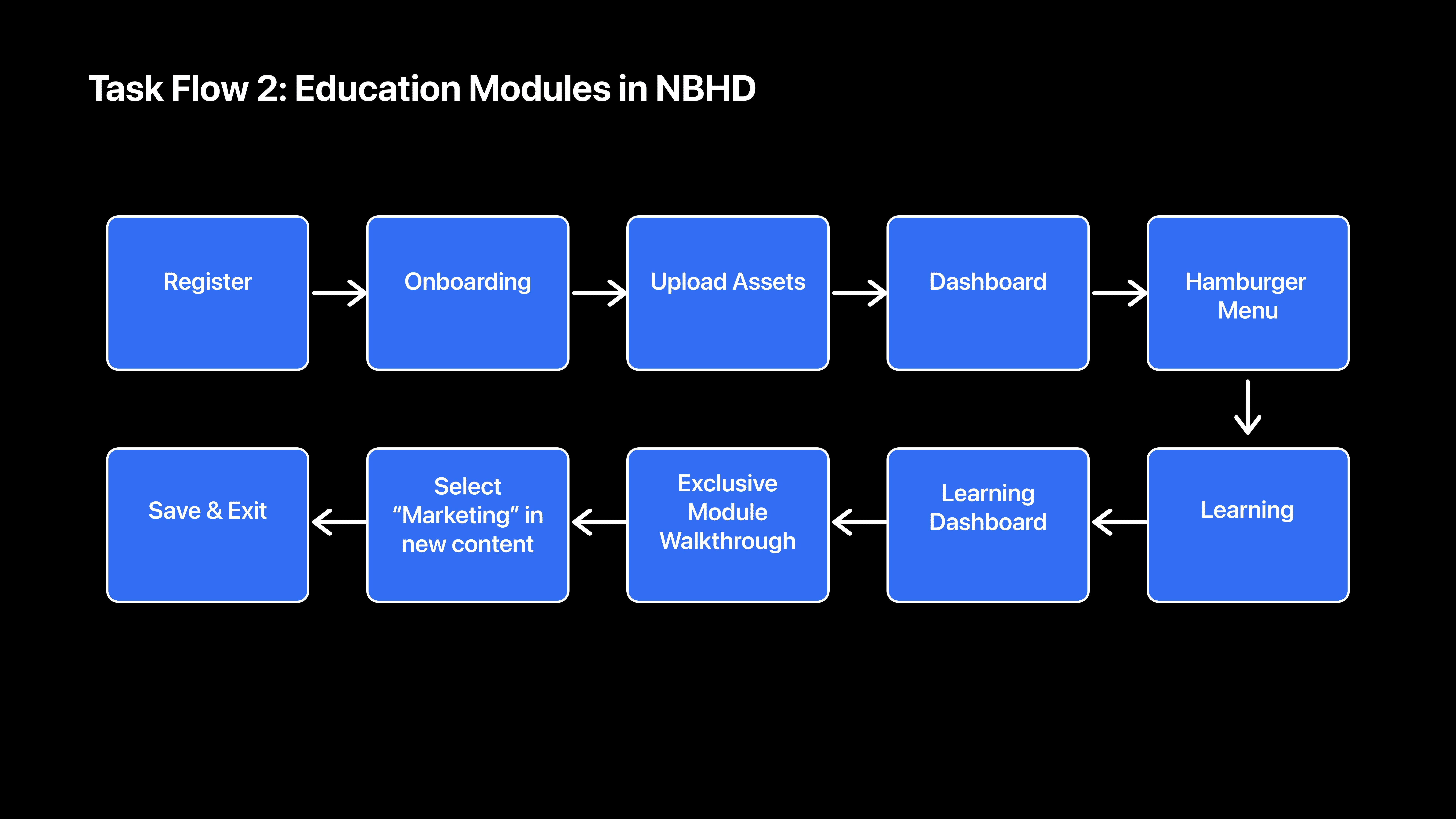
NBHD doesn't compete with tools like Canva, Adobe Express, or Figma. It integrates with them. The platform sits at the intersection of design education and professional collaboration, reducing the friction, cost, and miscommunication that small business owners face before ever hiring a designer. Through a personalized onboarding experience, NBHD uses AI to evaluate uploaded brand assets and generate actionable recommendations while giving users complete control over every decision. New and returning users receive a curated brand journey that produces usable files ready for editing across connected applications. The goal is design fluency. Before a business owner commissions a designer, NBHD ensures they understand their own brand well enough to communicate it clearly, collaborate effectively, and spend confidently. When they're ready, NBHD connects them directly with a local verified designer for one on one refinement.
The result is a continuous loop. Assets feed back into the platform, recommendations improve over time, and the brand gets sharper with every iteration. NBHD makes professional design accessible, not intimidating.
Logo

Final Logo
Logo Reflection
The NBHD wordmark was a month-long design process rooted in a single concept: an interlocking, community-driven mark that felt modern without being decorative. What appeared simple in concept became one of the most time-intensive parts of the project.
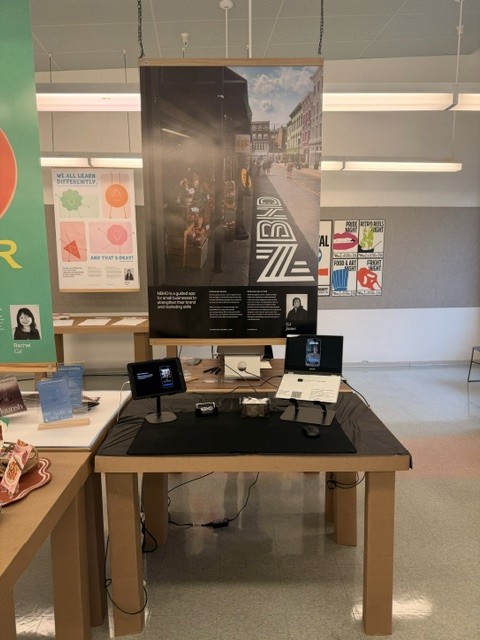
Post-DAAPWorks feedback revealed something unexpected. Visitors engaged with the logo more than the product itself, which prompted genuine reflection. The wordmark and the platform felt like two strong but isolated pieces rather than one unified system. The logo met every intention I set for it, but its visual strength may have worked against the broader project by drawing attention away from the UI/UX work it was meant to support.
At one point I considered pivoting the capstone entirely into a typography project to fully explore what this wordmark could become. That instinct still lingers. With more time, I would either simplify the logo development process to better serve the product, or lean into the mark fully and let it become the project. That tension is worth exploring in a "next steps" phase of NBHD.
Phase 03
Revised Style Guide
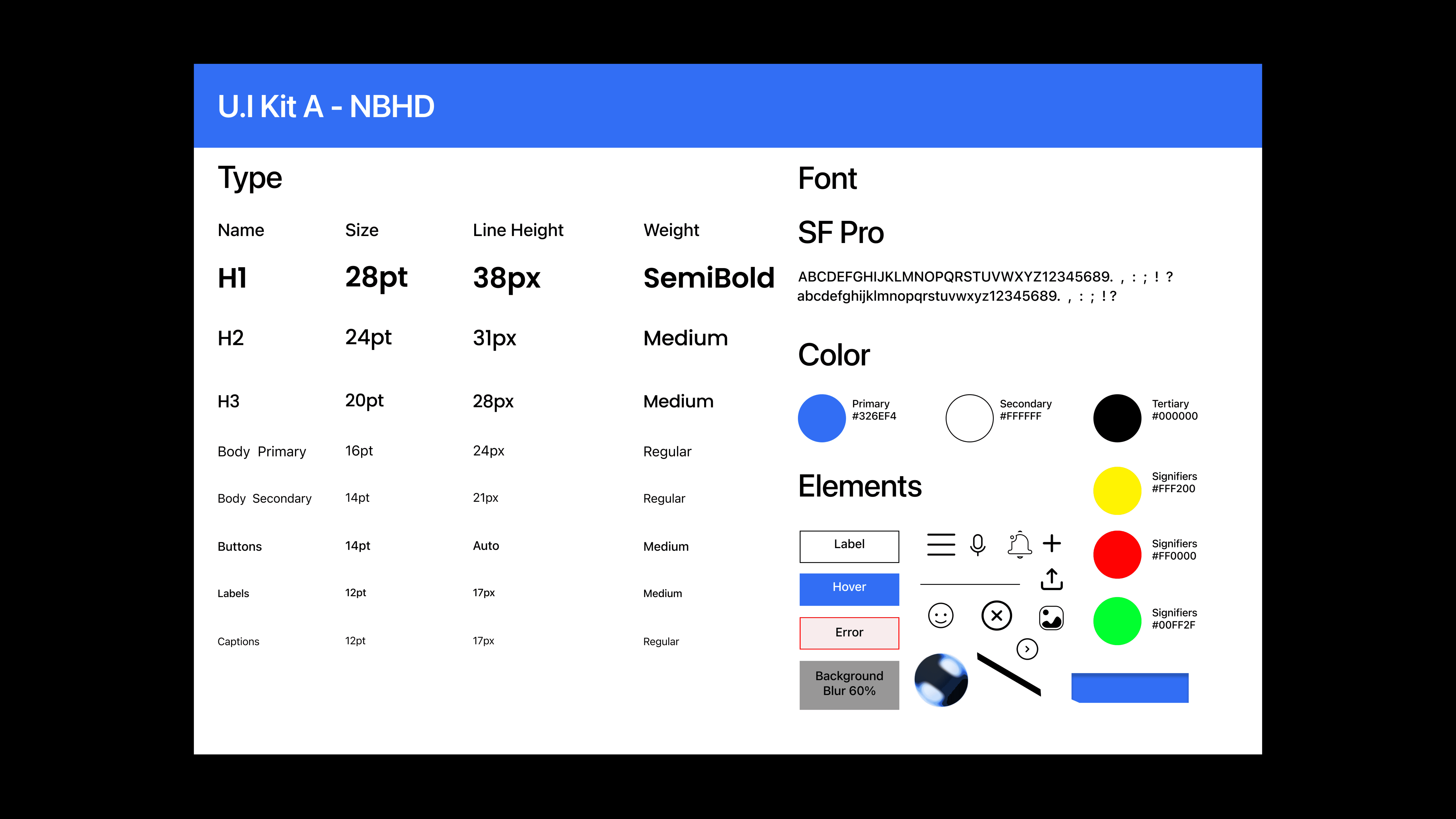
Revised Mobile Mockups
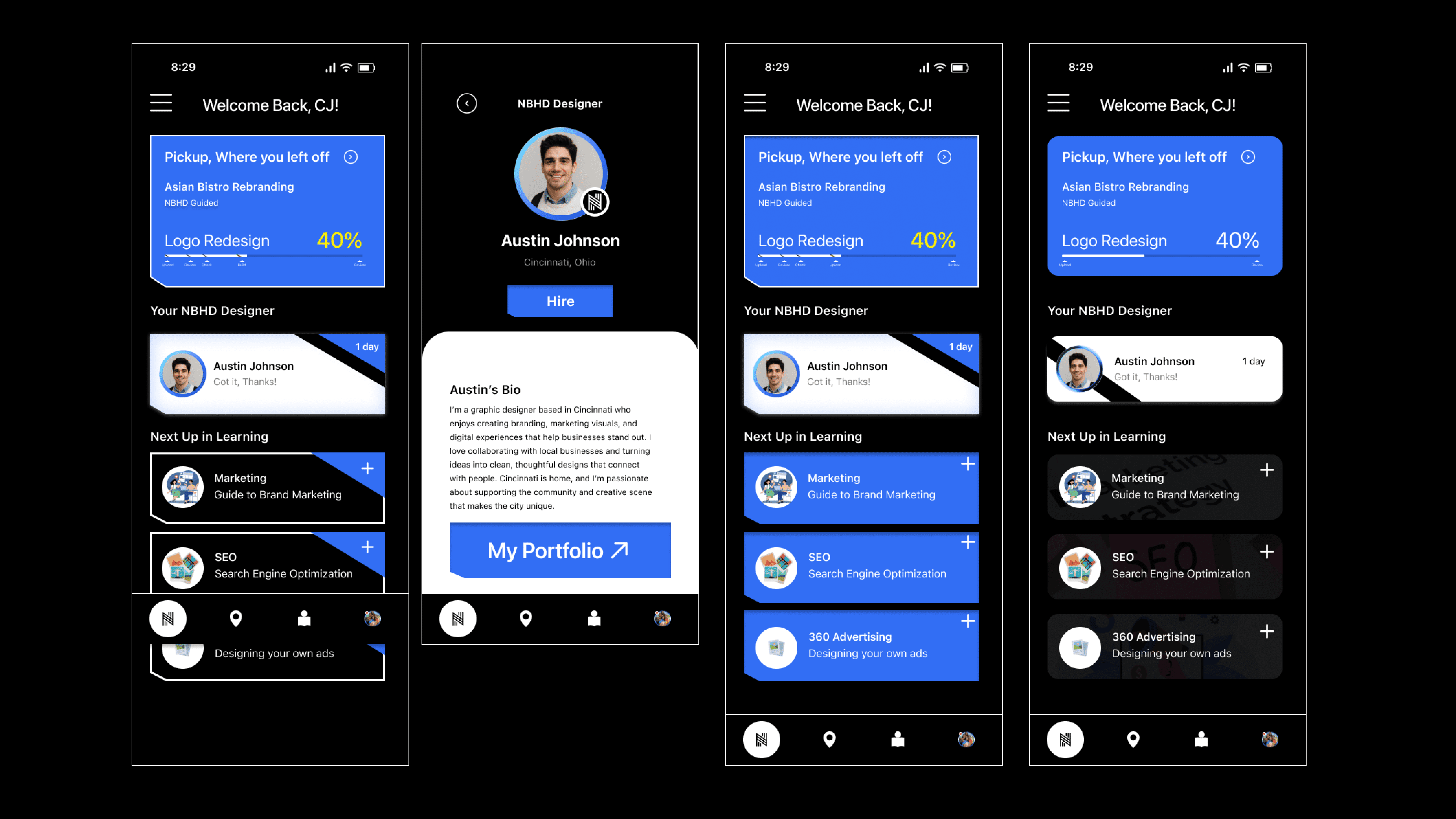
Why the Design Evolved Again
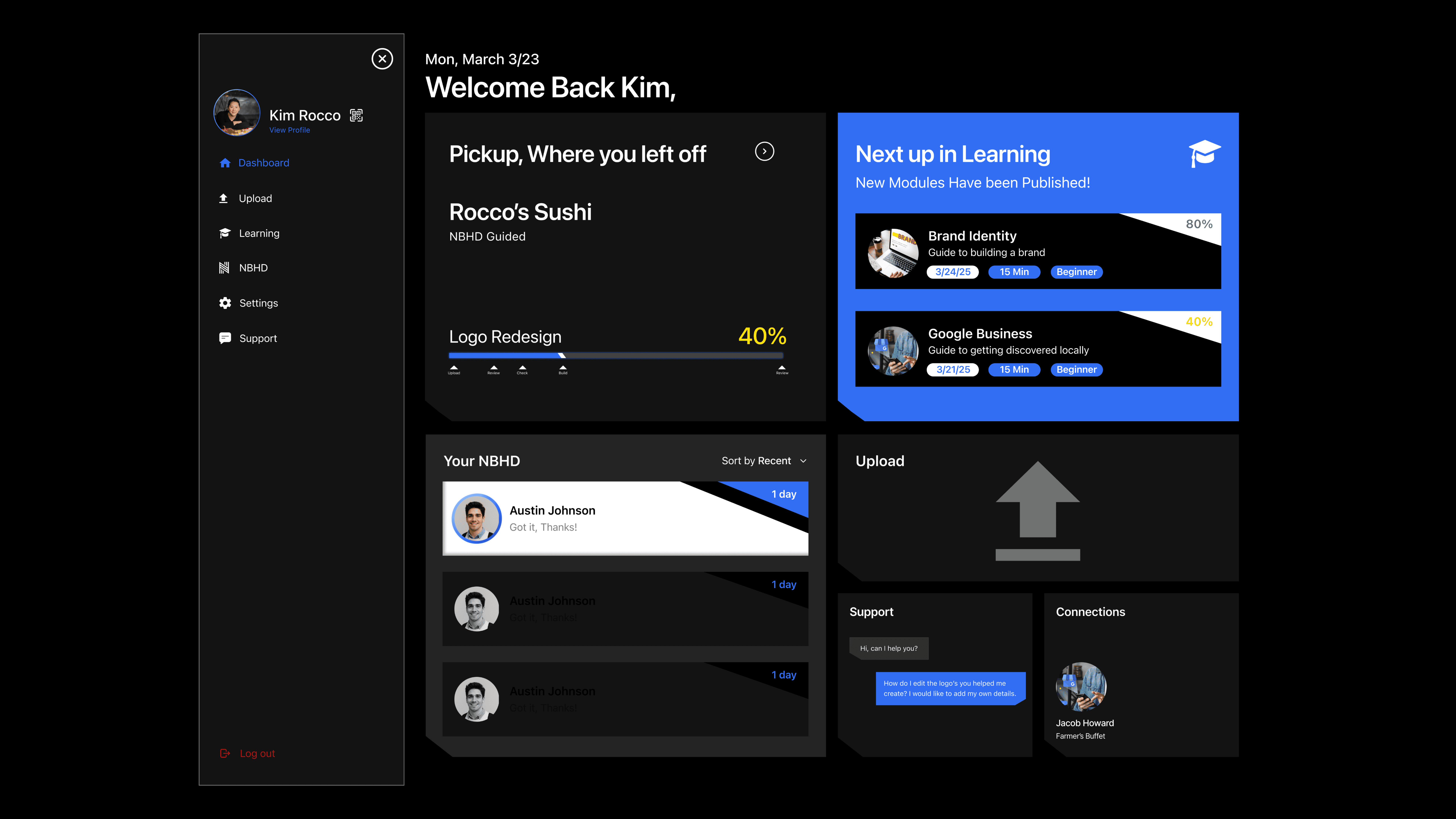
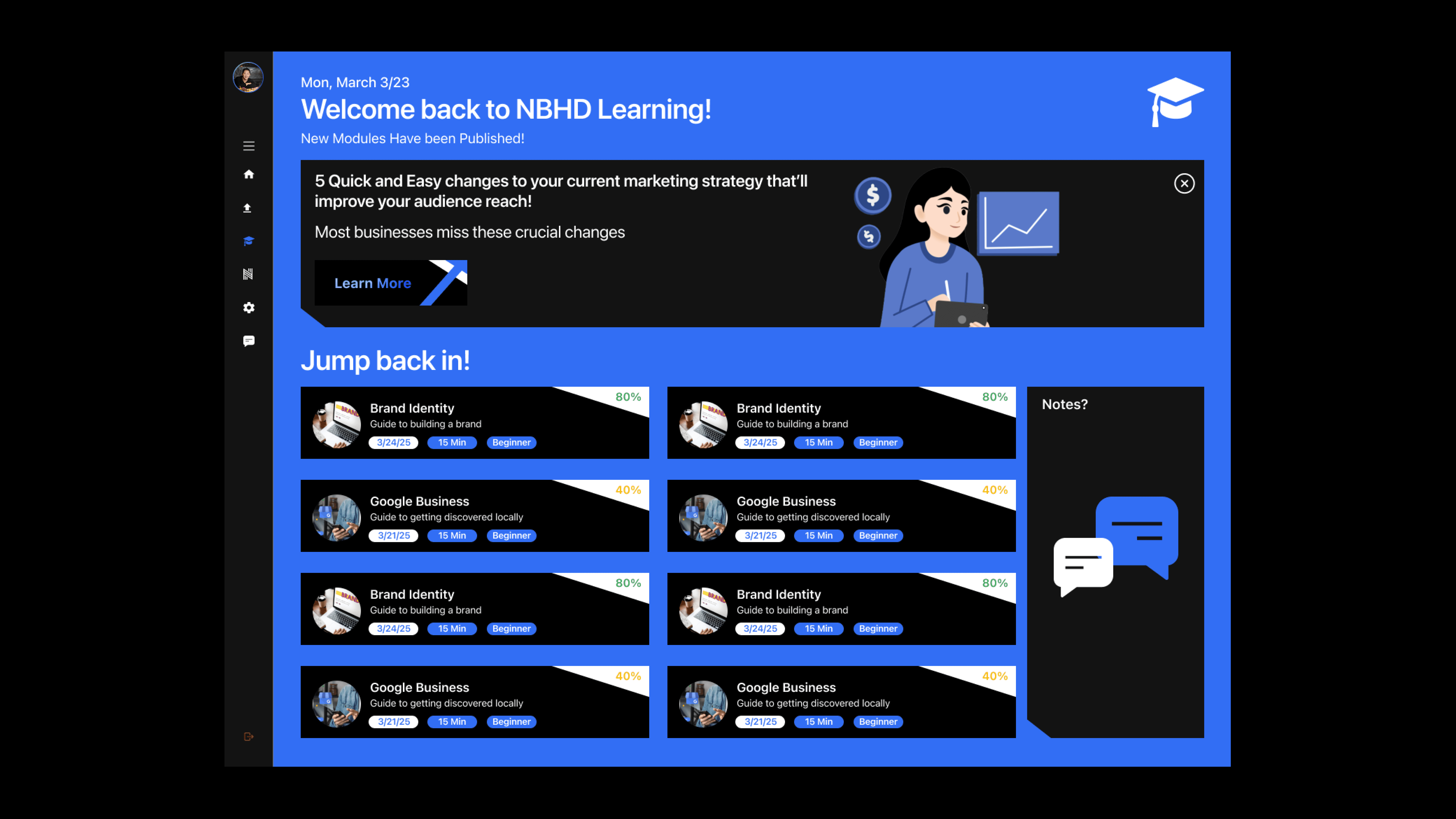
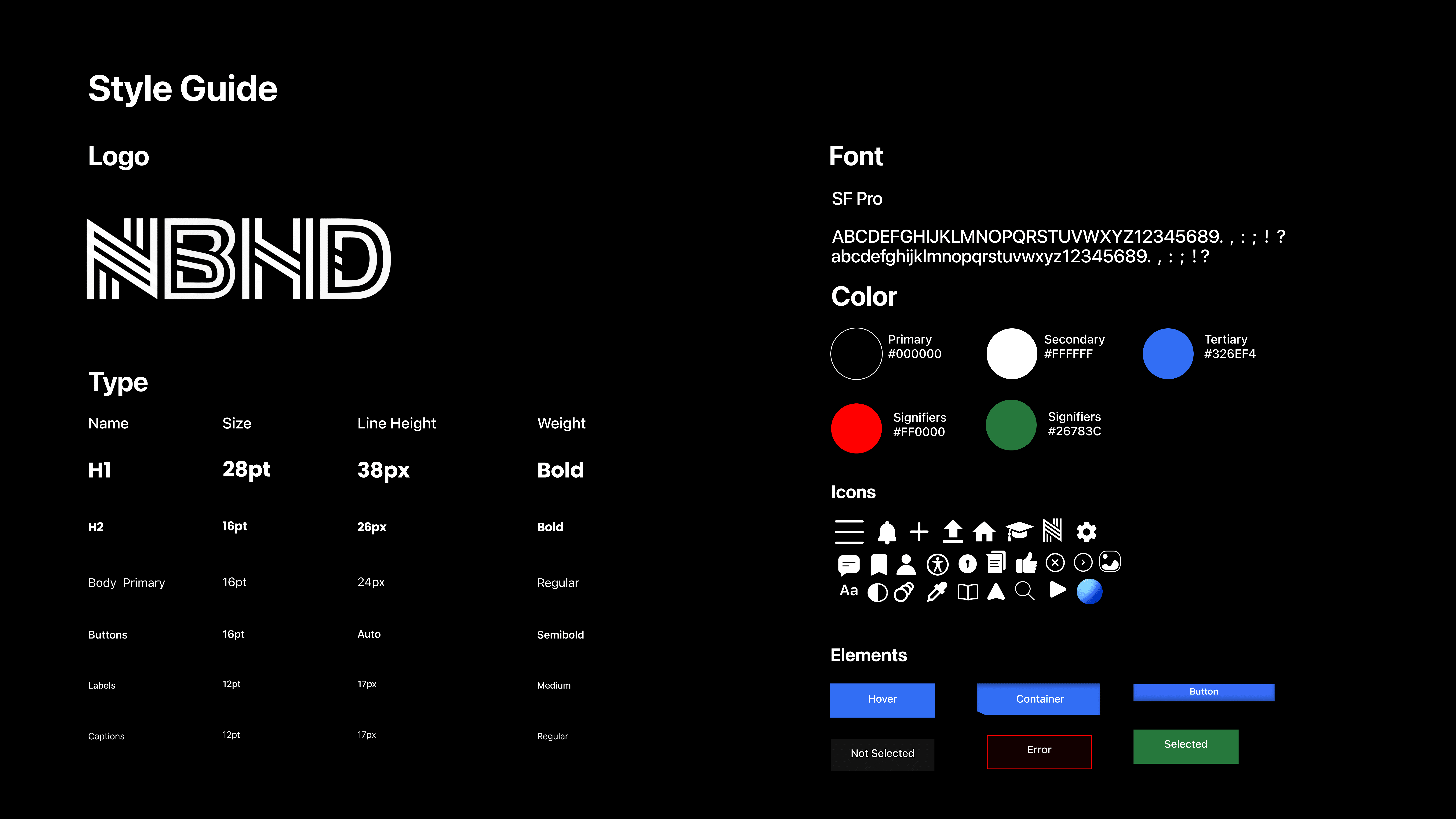
Between these two phases, the feedback shifted from "does this function work?" to "does this actually look like something?" My earlier direction was functional, but visually it played it safe, clean, familiar patterns that didn't take a real point of view. Designers around me pushed back on that, not because it was wrong, but because it wasn't challenging me. For a final capstone project, I didn't need a "safe" design system, I needed one that stretched what I was capable of. That feedback is what pushed the visual direction toward something with more identity and intention, even knowing it wouldn't be perfect on the first pass. The goal shifted from playing it safe to actually growing as a designer.
Desktop Mockups

Final Style Guide
Revised Visual System Reflection
As DAAPWorks approached, the focus shifted to identifying the most impactful way to communicate NBHD rather than building everything at once. In-class critique feedback raised a valid point: not every business owner works primarily from a mobile device, and most original brand asset files live on a desktop computer rather than a phone.
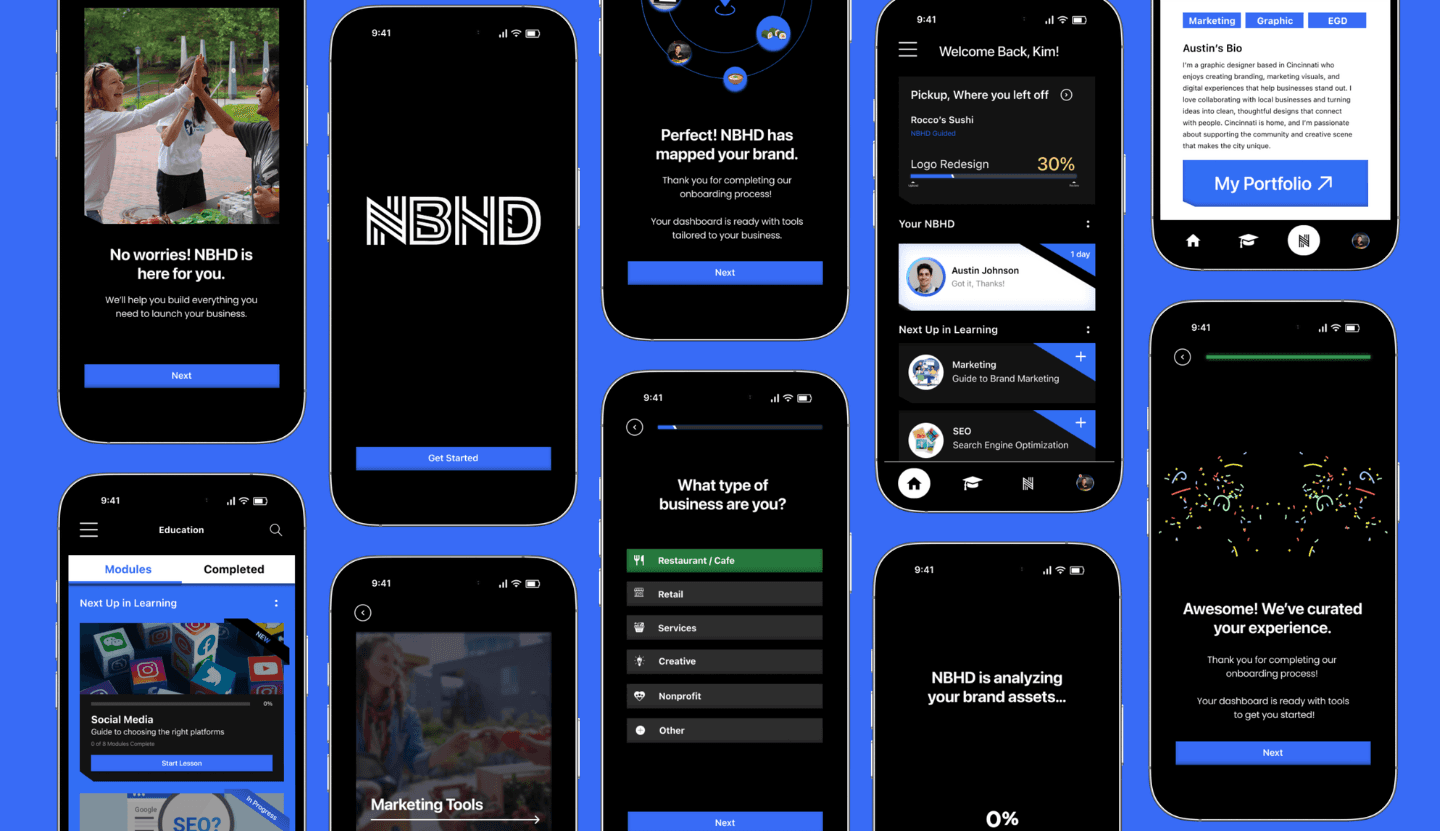
Rather than designing two separate UI systems for mobile and desktop, a more efficient solution emerged. NBHD's AI simply recognizes assets from a mobile photo, meaning an owner can photograph files directly from their computer screen during onboarding. As long as they hold the copyright, NBHD builds their experience from that image. The need for a dedicated desktop application becomes secondary.
This compromise actually strengthened the core UX principle behind NBHD: the platform should be simple, approachable regardless of design knowledge, and efficient in delivering results. Desktop integration remains a next steps consideration, but the photo-based asset recognition made the mobile experience more complete.
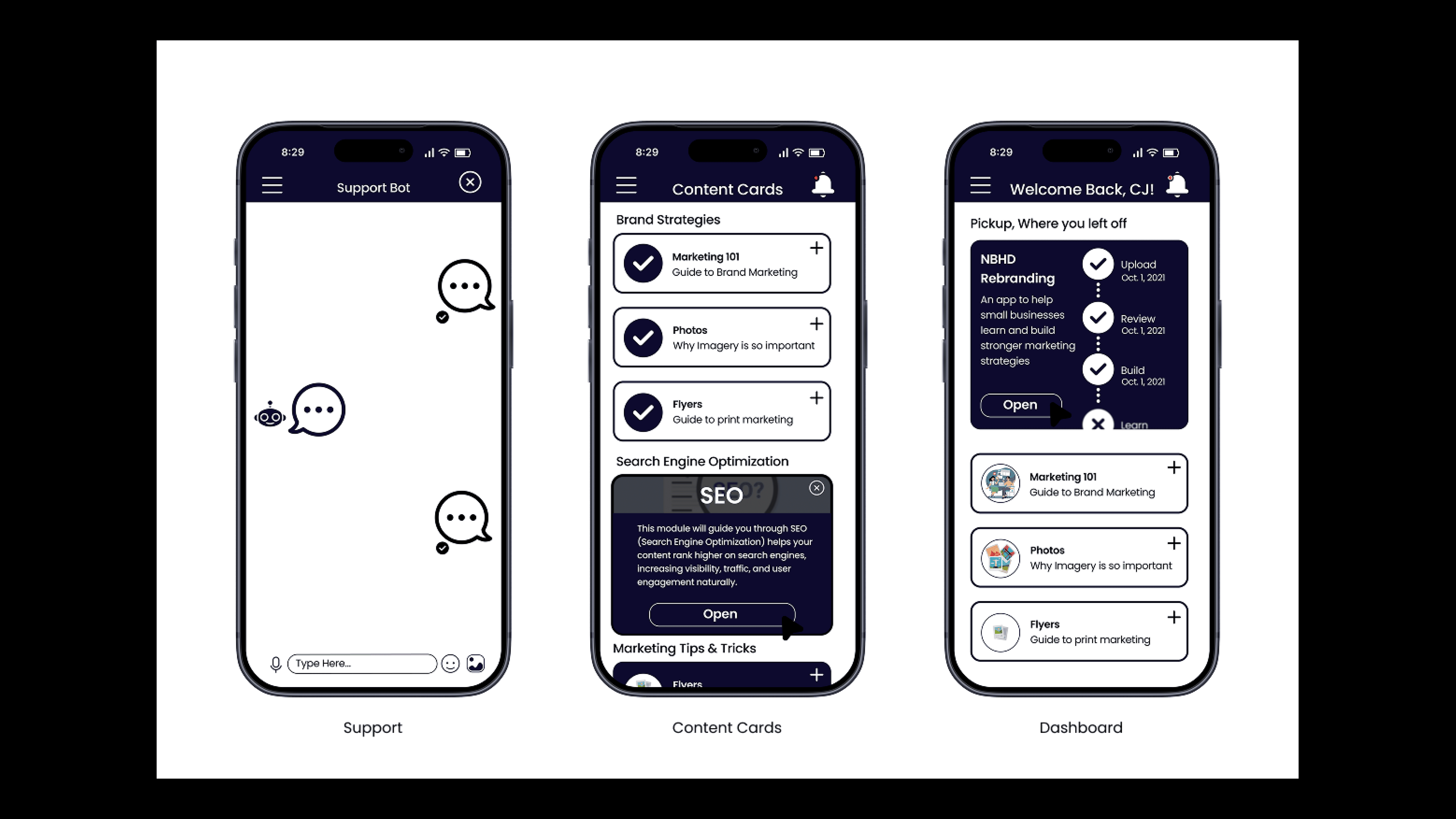
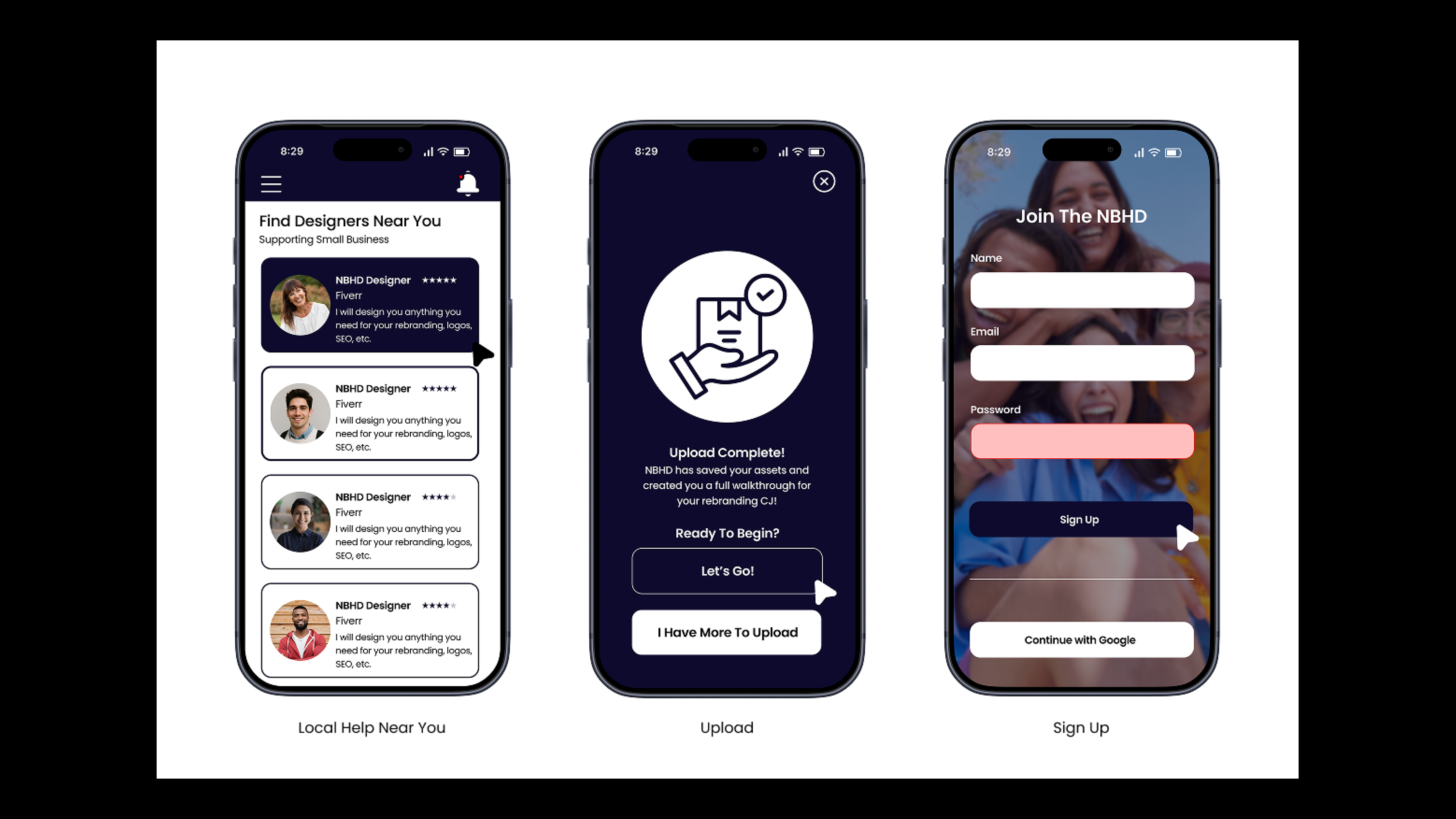
Final Mobile User Interface Screens
Experience NBHD for yourself
Next Steps
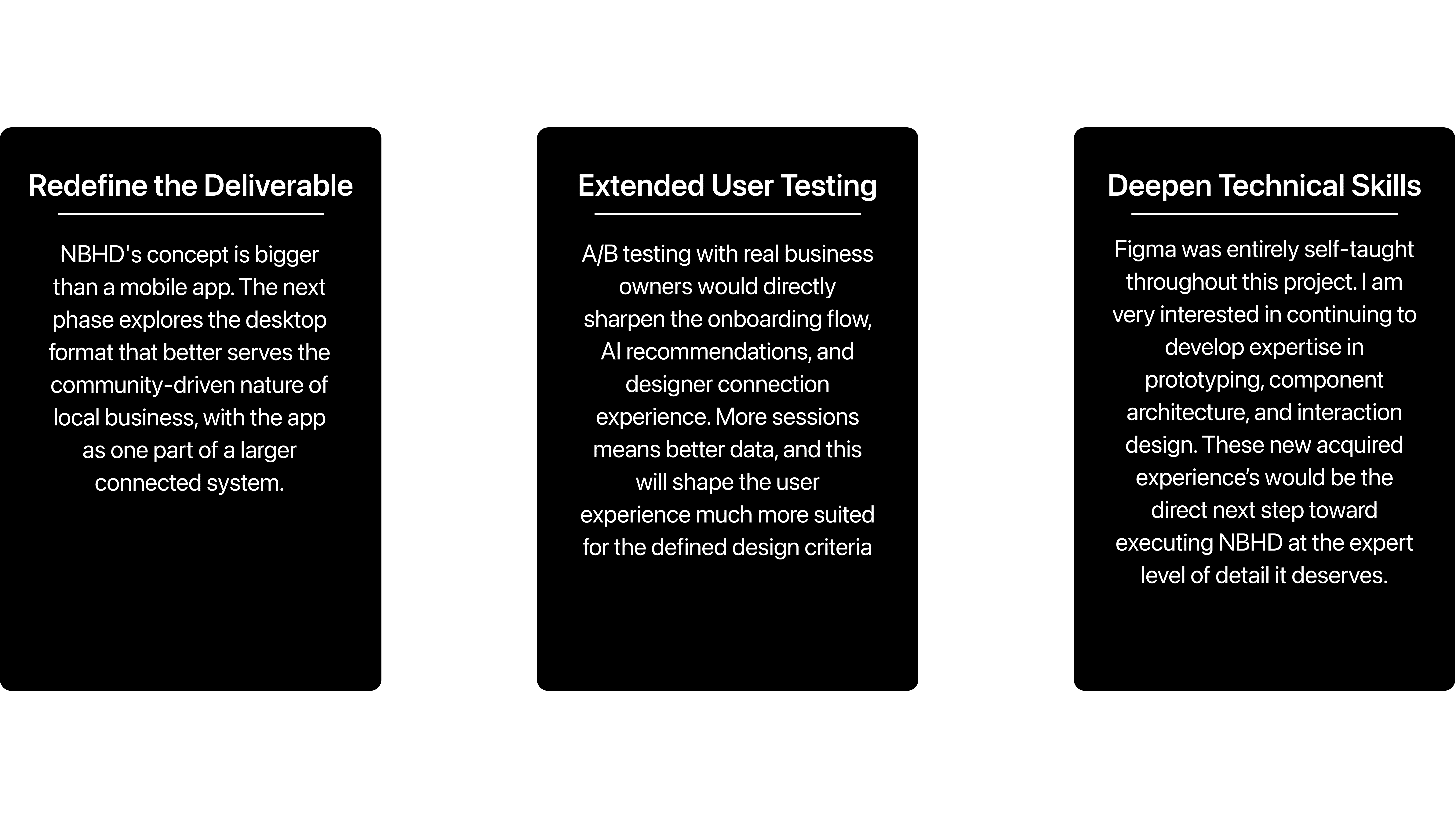
NBHD was one of the most challenging and rewarding projects of my academic career. The research process was thorough and grounding, with insights gathered from several participants, business owners, and designers that validated the platform's core purpose. But the honest truth is that the scope of this project grew beyond what one person could fully execute in a single semester for the UI/UX development, and that tension shaped every phase of the work. What surprised me most was how impactful the concept became. What started as a throwaway idea in my notebook turned into something I genuinely believe has real potential with more development time. I have already outlined the next steps I would take if I were to revisit and continue this project.
Project Highlights