Role
Team
Timeline
Summary
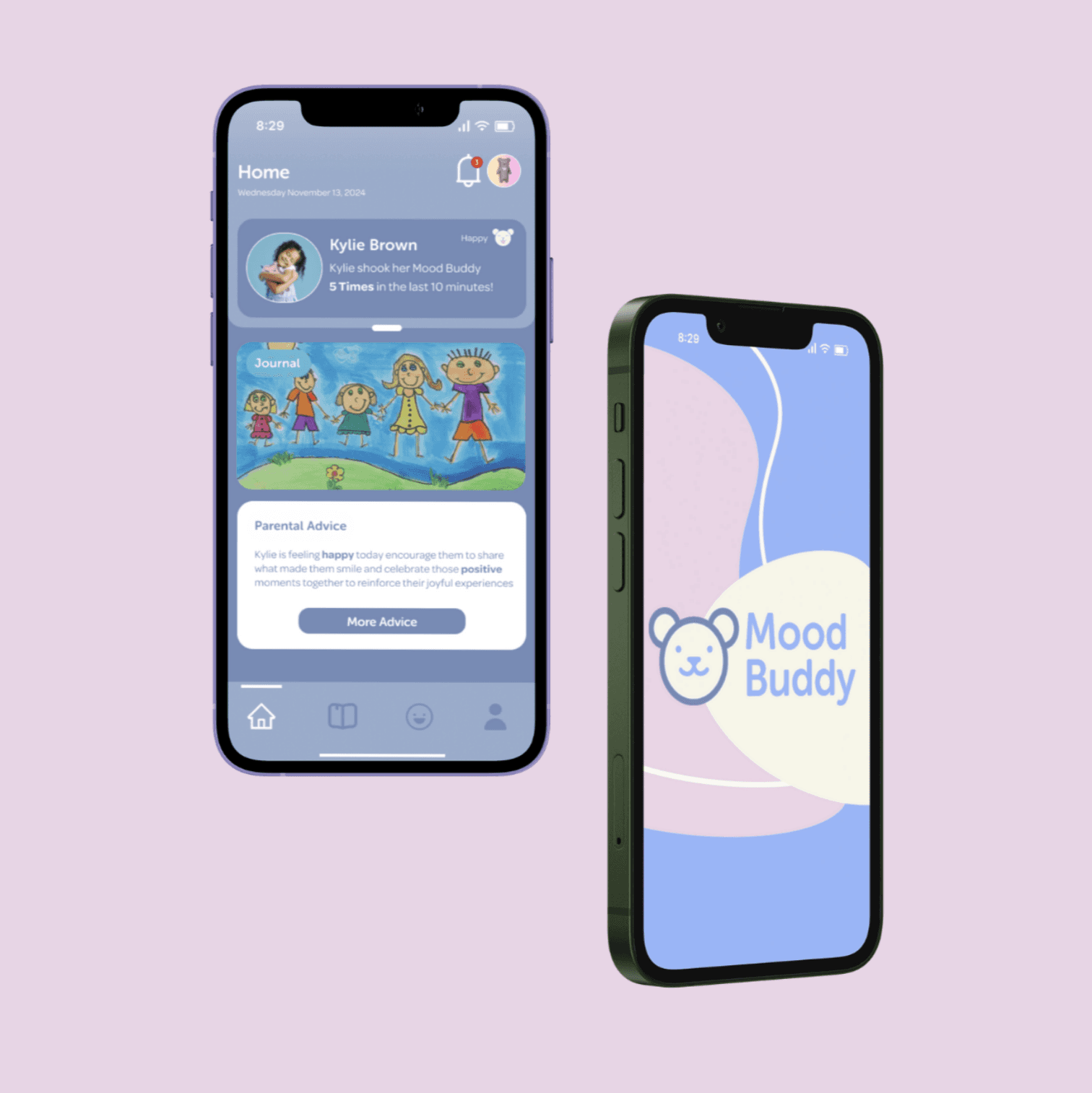
In Fall 2024, I had the privilege of participating in DAAP’s Collaborative Studio focused on Children’s Service Design. Throughout the semester, I worked closely with a team of peers on a comprehensive service design project aimed at supporting emotional regulation in children under 12. Our solution, Moodbuddy, is an interactive service designed for parents and children to foster emotional awareness, strengthen connections, and promote healthy communication. Moodbuddy transforms parenting into a collaborative partnership, helping families navigate emotions together while enhancing educational engagement in today’s digital age.
Phase 01
The Problem
How might we increase education and accessibility to both parents and children at home and at school that will help mitigate and support moments of emotional dysregulation for both parties?
Our Solution
Mood Buddy is a therapeutic service combining a smart teddy bear and a connected app to help children regulate emotions. The bear uses color cues and guided breathing to calm the child, while the app notifies parents, tracks emotional patterns, and provides insights through a digital journal. Designed for families and educational settings, Mood Buddy fosters emotional awareness and strengthens parent-child connections.
Secondary Research
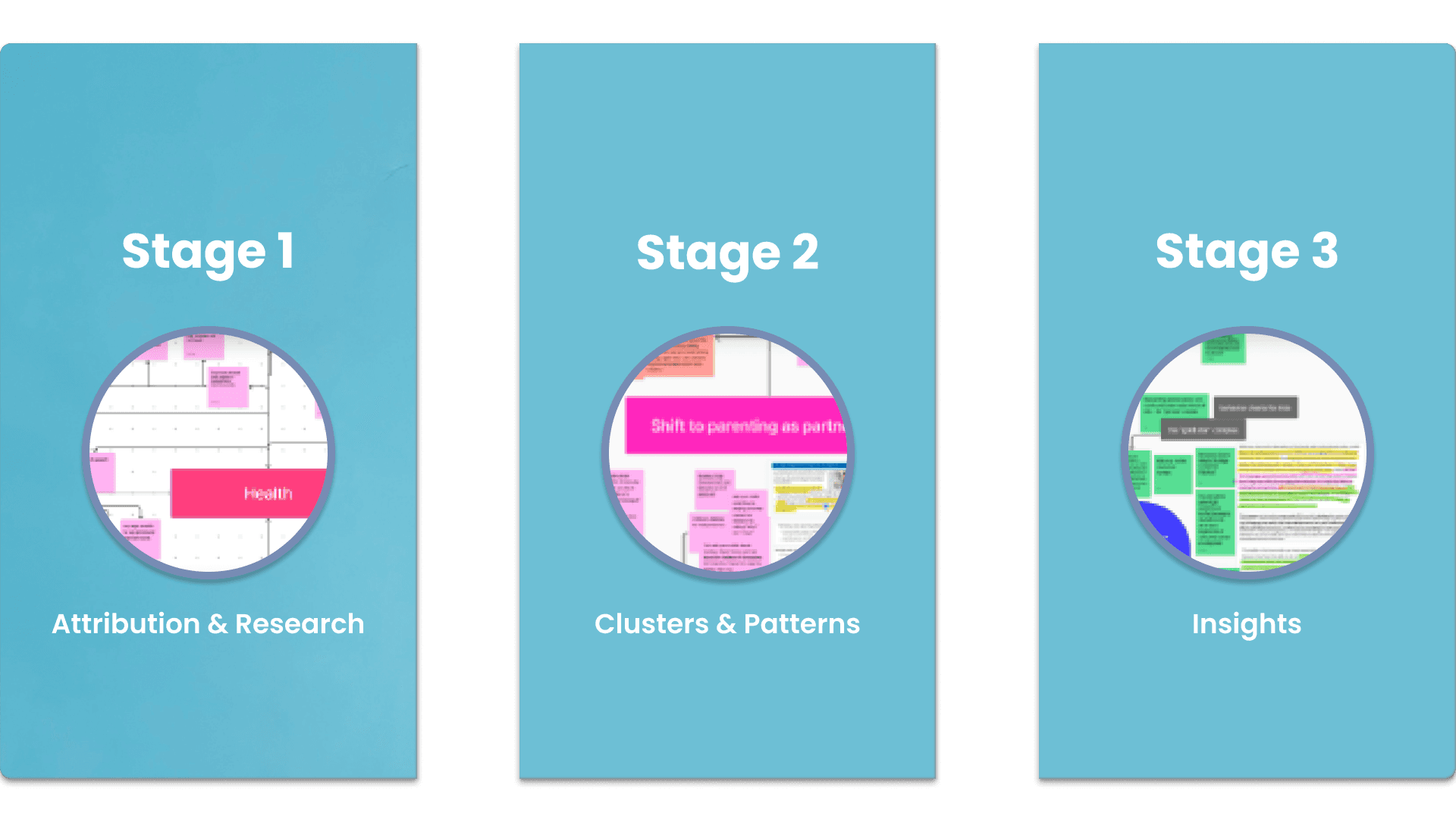
We began our collaborative project with several group conversations on what problem spaces exists for kids and parents today, and there were so many especially since all of us can recall our childhood experiences and we just wanted to make it a bit easier for kids to better understand their emotions and for parents to be right there with them in the passenger seat to support their children. We broke our initial research into 3 stages, Attribution and research is the group seeking out information that's factual and public. Stage 2 is Clusters & Patterns we noticed in our Stage 1 data. Stage 3 are insights and how might we's created based on the previous stages.
Insights
Primary Research
We began our collaborative project with several group conversations on what problem spaces exists for kids and parents today, and there were so many especially since all of us can recall our childhood experiences and we just wanted to make it a bit easier for kids to better understand their emotions and for parents to be right there with them in the passenger seat to support their children. We broke our initial research into 3 stages, Attribution and research is the group seeking out information that's factual and public. Stage 2 is Clusters & Patterns we noticed in our Stage 1 data. Stage 3 are insights and how might we's created based on the previous stages.
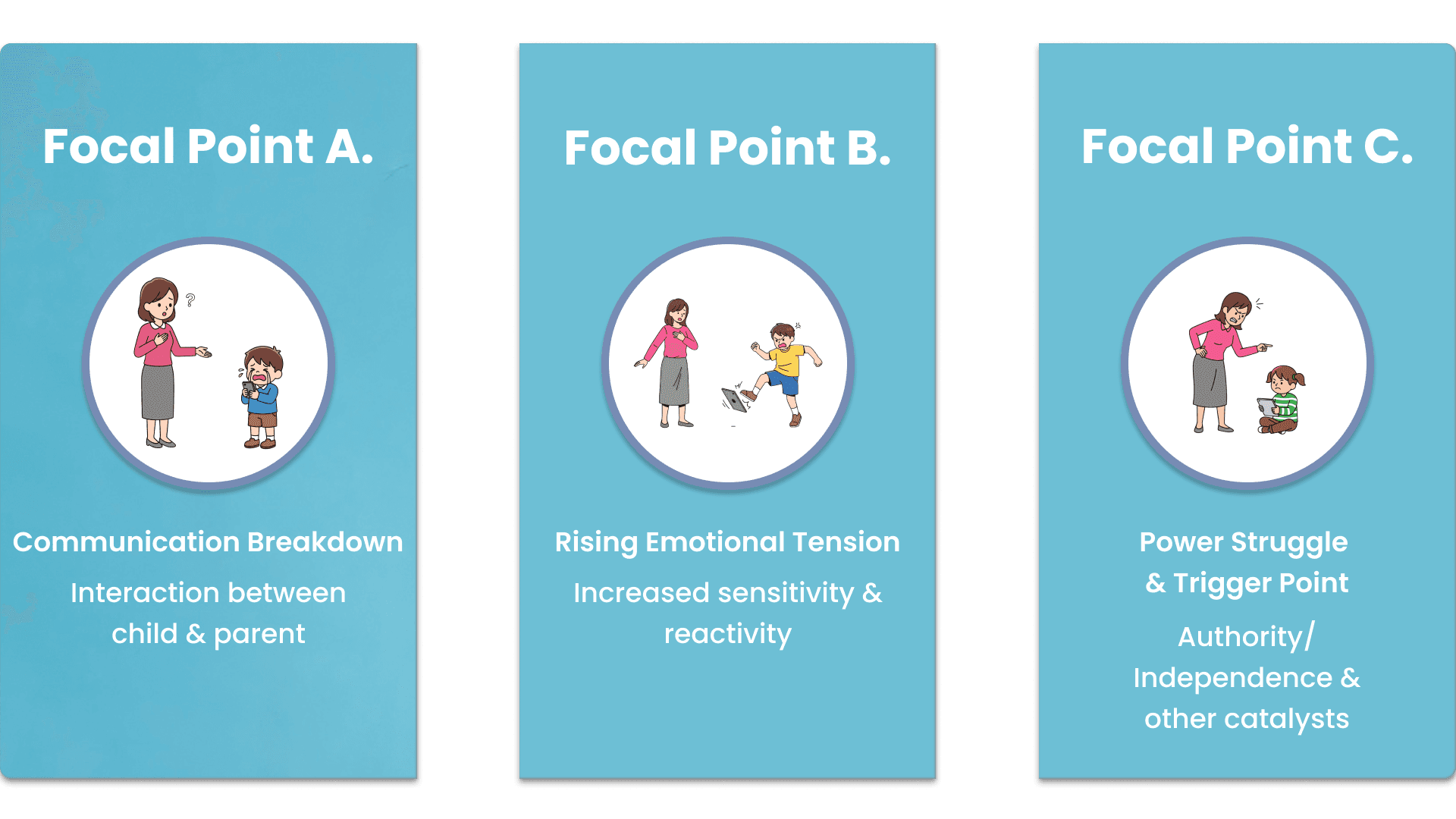
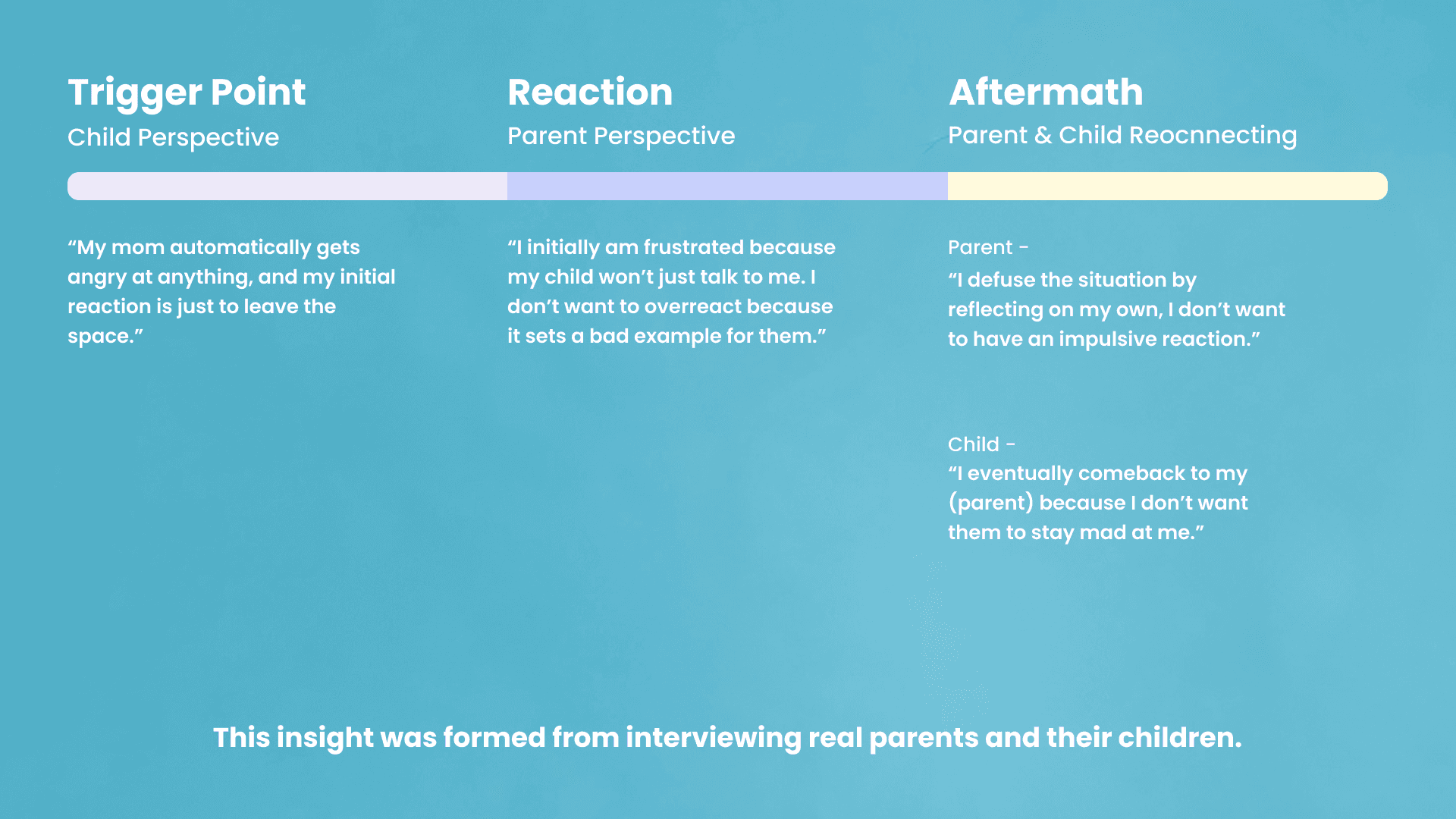
Interview Insights: Perspective Argument Between Parent & Child
Our collaboration project took me and my group to real parents and their children who are actively experiencing this disconnect we are trying to solve in our problem space. We interviewed 5 families, which helped better but this problem space in a better perspective.
Coming Soon….
Project files are on personal computer.
Huge thank you to my studio group members.