
Role
Team
Tools
Adobe Illustrator, Canva
Timeline
"My worst project became my most valuable lesson."
For this project, I designed a physical infographic for a gallery show. The brief was open-ended: design an infographic around any topic backed by real data. As a longtime fan of animated comedies like South Park, Family Guy, and American Dad, I chose to visualize the genre's rise over the past decade.
Where It Went Wrong
The concept was strong, animated comedy has seen real, data-backed growth in viewership since the early 2010s, and I had the research to prove it. The problem wasn't the data or the direction. It was the execution: I built the piece in Canva when it needed the precision of Adobe Illustrator, and that single decision compromised the entire final product.
Phase 01
Concept & Direction
The data gave this project a real reason to exist. My research confirmed a trend I'd noticed anecdotally, that animated comedy classics like Family Guy, American Dad, South Park, King of the Hill, Futurama, and Spongebob have shaped the landscape of comedy and dark humor for years, and audience interest in the genre has only grown. The goal was to engage viewers already in the space while introducing them to shows they might have missed. The project required sourcing five reputable data points and designing an infographic around them.
The Audience
Anyone curious about animated comedy's growth, viewers who already watch these shows and want the numbers behind the trend, as well as newer fans looking for their next series to watch.
Early Draft
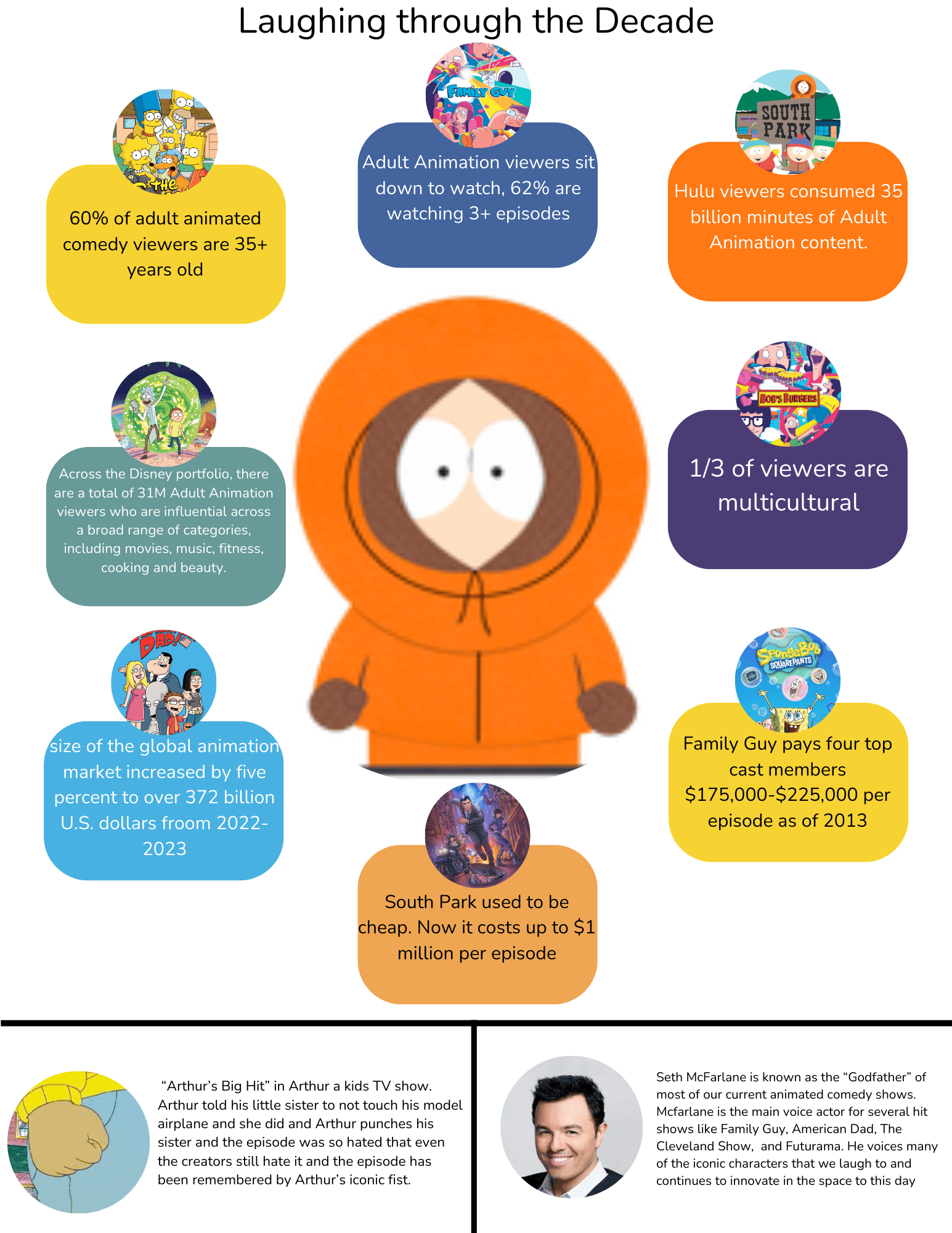
Why This Early Design Direction?
Streaming plays a huge role in how audiences access entertainment today, so I wanted the design to feel familiar. My target audience was 17+ (excluding Spongebob), fitting given the dry, dark humor these shows lean on. After sketching in class, I landed on a Hulu/Disney Plus inspired layout for the infographic. The concept tested well, and I moved forward combining it with my research data.
Phase 02
Where Things Went Worse
At the time, Canva was gaining serious traction as a quick-design platform, alongside tools like Adobe Express and Vista Create, before AI made shortcuts like this even more common. It let anyone, regardless of background, open a template and produce something polished-looking, fast and for free. I saw it as a chance to try a different design platform for the first time, rather than sticking with the precision tools I already knew, like Adobe Creative Cloud and Figma. Canva's built-in objectives and specifications made it feel like it could cut real time out of my process and free me up for other projects. Below are the first Canva drafts I was genuinely excited about, mostly because how fast they came together felt like proof the shortcut was working.
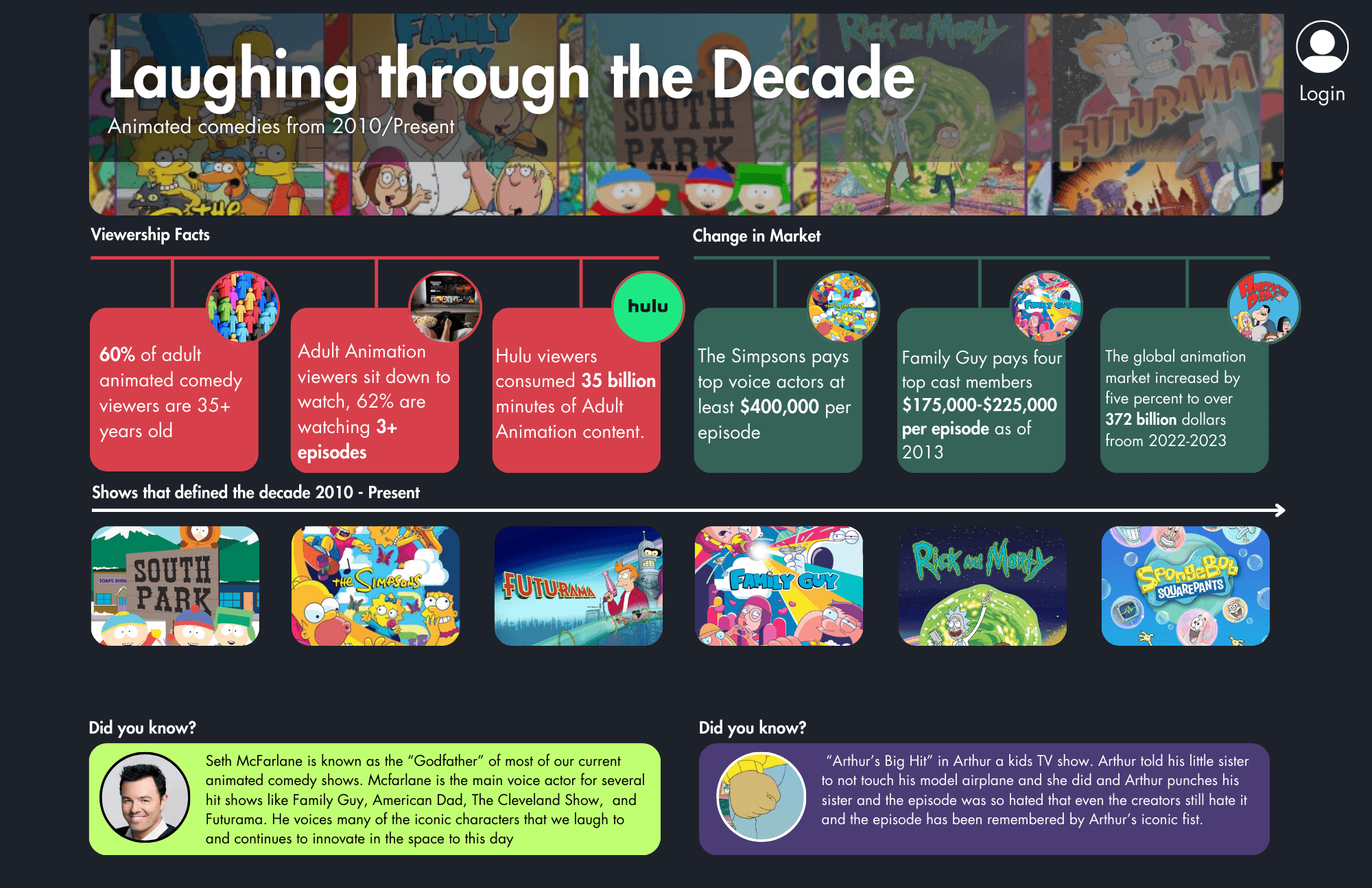

The Early Feedback Made Me Blind to the Reality
Combing through Canva's limited design abilities outside of quick templates eventually posed a real problem. Once I'd invested serious time, redesigns, critiques, and all the data I originally wanted, combined with the streaming-service-styled layout, I felt like I was in a comfortable spot. The feedback was positive, and I was moving fast. But underneath that, the real question was, where do I take this from here? Week after week, my classmates made significant progress using Adobe Creative Suite and Figma, while I convinced myself only minor tweaks stood between me and a finished project. I was ignoring the obvious: this was only strong enough to be an early concept, not a final design. Still, I pushed forward, sourcing new data that better matched my objectives and adding more shows to the mix.

Phase 03
The Realization That Turned Into a Full Redesign
About a week before the final deadline, I was still combing through data and "improving" the project wherever I could. In a one-on-one with my professor, I admitted to using Canva, and it clicked just how much that shortcut had undermined the entire project. We agreed that quick-design tools have their place, but as a designer with access to the right tools for the job, using Canva here was a real mistake, and one I regretted making from the start. I wasn't willing to let it stand, though.
Final Deliverable & Reflection
With one weekend to redesign the entire infographic, and a newfound understanding of how a designer should actually think, I opened Adobe Illustrator and started a full rebuild. The data and research were solid all along; they just never had the right graphic to support them. I dropped the streaming-service aesthetic, which works for UI/UX but falls flat for an infographic, and rebuilt the layout, typography, and elements correctly in the limited time I had. Finishing the redesign forced a real reflection on my process. Attention to detail isn't optional advice for a designer, it's foundational. I'd tried to take a shortcut that wasn't built for the level of craft the project needed, and it showed, even if I was convinced at the time it wouldn't. That lesson has shaped my entire design process since, and it's a permanent reminder that shortcuts don't hold up, especially in this field. There's a saying I kept coming back to during the time crunch: you can dress something up, but if the foundation is wrong, dressing it up won't fix it. That's exactly what my Canva version was, and rebuilding it properly made it so much stronger.

Next Steps
Laughing Through the Decade was a growth experience I needed in order to become the designer I am today. I was excited to share a hobby I genuinely enjoy, but I convinced myself a shortcut was a smart strategy, instead, it crippled my process and forced me to rebuild from the fundamentals. Even so, I still love this project. The execution was flawed, but it's what pushed my design mindset into gear and changed how I approach every project since. Here are the next steps I'd take if I revisited Laughing Through the Decade today.
